
Vizio's New Mini LED TV Offers a 'Dumb TV' Option
Vizio's latest Mini LED Quantum TV, acquired by Walmart in 2024, unexpectedly provides an option to function as a 'dumb TV,' bypassing its smart OS and data collection features.

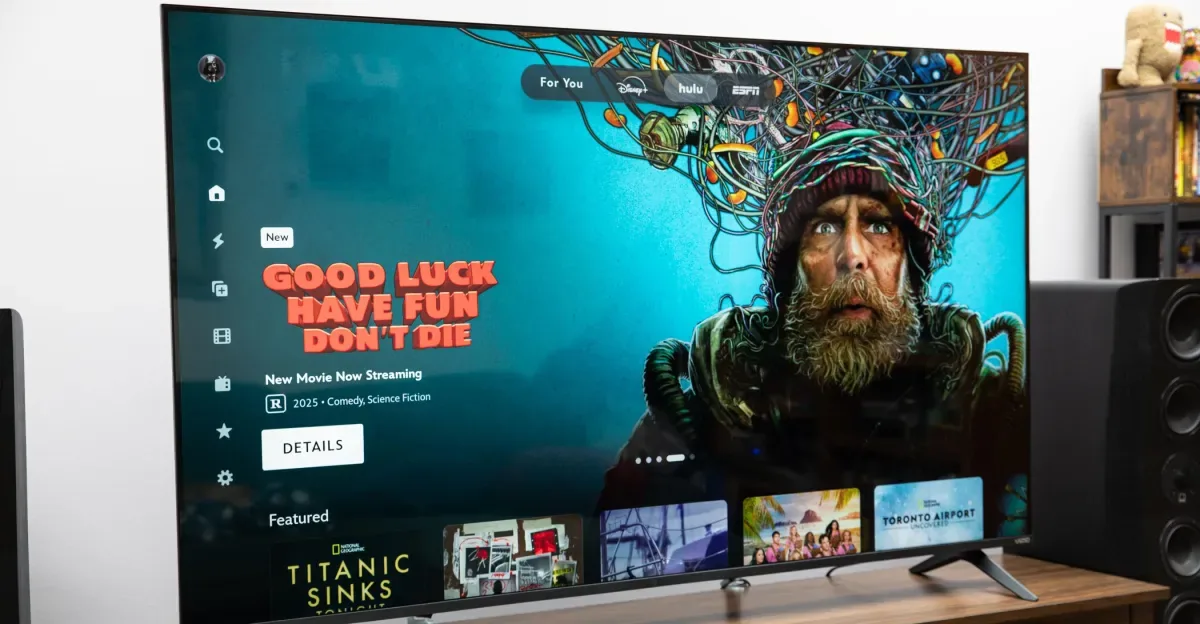
Vizio's recently released 65-inch Mini LED Quantum TV has emerged as a surprising contender in the market, not just for its budget-friendly quantum-dot technology, but for an unexpected feature that allows it to operate as a "dumb TV." Following its acquisition by Walmart in 2024, Vizio's focus appears to be on its advertising business, with the TV's operating system serving as a conduit for data collection. However, users can opt out of these smart features, making it a distinct choice for those seeking a more private viewing experience.
The television, priced under $398 for the 65-inch model, boasts Mini LED backlighting with quantum dots, promising enhanced brightness and color accuracy. Standard smart TVs typically collect user viewing data to personalize recommendations and advertisements. Vizio is no exception, requiring users to agree to an activity data policy to access streaming apps like Netflix and YouTube. This policy grants Walmart extensive access to viewing habits, which could be leveraged to tailor shopping experiences within the Walmart app.
Bypassing the Smart Features
Despite the integrated smart capabilities, Vizio has included a pathway for users to disable the smart TV features entirely. During the initial setup, users are prompted to create or sign in to a Walmart account. While declining this step comes with warnings about losing access to certain features and services, a further refusal to accept the activity data policy effectively turns the Vizio Mini LED Quantum into a traditional display. This means the TV will not run its Vizio OS, nor will it collect viewing data. For added privacy, users can also choose to disconnect the TV from the internet altogether by forgetting its Wi-Fi settings, ensuring no data leaves the device.
Even when opting for an external streaming device, Vizio and Walmart continue to collect data on HDMI port activity. However, by carefully navigating the setup process, users can prevent the Vizio OS from running, thereby limiting data gathering. This level of user control over smart features is a departure from many competing smart TV platforms, which often make opting out of data collection more difficult or impossible.
The Vizio Mini LED Quantum TV offers impressive performance for its price point. It supports HDR formats including Dolby Vision and HDR10+, and features a Mini LED display with quantum dots. Picture modes like 'Calibrated' and 'Calibrated Dark' provide accurate color reproduction, with the latter being ideal for dark room viewing. The display can reach up to 936 nits of brightness in its 'Calibrated' mode, making it suitable for well-lit rooms. While the screen exhibits some reflections due to its glossy finish and the IPS panel results in less deep black levels compared to VA panels, these are minor drawbacks given the budget TV's overall capabilities. Motion handling is generally good, though some minor motion blur was observed during fast-paced scenes.
The TV is equipped with three HDMI 2.0 ports, an ATSC 1.0 tuner, and supports Dolby Atmos and DTS:X audio. Gaming features include 4K/60Hz and 1080p/120Hz support. While the build quality reflects its price point, with a plastic casing and limited port management, the core picture and sound performance, especially when used with external devices, is commendable. For consumers seeking a large-screen TV that prioritizes picture quality over integrated smart functionalities, the Vizio Mini LED Quantum provides a compelling, and surprisingly private, option.