
Partial Lunar Eclipse: See 'Almost Blood Moon' Over Southern California
Southern Californians can witness a partial lunar eclipse on August 27-28, where Earth's shadow will obscure nearly 96% of the moon, potentially casting a reddish hue.

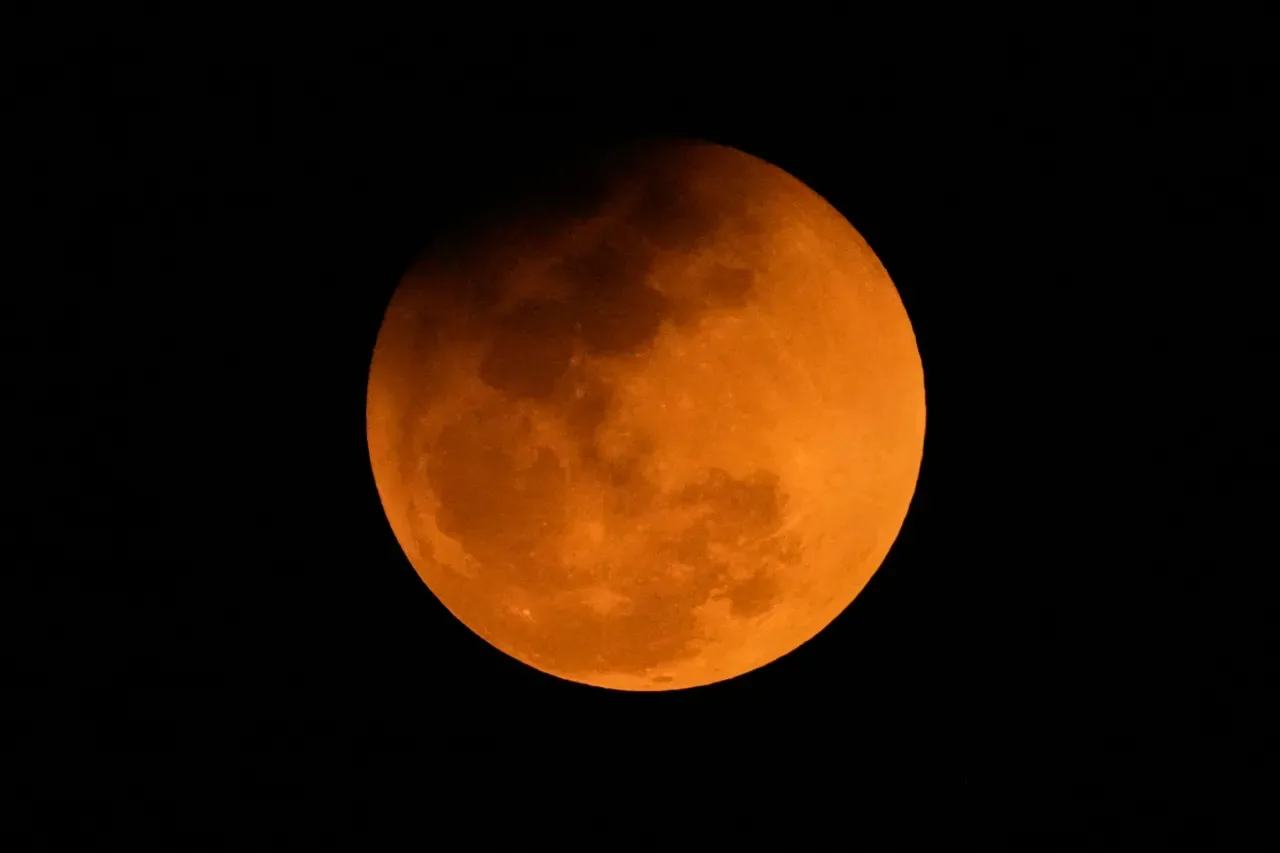
Skywatchers in Southern California will have a unique opportunity to observe a striking celestial event this week: a partial lunar eclipse that will cast Earth's shadow across nearly the entire face of the moon. The eclipse is set to occur overnight from August 27 to August 28, 2026, with an estimated 96% of the lunar surface expected to be enveloped by our planet's shadow, according to astronomical sources. This deep immersion in shadow is predicted to give the moon a dramatic reddish or crimson appearance, earning it the moniker "almost blood moon." The phenomenon occurs when the Earth aligns directly between the sun and the moon during the full moon phase, causing its shadow to fall upon the lunar body.
For residents on the West Coast of the United States, including those in the Los Angeles metropolitan area, the eclipse will reach its peak intensity just a few hours after sunset. This timing offers a prime viewing window for a spectacle that will be visible to a vast population. Billions of people across North America, South America, and parts of Europe and Africa are expected to catch at least a portion of this cosmic display. While the eclipse itself is a global event, the specific local times for viewing vary significantly by geographic location.
Deepest Eclipse Until 2028
Unlike the more elusive solar eclipses, lunar eclipses do not require any special protective eyewear. The event can be safely enjoyed with the naked eye, although enhancing the experience with binoculars or a telescope can offer a more detailed view of the moon as it is gradually obscured. It's important for viewers to check local sunset times for August 27th to maximize their viewing opportunities. Unfortunately, audiences in Australia and much of Asia will miss out on this particular event, as the moon will be below the horizon during the eclipse's duration. Countries such as India, China, and Japan will be unable to witness the celestial show.
This Aug. 27-28 eclipse is notable for its depth, anticipated to be the most significant lunar eclipse until a similar event scheduled for New Year's Eve 2028-29. The precise alignment of celestial bodies during this 2026 eclipse is a rare occurrence that astronomical enthusiasts eagerly anticipate. Understanding the mechanics of eclipses, including the difference between lunar and solar events, helps viewers appreciate the science behind what they are seeing. A lunar eclipse happens when the Earth moves between the sun and moon, blocking the sun's light from reaching the moon. A solar eclipse, conversely, occurs when the moon passes between the sun and Earth, casting a shadow on Earth. Both events are fascinating demonstrations of orbital mechanics, but the partial lunar eclipse offers a prolonged and easily accessible viewing experience for millions.
The reddish hue, often associated with "blood moons," is caused by sunlight filtering through Earth's atmosphere. As the sun's rays pass through the atmosphere, shorter blue wavelengths are scattered away, while longer red wavelengths are transmitted and bent towards the moon. The intensity of the red color can depend on the amount of dust and clouds present in Earth's atmosphere at the time of the eclipse. This natural light show provides a consistent reminder of the dynamic interplay between Earth, its moon, and the sun, offering a moment of shared wonder for observers across the globe who are positioned to witness it. The anticipation for this celestial event is palpable among amateur astronomers and the general public alike, promising a memorable night of stargazing.