
Artemis 2 Astronauts Capture Stunning Lunar Far Side Images
Artemis 2 commander Reid Wiseman and astrophotographer Andrew McCarthy collaborated to reveal never-before-seen colors and details of the moon's far side. The mission's photos offer unique geological insights.

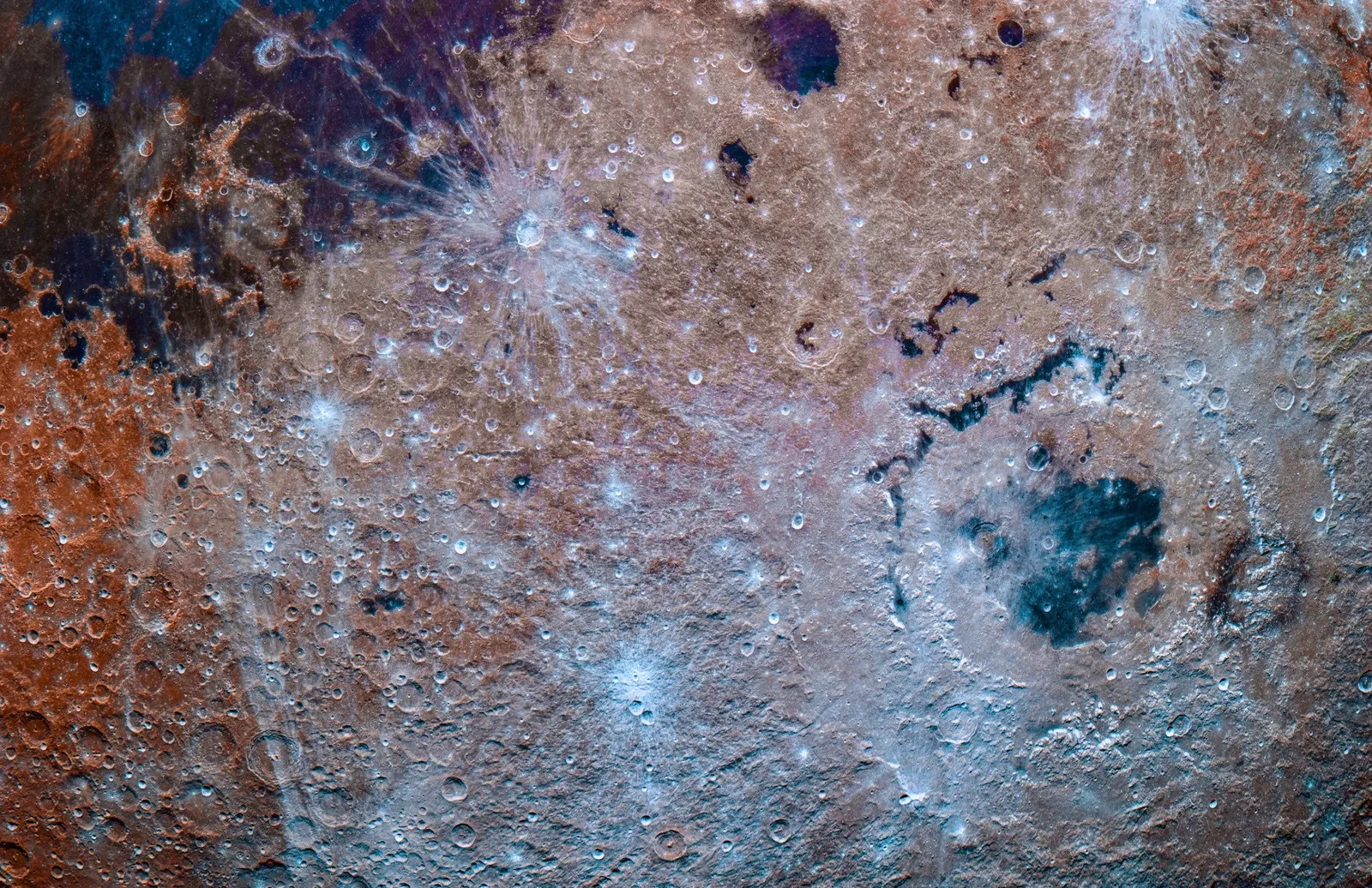
NASA astronaut Reid Wiseman, commander of the historic Artemis 2 mission, teamed up with renowned astrophotographer Andrew McCarthy to capture unprecedented images of the moon's far side. The collaboration, initiated by McCarthy via direct message to Wiseman just weeks before the mission's launch on April 1, aimed to apply McCarthy's advanced processing techniques to photos taken directly from lunar orbit. Wiseman and the Artemis 2 crew embarked on a 10-day journey around the moon, producing a collection of breathtaking photographs that reveal intricate details previously unseen by the human eye.
McCarthy, known for his ability to combine hundreds or thousands of individual lunar images to reveal subtle colors and geological features, saw an opportunity to push the boundaries of astrophotography. "He was immediately onboard," McCarthy told Space.com, describing Wiseman's enthusiastic response. "It was a dream come true, obviously, for me, but I saw it as this very unique opportunity." The images captured by the Artemis 2 crew, particularly those of the lunar far side, provided McCarthy with exceptionally clean and high-fidelity data.
The colors visible in these new images are not artistic embellishments but indicators of the moon's diverse mineral composition. "The color is naturally there, just much more subtle to your eyes," McCarthy explained. Different minerals produce distinct hues: titanium-rich basalts appear bluish, while older, weathered materials can present in shades of brown and red. McCarthy's processing method, often described as giving the camera "cyborg eyes," enhances these subtle spectral variations, allowing viewers to see the moon as if they possessed superhuman vision.
Unlocking Lunar Secrets from Orbit
McCarthy's innovative approach involves a technique called "stacking," where numerous photos are layered to reduce digital noise and amplify faint details. This method is crucial for bringing out the subtle colors that are otherwise imperceptible. While NASA has released "mineral moon" images in the past, often derived from lower-fidelity data from probes like the Lunar Reconnaissance Orbiter (LRO), the data from Wiseman's camera offered unparalleled quality. "Usually you can't get very high-fidelity color data from the far side of the moon," McCarthy noted. "With the really, really high-fidelity image stacks from the stuff that Reid got, I'm able to bring out that saturation."
The absence of Earth's atmosphere significantly impacts the clarity of images taken from lunar orbit. On Earth, atmospheric distortion and light scattering can add color casts and reduce image fidelity, requiring McCarthy to use hundreds, sometimes thousands, of exposures for a single composite. In contrast, the photos taken by Wiseman during the Artemis 2 mission were remarkably clean. "On Earth, you're dealing with atmosphere in the way, and atmosphere actually adds a color cast to the moon," McCarthy said. "I'm often shooting 150 to 200 photos just to barely be able to get out the color .... It's way more than that if I'm doing it with a mosaic — sometimes thousands of photos." McCarthy found he could achieve stunning results using significantly fewer exposures from the lunar orbit data, sometimes as few as 10 to 15 shots from a set of 50.
This collaboration marks a significant advancement in lunar imaging, demonstrating the power of combining human exploration with cutting-edge digital processing. The Artemis 2 mission, which concluded with a splashdown on April 10, has provided NASA with over 12,000 images. McCarthy expressed his excitement about the data's quality, stating, "It is phenomenally clean. It's the best data I've ever worked." He plans to continue analyzing the wealth of material, with further edits and explorations of lunar highlands expected in the future, promising more revelations from the moon's mysterious far side.