
Asteroid 2026 JH2 to Safely Pass Earth Within Moon's Distance
A newly discovered asteroid, 2026 JH2, will make a close pass by Earth on Monday, traveling within 56,000 miles. Astronomers confirm the celestial body poses no threat of impact.

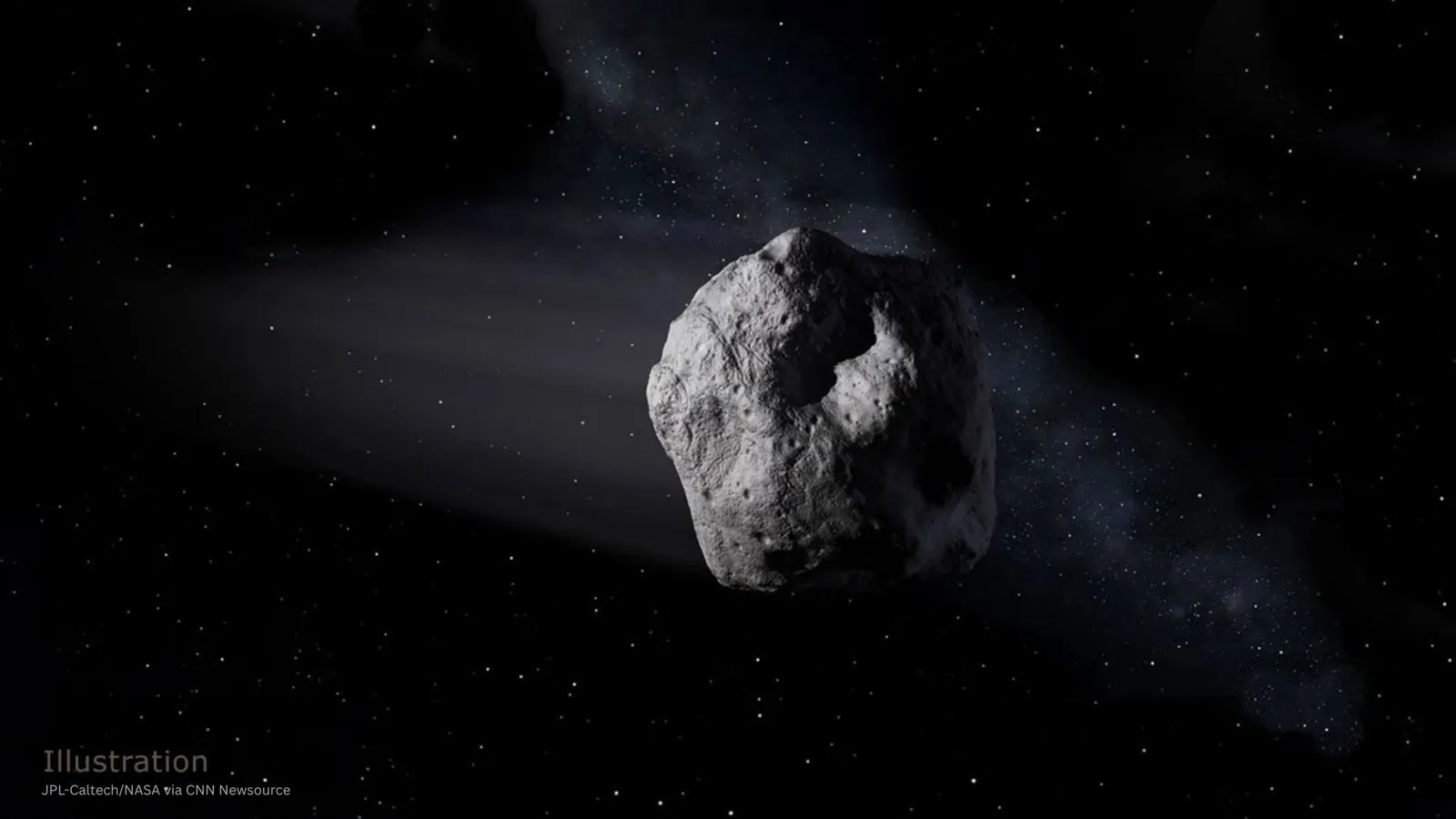
A recently identified asteroid, designated 2026 JH2, is set to perform a remarkably close flyby of Earth on Monday, passing at a distance of approximately 56,000 miles. This proximity is significantly less than the average distance between the Earth and the Moon, though astronomers have confirmed there is no cause for concern regarding a potential impact. The asteroid was first detected just days ago by a network of five observatories, including the Farpoint Observatory in Wabaunsee County, Kansas, and the Mount Lemmon Observatory situated in Arizona's Santa Catalina Mountains. Preliminary estimates from NASA's Jet Propulsion Laboratory suggest that 2026 JH2 measures between 50 and 100 feet in diameter, a figure derived from its observed brightness and estimated surface reflectivity.
Astronomers are diligently working to refine their understanding of the asteroid's orbital path and its physical composition. To date, the object has been tracked a limited number of times, allowing for ongoing trajectory calculations. Despite the evolving data, current projections indicate a zero risk of impact with our planet. This space rock is classified as an Apollo-class near-Earth object, a designation for asteroids whose orbits extend beyond Earth's path around the sun and which intersect Earth's orbital plane.
Understanding Near-Earth Objects
The close approach of 2026 JH2 highlights the ongoing efforts in planetary defense and the importance of tracking near-Earth objects (NEOs). NEOs are asteroids and comets whose orbits bring them into proximity with Earth's orbit. While many are small and pose no threat, larger objects have the potential for significant impact. Organizations like NASA continuously monitor the skies for such objects, cataloging them and calculating their trajectories to assess any future risks. The discovery and tracking of asteroids like 2026 JH2 are crucial for building a comprehensive database and understanding the dynamics of our solar system. This vigilance allows scientists to provide timely warnings and develop mitigation strategies if a potentially hazardous asteroid were ever identified.
The Virtual Telescope Project is scheduled to provide a live stream of the celestial event, with coverage beginning at 5:45 p.m. Eastern Time on Monday. This opportunity will allow the public to witness the asteroid's passage, albeit remotely, thanks to advancements in astronomical observation and broadcasting technology. The detailed observation data gathered during this close encounter will further aid scientists in characterizing the asteroid and improving future orbital predictions.