
Astronomers Find 'Phoenix Planet' Forming From Star's Ashes
Astronomers have discovered a unique planet candidate, nicknamed the 'Phoenix Planet,' that appears to be forming from the debris of a dead star's remnants, offering new insights into planetary formation.

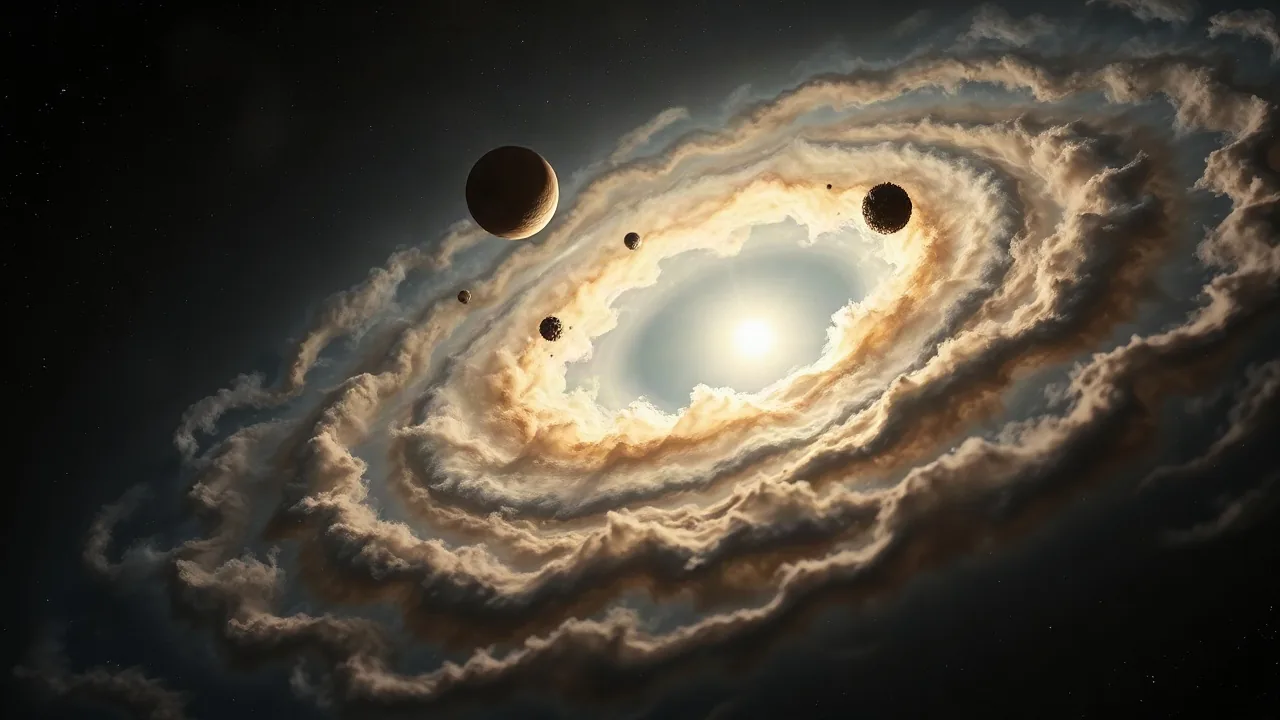
Astronomers have announced the discovery of a compelling planet candidate, dubbed the "Phoenix Planet," that is actively accreting material onto a white dwarf star. This celestial body, detected through observations by NASA's Hubble Space Telescope, represents a potential second-generation planet, meaning it may have formed from the dispersed ashes of a progenitor star that died long ago. The findings, published in the journal Nature Astronomy, challenge current understandings of planetary system evolution and the conditions under which new worlds can emerge.
The discovery centers on a white dwarf star, the dense, hot core left behind after a star like our Sun exhausts its nuclear fuel. Typically, white dwarfs are considered stellar remnants, devoid of the active processes that lead to planet formation. However, this particular white dwarf is exhibiting signs of accretion – drawing in surrounding gas and dust. The most intriguing aspect is that the composition of this accreted material suggests it originates from a destroyed planetary system, painting a picture of a planet being built from the remnants of a previous one.
A World Reborn from Stellar Death
This "Phoenix Planet" is hypothesized to have formed from the debris of a dead star's ashes, a process previously considered unlikely or extremely rare. The implications are significant for understanding how planetary systems can reform or survive catastrophic stellar events. Dr. J.J. Hermes from the University of Warwick, a lead author on the study, stated, "It is completely unexpected. We thought we were looking at a normal white dwarf, but the data revealed something far more extraordinary. This is a planet being born from the ashes of a dead star."
The team utilized data from the Hubble telescope to analyze the spectrum of light passing through the white dwarf's atmosphere. This spectral analysis allowed them to identify the chemical composition of the material being accreted. The presence of specific elements in unusual proportions pointed towards the disintegration of rocky bodies, likely planets or asteroids, that once orbited the progenitor star. This catastrophic event would have scattered debris, some of which is now being drawn into the white dwarf, potentially coalescing to form new planetary bodies.
Understanding the lifecycle of stars and the fate of their planetary systems is a cornerstone of astrophysics. White dwarfs represent the final evolutionary stage for the vast majority of stars in our galaxy. Studying phenomena around them, like the formation of a potential second-generation planet, provides crucial data points for modeling stellar and planetary evolution across cosmic timescales. This discovery could refine models of how planetary building blocks survive or are reconstituted even after their host star has died.
The researchers are continuing to monitor this system to gather more data and confirm the nature of the "Phoenix Planet." Further observations will be critical to determine its mass, orbital characteristics, and the precise mechanisms driving its formation. The potential existence of such planets opens up exciting avenues for research into the resilience of planetary matter and the possibility of life emerging in unexpected cosmic environments, long after the initial star has faded.