
Aug. 12 Eclipse Peaks Perseid Meteor Shower Over North America
North America and Europe are set for a celestial double-feature on August 12, 2026, with a partial solar eclipse visible in daylight and the peak of the Perseid meteor shower after dark.

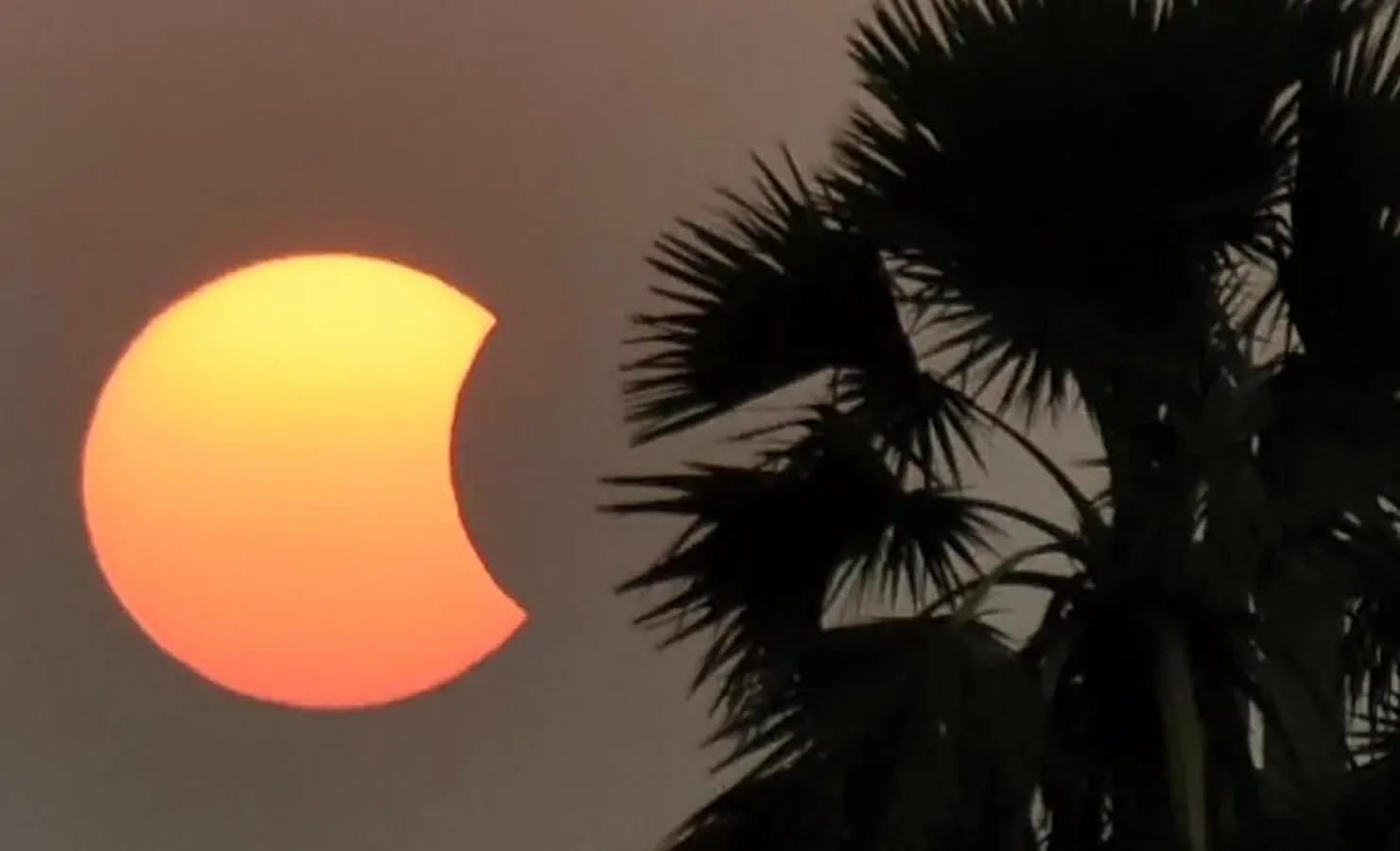
Skywatchers across North America and Europe are gearing up for a rare cosmic convergence on Wednesday, August 12, 2026, as a partial solar eclipse graces the daytime sky, followed by the peak of the annual Perseid meteor shower after sunset. This unique alignment offers a prime opportunity to witness two distinct astronomical spectacles under a moonless night, potentially delivering some of the most memorable skywatching experiences of the year.
The celestial events begin in daylight with a partial solar eclipse, where the moon will obscure a portion of the sun. While the path of totality, where the sun is completely hidden, will traverse Europe, millions in eastern Canada and parts of the U.S. can still expect to see a noticeable 'bite' taken out of the sun. The most significant coverage in North America will be visible in far northern Canada, with Alaska and the northeastern U.S. also offering good vantage points. In Fairbanks, Alaska, approximately 37% of the sun is projected to be covered around 8:27 a.m. AKDT. For the contiguous U.S., Presque Isle, Maine, will experience the largest partial eclipse, reaching about 28% coverage at approximately 1:50 p.m. EDT. Further south, Boston will observe around 16% coverage, while New York City expects about 10%, both occurring near 1:54 p.m. EDT. Unlike total eclipses, viewing these partial events requires dedicated eye protection. Certified eclipse glasses meeting the ISO 12312-2 standard are essential. For those using binoculars or telescopes, securely mounted solar filters must be attached to the front of the optics. Leftover eclipse glasses from the April 8, 2024, total solar eclipse are usable, provided they are inspected for damage like scratches or pinpricks.
The Night Sky Ignites with Meteors and More
As daylight fades, the focus shifts to the night sky, where the new moon responsible for the solar eclipse will leave the heavens dark, creating ideal conditions for the Perseid meteor shower to shine. Astronomers anticipate a spectacular display, with observers under dark, rural skies potentially witnessing between 60 to 100 meteors per hour. Even those in suburban areas can expect a steady stream of shooting stars. The shower, which appears to originate from the constellation Perseus, offers meteors that can streak across any part of the sky.
Maximizing the meteor count hinges on location and preparation. Driving away from urban light pollution to areas like national parks or designated Dark Sky Places is highly recommended. Once at a viewing site, allowing at least 20 minutes for eyes to adjust to the darkness is crucial. Resisting the urge to check mobile devices will also enhance the viewing experience, as the screen's brightness can diminish night vision. The Perseids are renowned for their bright fireballs, a result of larger-than-average meteoroids entering Earth's atmosphere.
Beyond the meteors, the night sky on August 12th will offer additional celestial treats. The Milky Way will be prominently displayed, arching high across the southern sky from dark locations, providing one of the year's most breathtaking views of our home galaxy. Additionally, the planet Venus will reach its dichotomy phase, appearing exceptionally bright yet only half-illuminated when viewed through a small telescope as it approaches Earth.
The convergence of a partial solar eclipse and the peak of the Perseid meteor shower on August 12, 2026, presents a remarkable opportunity for astronomical observation. The specific timing, coinciding with a new moon, maximizes the visibility of the meteors, while the accessible nature of a partial solar eclipse allows millions to participate in a significant celestial event. The added presence of the Milky Way and Venus further enhances the night's potential for wonder, making it a highly anticipated date for stargazers across North America and Europe.