
August 2026 Lunar Eclipse: U.S. Weather Forecast for Viewing
Millions in North and South America can witness a partial lunar eclipse late on August 27th into the early morning of August 28th. Weather patterns, including a heat dome, will determine viewing conditions across the U.S.

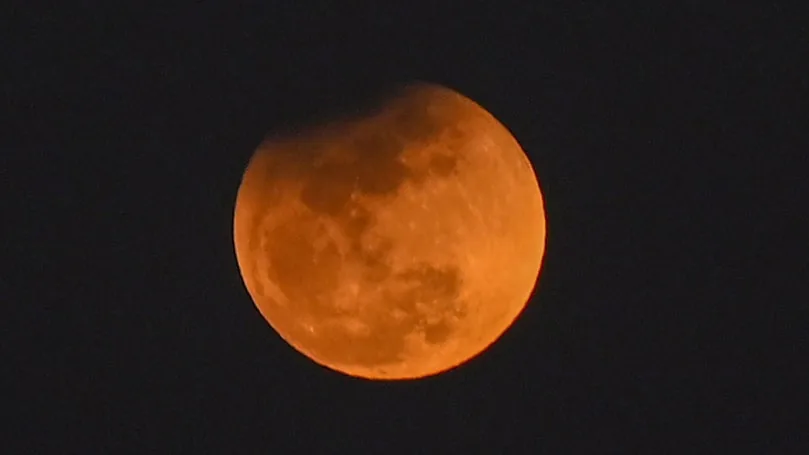
A partial lunar eclipse will grace the skies over North and South America late Thursday night, August 27th, extending into the early morning hours of Friday, August 28th. Skywatchers across the United States will have a chance to observe the celestial event, though local weather conditions will play a crucial role in visibility. Experts suggest that while summer typically brings clearer skies, showers and thunderstorms could obscure the view in certain regions.
One significant weather factor anticipated is a heat dome, which is expected to settle over the Southwest. These high-pressure systems feature sinking air that can suppress cloud formation, potentially offering clear viewing conditions for those near the center of the dome. However, individuals on the periphery of this system might still encounter clouds, rain, and storms.
Regional Weather Outlook for the Eclipse
While precise forecasts remain challenging days out, a general outlook for the U.S. indicates varying conditions. In the Northeast, scattered showers and thunderstorms are forecast from the mid-Atlantic to New England, which could intermittently obstruct views of the eclipse. The South may also experience scattered storms, particularly from Virginia and the Carolinas down to Florida and the lower Mississippi Valley. Nevertheless, these storms might be dispersed enough to allow viewing for many, with areas like Oklahoma and Texas potentially having favorable conditions. Much of the Midwest is predicted to have relatively good viewing opportunities, with the exception of the Central Plains where thunderstorms could affect visibility in parts of Nebraska and Kansas. Clouds from these storms might drift into neighboring areas of Iowa and Missouri. The Western U.S. is largely expected to have excellent viewing conditions, with high pressure dominating and only isolated showers or thundershowers anticipated in the Rockies or Desert Southwest, alongside potential wildfire smoke.
A lunar eclipse occurs when the Earth positions itself directly between the sun and the moon, casting its shadow upon the lunar surface. In a partial eclipse, the alignment is not perfect, resulting in a portion of the moon being obscured by Earth's umbra. This particular event will be visible across most of eastern North America and South America. For observers in Europe and Africa, the moon will be setting on the morning of August 28th during the eclipse. In the western U.S., western Canada, Alaska, and Hawaii, the moon will be ascending as the eclipse begins on the evening of August 27th. The partial eclipse is expected to last nearly 3.5 hours, with its peak occurring around 12:13 a.m. Eastern Daylight Time.
Stargazers are advised to check local weather forecasts closer to the date for the most accurate predictions. While the lunar eclipse itself is a predictable astronomical event, its visibility is subject to terrestrial atmospheric conditions. Understanding the interplay between weather patterns and celestial events is key for maximizing the chance of a clear view of this captivating phenomenon. The duration and visibility of this partial lunar eclipse highlight the dynamic nature of both space and our planet's atmosphere.