
BepiColombo's 8-Year Mercury Mission: Epic 3-Minute Video Shows 10 Billion Km Journey
A new video captures the BepiColombo mission's eight-year, 10 billion km journey to Mercury. Released by ESA and JAXA, it showcases gravity assists and flybys of Venus and Mercury.

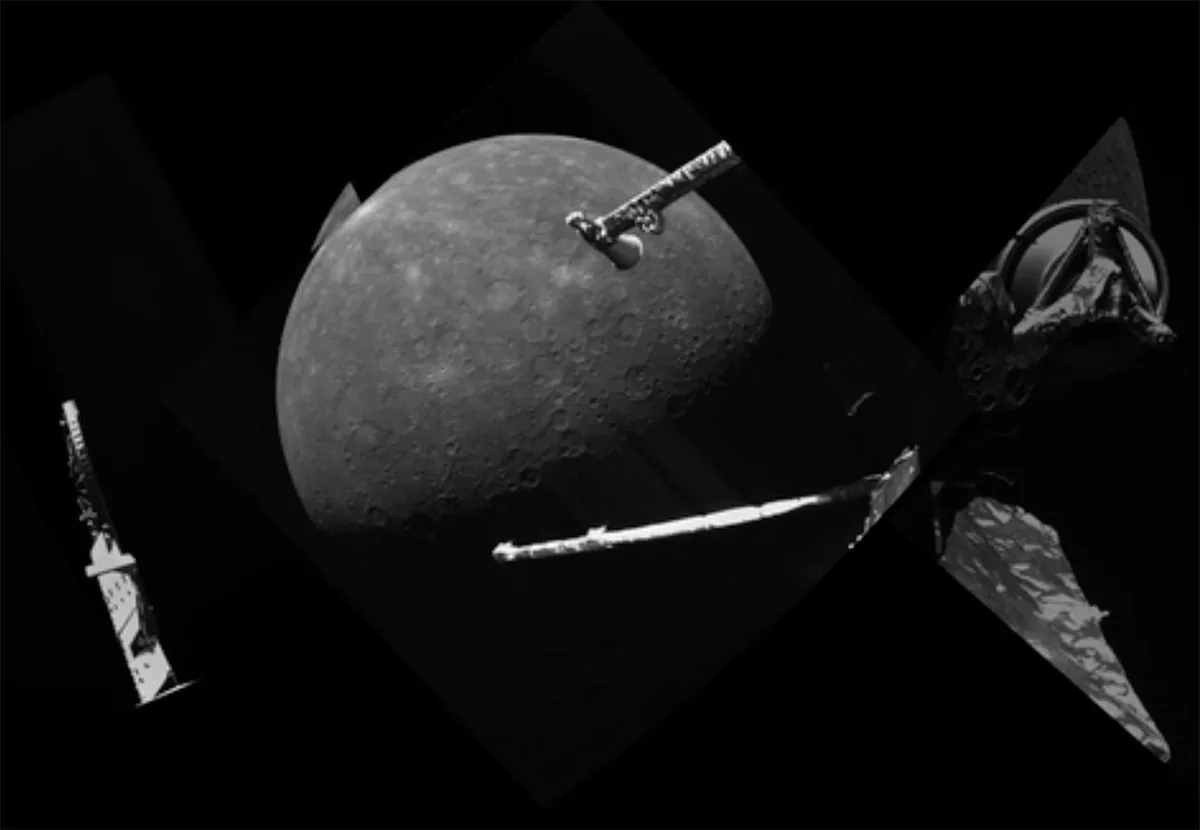
An extraordinary video documenting nearly eight years of interplanetary travel has been released by the European Space Agency (ESA) and the Japan Aerospace Exploration Agency (JAXA). The footage chronicles the BepiColombo mission's epic voyage, spanning 9.9 billion kilometers (approximately 6 billion miles) across the Solar System, culminating in its arrival at Mercury. This visual compilation offers a rare glimpse into the complex maneuvers required to guide a spacecraft to the solar system's innermost planet.
Launched on October 20, 2018, BepiColombo has undertaken nine crucial gravity-assist maneuvers. These intricate orbital adjustments, which utilized flybys of Earth once, Venus twice, and Mercury six times, were essential for slowing the spacecraft and positioning it for eventual orbit around the Sun's closest planet. While individual images and video clips have surfaced previously, this marks the first time ESA and JAXA have synthesized the entire journey into a single, compelling narrative.
The captivating visuals originate from three monitoring cameras (M-CAMs) integrated into the Mercury Transfer Module (MTM). This module is tasked with transporting the mission's two primary science orbiters. ESA scientists noted that these engineering cameras, lacking a standard shutter mechanism, initially produced frames with streak artifacts due to light exposure. Dedicated image processing teams have meticulously cleaned these artifacts, resulting in clear views of planets drifting by in the background.
Final Approach and Orbit Insertion
On September 3, 2026, BepiColombo commenced its final orbital insertion sequence. The Mercury Transfer Module officially detached from the two science probes, ESA’s Mercury Planetary Orbiter (MPO) and JAXA’s Mercury Magnetospheric Orbiter (Mio). The transfer module is slated for a final flyby of Mercury, approximately 130,000 km (81,000 miles) distant, in late October 2026 before settling into a stable orbit around the Sun. The two science orbiters, remaining coupled, are preparing for their own Mercury orbit insertion, scheduled for November 2026.
A historic moment is anticipated on December 9–10, 2026, when the MPO and Mio will decouple. This event will signify the first time two independent spacecraft simultaneously orbit Mercury. Both missions aim to conduct comprehensive mapping of the planet's surface, composition, and magnetic field, offering unprecedented data about this extreme environment. The successful deployment and operation of these orbiters will mark a significant advancement in our understanding of Mercury and the inner solar system's formation and evolution.