
Hunter's Moon Returns This October: Viewing Guide & Celestial Events
October's Hunter's Moon will be visible tonight, offering a spectacular celestial display. This full moon is notable for its appearance alongside the planet Saturn.

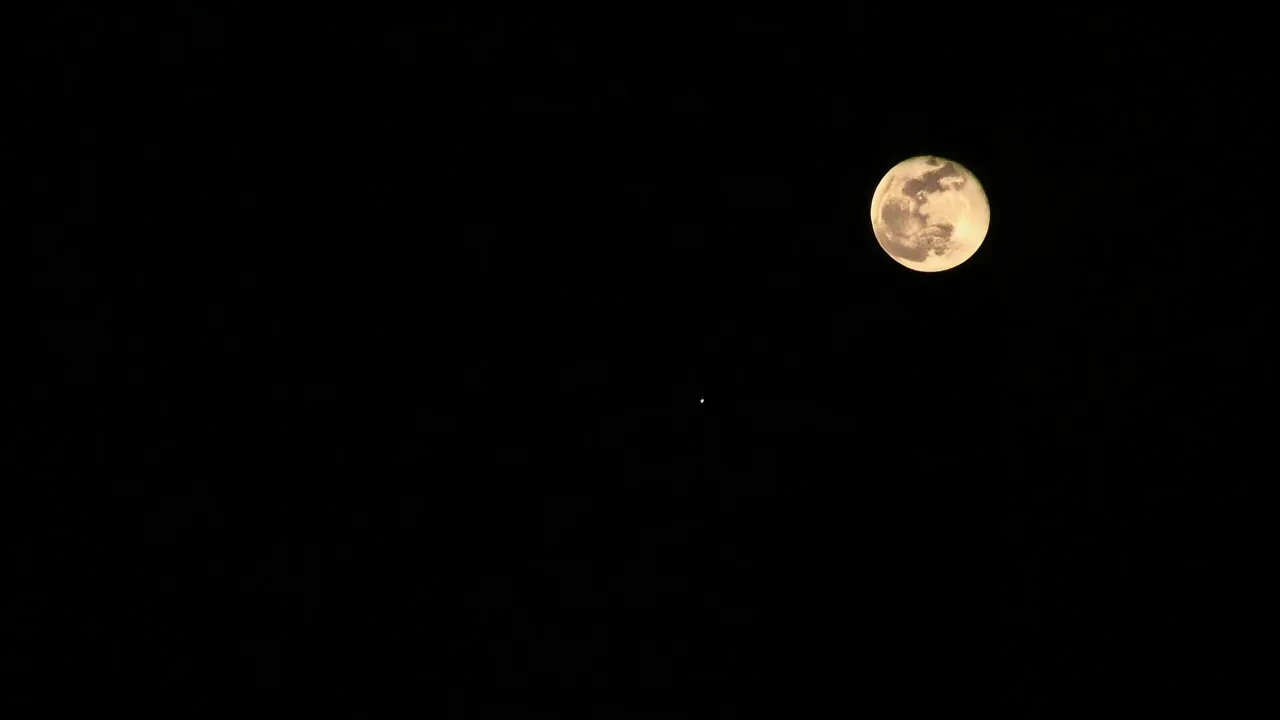
This October, stargazers can look forward to the annual spectacle of the Hunter's Moon, gracing the autumn night sky beginning tonight. This full moon, known for its brilliant appearance, will be accompanied by a special celestial companion: the planet Saturn, offering a unique opportunity for skywatchers.
The Hunter's Moon traditionally appears in the night sky following the Harvest Moon, which is the full moon closest to the autumnal equinox. This year, the celestial event provides a perfect chance to engage with the night sky, whether through naked-eye observation or with the aid of basic equipment. The moon's elevated position and striking color are hallmarks of this autumn phenomenon.
A Guide to Viewing the Hunter's Moon and Saturn
For optimal viewing of the Hunter's Moon and Saturn, experts recommend finding a location away from city lights and light pollution. The moon will reach its peak illumination on the night of October 25th, 2026. While the moon will be the primary focus, its proximity to Saturn will add another layer of interest for those equipped with binoculars or telescopes. Saturn, appearing as a steady, bright point of light near the moon, offers a glimpse of the ringed planet even through modest optical aids.
Photography enthusiasts will also find this event appealing. Capturing the full moon with a smartphone is achievable, especially with a few simple techniques. Avoiding the use of digital zoom and holding the phone steady can result in surprisingly detailed images of the lunar surface. Some of the best shots can be achieved during the moon's rise, when its apparent size is magnified by atmospheric effects near the horizon.
The Hunter's Moon has historical significance, traditionally marking a time when hunters would prepare for the coming winter by tracking and killing game. The abundance of prey was thought to be highlighted by the bright moonlight. This cultural connection adds a layer of depth to the astronomical event, linking modern observers to ancient traditions.
Beyond the moon and Saturn, amateur astronomers might also spot other celestial objects if conditions are favorable. The clarity of the atmosphere is key to observing fainter objects. This event serves as a reminder of the vastness of the cosmos and the predictable, yet always awe-inspiring, movements of celestial bodies within our solar system.