
Besxar Plans Orbital Semiconductor Factory on SpaceX Rockets
Startup Besxar is partnering with SpaceX to build a semiconductor factory in orbit, leveraging rocket flights to overcome terrestrial manufacturing challenges. The company aims to produce advanced chip precursors using the vacuum of space.

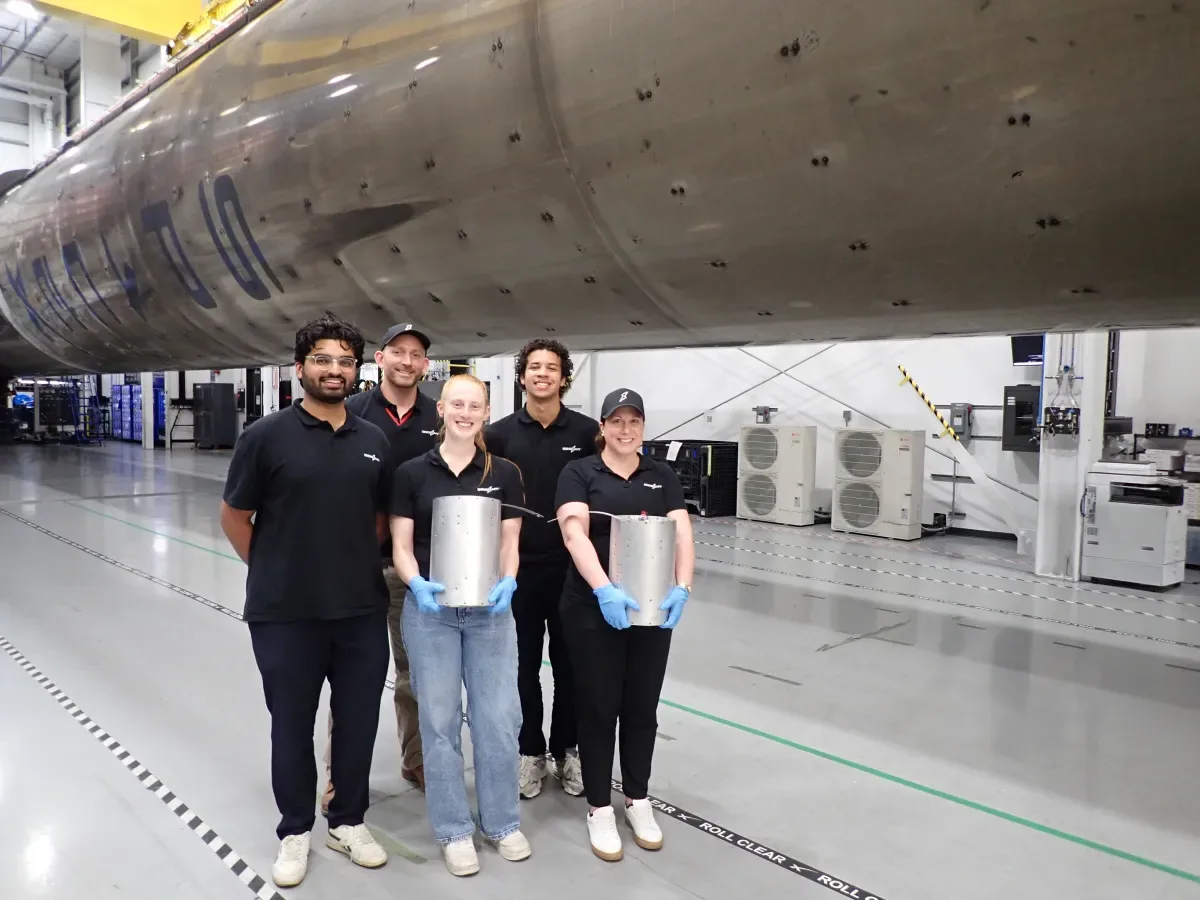
Startup Besxar is set to launch an orbital semiconductor factory, utilizing the repeated flights of SpaceX's Falcon 9 rocket boosters. The company, founded by former OpenAI staffer Ashley Pilipiszyn, aims to manufacture crucial precursors for advanced semiconductors by taking advantage of the vacuum environment in space. This ambitious project seeks to bypass the complex and expensive infrastructure required for clean rooms on Earth, which are essential to prevent microscopic dust contamination during chip production.
Pilipiszyn explained the company's rationale, stating, "We're at a time where it's actually more cost-effective to go where the physics already works. Don't do it on Earth where you're fighting physics." Besxar has successfully raised nearly $14 million, including a $9 million seed round led by Dauntless Ventures and Overture VC, to fund its endeavors. The core idea is to leverage the inherent advantages of space, particularly its vacuum, to create purer materials for chip fabrication.
Developing Orbital Manufacturing Capabilities
The company's initial tests involved two "fabships"—compact canisters designed for in-orbit material testing. These units were included on a Starlink mission in July 2026, successfully proving their ability to withstand launch conditions, protect wafer samples from contamination, and expose them to the vacuum of space. Despite a minor malfunction in one canister's flight data system, which Besxar is investigating, the results were highly encouraging. "The flown samples were the cleanest and had the least amount of particulate matter compared to … non-flown terrestrial wafers, which is fantastic for us as we scale up," Pilipiszyn told TechCrunch.
Besxar's strategy involves a phased approach over the next two years. Future iterations plan to incorporate larger fabrication units. The ultimate goal is to deploy these advanced fabs on larger vehicles like SpaceX's forthcoming Starship. Pilipiszyn initially approached SpaceX three years ago to discuss potential collaborations, including flights on Starship. The current deal for payload space on Falcon 9 boosters allows the company to de-risk its technology while awaiting the full operational capability of Starship.
The manufacturing process will advance incrementally. Initial steps involve heating wafers, followed by depositing single materials, and then progressing to multi-material deposition. Once the company can produce qualification samples, Besxar—whose name is inspired by the fictional "beskar" metal from Star Wars—intends to supply major chipmakers. The wafers produced are intended for applications such as advanced chips used in data centers, robotics, and electric vehicles, areas where precise electrical power regulation is critical.
Several companies are exploring the use of space for high-quality semiconductor production, including United Semiconductors and Space Forge. However, a significant hurdle for all these ventures is the limited capacity to return substantial volumes of manufactured product from orbit. Pilipiszyn anticipates scaling production to hundreds and then thousands of wafers per fab. This expansion, however, is contingent on the availability of affordable and frequent launch capabilities. The successful deployment of SpaceX's Starship or the emergence of similar next-generation rockets from competitors like Rocket Lab and Stoke Space are key factors.
"We believe that there is a solid transport layer now, so we can focus on the application layer," Pilipiszyn stated. "We can just focus on our core manufacturing and getting our products back down to earth to market as quickly as possible." This strategic focus on the application layer, enabled by advancements in launch services, positions Besxar to capitalize on the unique manufacturing environment offered by space.