
Buck Moon Sets Stage for August Total Solar Eclipse
The full Buck Moon illuminated skies on July 29, marking the eighth full moon of 2026. This celestial event served as a prelude to a total solar eclipse scheduled for August 12.

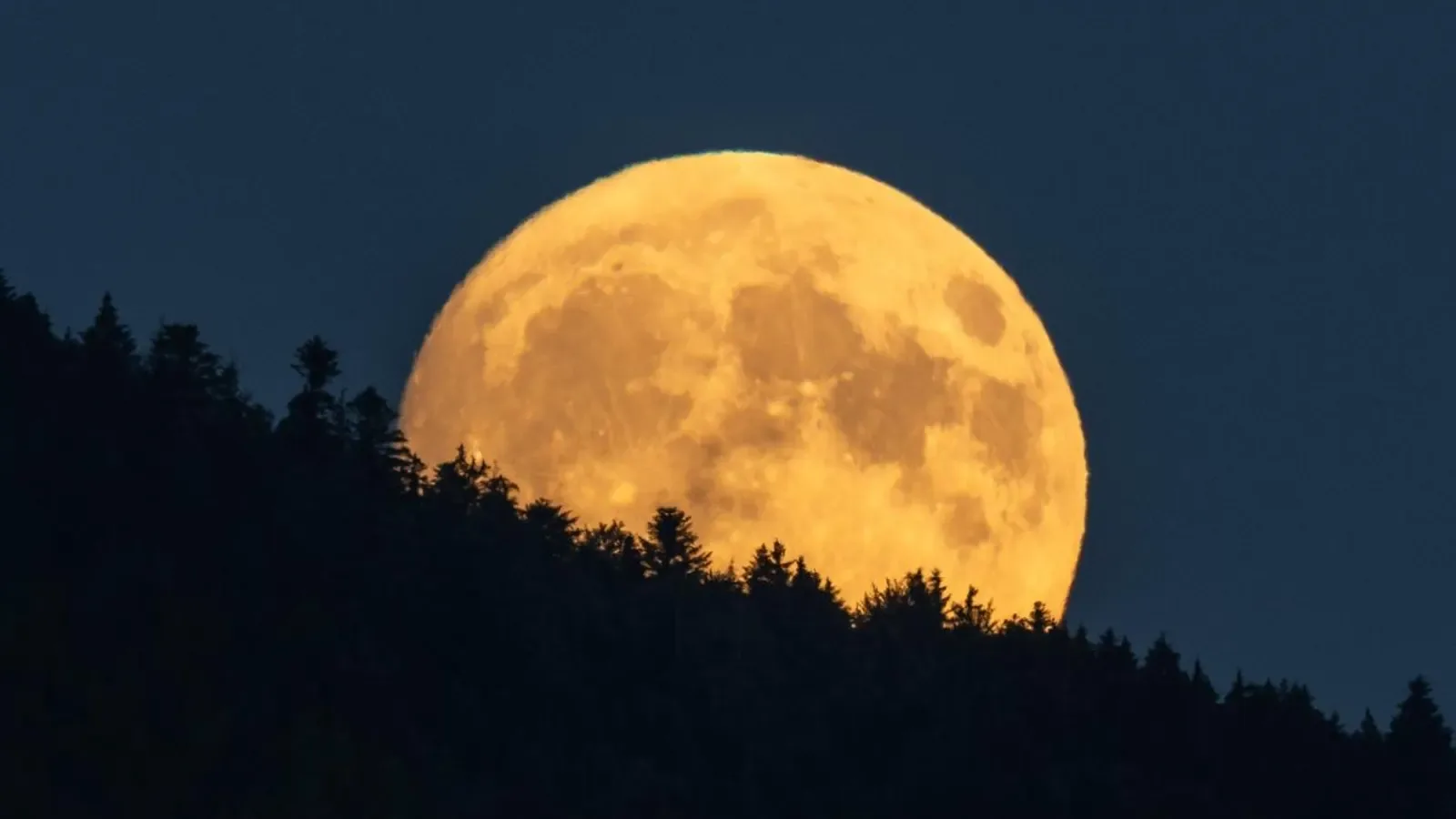
The full Buck Moon, the eighth full moon of 2026, graced the evening sky on Wednesday, July 29. This midsummer celestial event provided a classic warm-weather spectacle as twilight deepened across the globe. This lunar phase also sets the stage for a dramatic astronomical display just two weeks later: a total solar eclipse on August 12, visible across parts of Greenland, Iceland, and Spain.
Traditionally, the July full moon earns its moniker, the Buck Moon, from the timing of male deer, or bucks, regrowing their antlers. Other historical names for this moon include the Thunder Moon and Hay Moon, reflecting seasonal agricultural activities and weather patterns.
As a midsummer moon in the Northern Hemisphere, the Buck Moon followed a lower arc across the sky. This is because full moons appear opposite the sun, which remains high in the sky during late July, causing the moon to rise lower than its winter counterparts. Many striking photographs captured during the event leveraged the phenomenon known as the moon illusion. This optical effect makes the moon appear larger when it is near the horizon, particularly at moonrise, when foreground elements like cityscapes or natural landmarks provide a subconscious sense of scale that exaggerates its apparent size.
Celestial Events Abound in August
While the Buck Moon officially reached its fullest phase during daylight hours in North America, it presented a fully illuminated appearance on both the preceding and following nights. Skywatchers and photographers often prioritize moonrise timing—when the moon ascends shortly after sunset—over the precise moment of the full phase. The moon's appearance near the horizon, often casting an orange or red hue, is due to light scattering through Earth's atmosphere. Shorter blue wavelengths are absorbed by atmospheric molecules, allowing longer red and orange wavelengths to pass through, reaching our eyes.
The July Buck Moon serves as a calm prelude to a significantly more active astronomical month. August 2026 promises a total solar eclipse on Aug. 12, with a path of totality stretching across eastern Greenland, western Iceland, and northern Spain. For those in these regions, clear skies will offer up to 2 minutes and 18 seconds of the sun's corona becoming visible. Following this, the annual Perseid meteor shower will reach its peak, potentially offering up to 50 shooting stars per hour in optimal viewing conditions.
A partial solar eclipse will be observable across Western Europe and North America. The northeastern U.S. and eastern Canada will experience significant partial eclipses. For instance, Boston is expected to see about a 16% obscured sun, while New York will witness approximately 10%. Proper eye protection, such as specialized solar eclipse glasses, will be crucial for safely viewing any phase of the partial eclipse. Following these events, on August 27, a very deep partial lunar eclipse will occur, with 96% of the full Sturgeon Moon entering Earth's shadow, lending it a significant reddish tint. This event, visible across North America, will be a near-total lunar eclipse, offering a dramatic spectacle close to a blood moon.