
Google Maps User Finds 390-Million-Year-Old Meteor Crater in Quebec
A Quebec camper's keen observation using Google Maps led to the identification of a previously unknown ancient meteor crater. Geologists confirmed the 15-mile-wide impact site, dating back 390 million years.

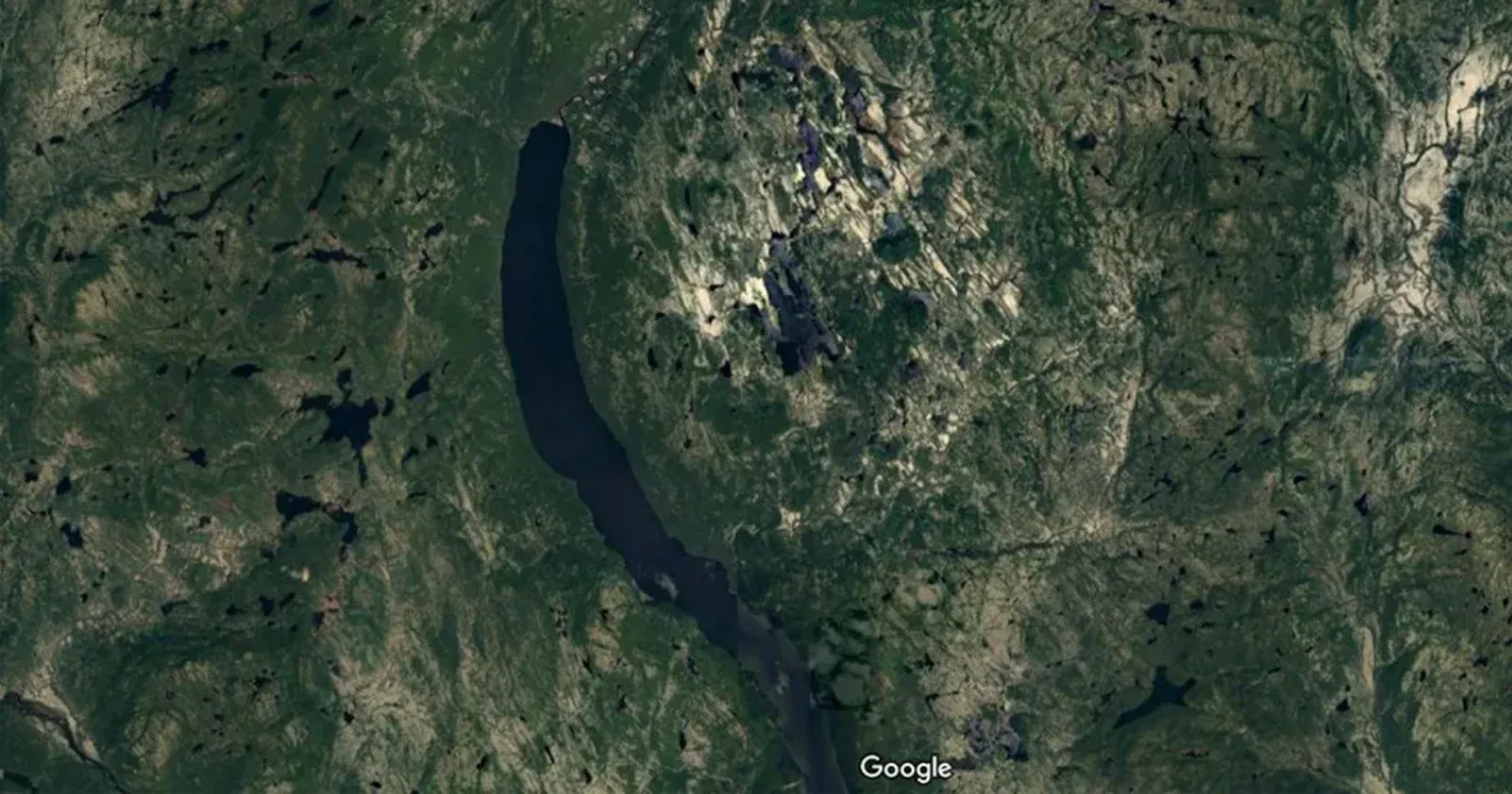
A Quebec camper planning a remote trip has stumbled upon a massive, ancient meteor crater in the Côte-Nord region, identified through meticulous examination of Google Maps imagery. Joël Lapointe’s discovery, initially met with professional skepticism, has been confirmed by a team of geologists, revealing a significant geological feature previously unknown to science. This finding underscores the potential for citizen science to contribute to major scientific discoveries.
The discovery began when Lapointe, an amateur astronomer, noticed a circular anomaly on satellite maps while planning a camping expedition. The distinctive shape strongly suggested a geological impact crater. "I get lots of messages from the public thinking they have found a crater and 99/100 turn out not to be the case," said Gordon Osinski, a planetary geology professor at Western University. "This is one of those rare examples that shows this is possible." Following Lapointe’s outreach, Osinski and his colleagues embarked on a challenging expedition in 2024 to investigate the remote site.
The expedition proved to be one of the most arduous Osinski has ever undertaken. "This was one of the most arduous expeditions I’ve ever done — and I’ve done 25 expeditions to the Arctic and six continents," Osinski recounted. "The terrain was incredibly rough and rugged, plus lots of bugs." The difficulty was compounded by the remote location; a seaplane was forced to land over 150 feet offshore, necessitating a challenging wade through water with all their scientific equipment.
Geological Evidence Confirms Impact Origin
Upon reaching the suspected site, the geologists focused on identifying definitive proof of a meteor impact. Their search centered on finding shatter cones, distinctive rock formations created by the immense shock waves generated by high-velocity impacts, unique to meteorite strikes and nuclear detonations. The team successfully observed clear examples of these shatter cones on their second day at the location. Further bolstering their findings, they also unearthed "spectacular examples" of impact melt rock. "You can melt literally tens of cubic kilometres of the Earth’s crust when you get a big enough asteroid hitting," Osinski explained.
The team has since dated the crater to approximately 390 million years ago, placing its formation during the Devonian period. This makes it one of the most ancient known impact structures. With a diameter of about 15 miles, the Quebec crater ranks among the larger meteor craters globally. Canada is known for its rich geological history of impacts, boasting a confirmed 31 such sites, while the United States has an estimated 50.
The discovery highlights the value of persistent observation and the integration of digital tools in scientific exploration. Lapointe expressed his satisfaction with the outcome, stating, "It’s not every day that an ordinary citizen finds a 390-million-year-old crater." He encourages others to trust their instincts: "I encourage everyone to not ignore intuition or an observation, even if it isn’t part of your field of expertise." Such discoveries are rare, emphasizing the importance of public engagement in science.