
Hillsborough Meteorite Reveals Clues to Salty Brines and Organic Chemistry
A rare meteorite that landed in a New Jersey home in 2024 has revealed evidence of concentrated salty brines and complex organic chemistry within its parent asteroid. The findings suggest primitive asteroids may have been more chemically active than previously thought.

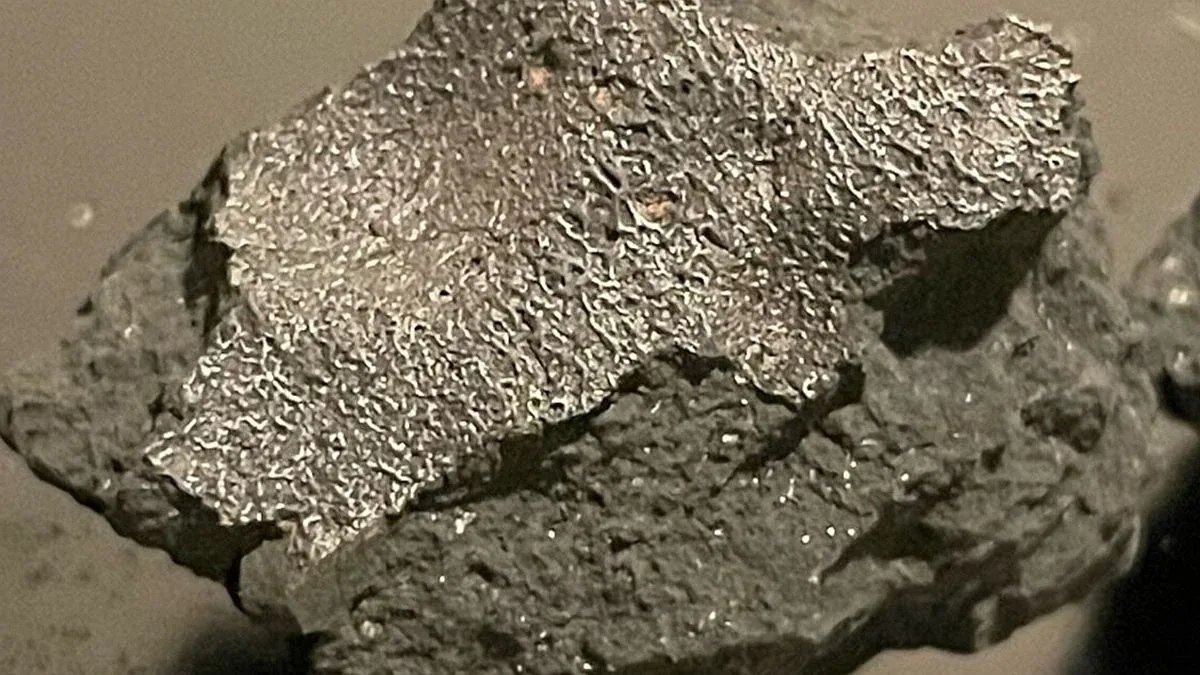
Scientists have discovered evidence that concentrated salty brines once flowed through the parent asteroid of the famed Hillsborough meteorite, driving complex chemistry and leaving behind a rich collection of organic compounds. The rare meteorite, which dramatically landed in a New Jersey home in July 2024, is providing unprecedented insights into the conditions within primitive asteroids in the early solar system. This discovery, published in the journal Science Advances, suggests that such salty water pockets within these celestial bodies may have been far more chemically dynamic than previously understood, potentially contributing essential ingredients for life to early Earth.
The Hillsborough meteorite is unique because it was recovered almost immediately after its atmospheric entry, minimizing contamination from Earth's environment. "A forensic study of the fragments revealed that they contained preserved bits from near the surface of a small primitive asteroid where it experienced concentrated salty fluids – a process not previously known from this type of proto-planet world," said meteor astronomer Peter Jenniskens of the SETI Institute and NASA's Ames Research Center. Unlike most meteorites, which can be altered by prolonged exposure to terrestrial conditions after falling, the Hillsborough specimen offers a remarkably pristine record of its extraterrestrial origins.
The dramatic event of the meteorite's fall was captured by numerous cameras, including doorbell systems and specialized meteor-observing networks, as it exploded over the New York metropolitan area before a fragment punched through a New Jersey roof. The homeowner’s quick actions in collecting the fragments using gloves and aluminum foil, and storing them in glass jars, were crucial. "Thanks to the homeowner's quick reaction, these are the most pristine CM1/2 meteorites we know of," Jenniskens stated. Trajectory calculations indicated the meteorite originated from the asteroid belt between Mars and Jupiter, belonging to the same class of carbon-rich asteroids that produced CM meteorites.
Early Solar System Chemistry Unveiled
The research team's analysis of the Hillsborough meteorite revealed preserved salt-rich inclusions and minerals that suggest aqueous alteration – changes driven by liquid water. These findings strongly indicate the parent asteroid once contained brines, fluids even saltier than Earth's oceans. These brines appear to have played a vital role in producing a diverse array of organic compounds, including amino acids, which are fundamental building blocks for life. "What the Hillsborough meteorite gives us is the environment where that amino acid formation takes place," Jenniskens explained. "We already knew that such amino acids could form within asteroids and be preserved in meteorites when they fall to Earth." This discovery provides the clearest evidence to date that primitive asteroids hosted pockets of salty water conducive to complex chemical reactions.
The presence of these reactive brines on early asteroids strengthens theories that meteorites like this could have delivered crucial ingredients for the emergence of life on the young Earth. While the researchers acknowledge the possibility that detected compounds might be remnants from earlier collisions, the findings paint a picture of a surprisingly active early solar system. Even small asteroids appear to have been dynamic environments where water, minerals, and organic chemistry interacted long before life arose on our planet. This research contributes to a growing understanding of the complex processes that shaped our solar system and potentially seeded Earth with the materials necessary for life.