
Perseid Meteor Shower Peaks Aug. 12-13 With Dark Skies
Stargazers can anticipate the annual Perseid meteor shower, peaking Aug. 12-13, under ideal new moon conditions. Other active showers include the Southern Delta Aquariids and Alpha Capricornids, though with less favorable viewing.

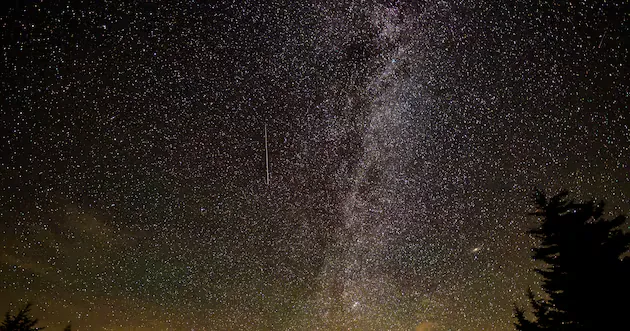
Stargazers are in for a treat as the annual Perseid meteor shower, one of the most active displays of the year, reaches its peak between August 12 and 13. This year's event promises exceptional viewing conditions, with the peak coinciding with a new moon, ensuring dark skies ideal for spotting the celestial fireworks. The shower officially began its visibility on July 17 and will continue through August 24.
The Perseids originate from debris shed by Comet 109P/Swift-Tuttle as it orbits the inner solar system, according to the American Meteor Society. These particles, traveling at approximately 133,200 miles per hour, create brilliant streaks of light as they burn up in Earth's atmosphere. Most of these fragments are tiny, often no larger than a grain of sand, and rarely reach the ground. Those that do are classified as meteorites.
The Perseid shower is renowned for its prolific nature, typically offering between 50 to 100 meteors per hour at its zenith. Observers in the Northern Hemisphere are advised to watch after midnight, with the pre-dawn hours offering the best opportunities. The swift and bright meteors frequently leave behind luminous trails, adding to the spectacle.
Other Summer Celestial Events
While the Perseids dominate the August sky, two other meteor showers are currently active: the Southern Delta Aquariids and the Alpha Capricornids. The Southern Delta Aquariids became visible on July 12 and will continue until August 23, with a peak on the night of July 30-31. However, viewing for this shower will be significantly hampered by a full moon occurring just two days prior to its peak, washing out the fainter meteors.
The Alpha Capricornids also began their activity on July 3 and will be visible until August 12, sharing their peak with the Aquariids. Like the Aquariids, their viewing will be challenged by the brighter night skies during their active period. This shower is visible globally but is less intense, usually producing no more than five meteors per hour.
Beyond their visual appeal, NASA's Meteoroid Environment Office closely monitors meteoroid activity year-round. Even minuscule particles pose a potential threat to space vehicles and sensitive hardware. The agency's Marshall Space Flight Center in Huntsville, Alabama, leads the effort to understand the frequency, impact locations, and risks associated with these cosmic debris streams.