
Rare Venus-Moon Conjunction Lights Up Western Sky Tonight
Stargazers in the U.S. can witness a rare celestial alignment of the Moon and Venus on Friday night. This conjunction, visible to the naked eye shortly after sunset, offers a unique viewing opportunity.

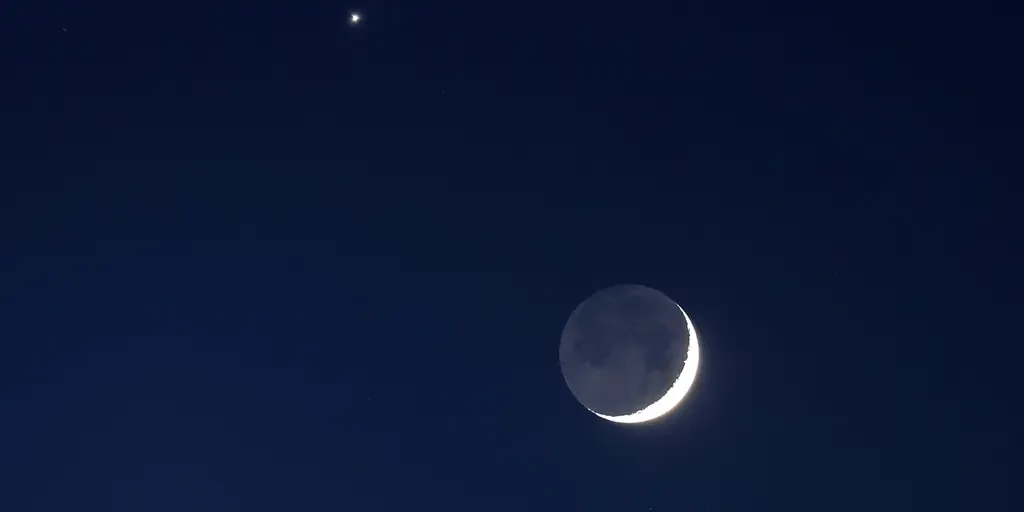
Skywatchers across the United States are in for a treat on Friday night as the Moon and the planet Venus will appear exceptionally close in the sky. This celestial event, known as a conjunction, will be visible to the naked eye shortly after sunset, offering a dazzling spectacle for anyone looking towards the western horizon.
The conjunction occurs when two celestial bodies, from Earth's vantage point, seem to align. While the Moon and Venus will appear mere inches apart in the sky, they are in reality separated by millions of miles. This particular pairing is expected to become visible about an hour after the sun dips below the horizon and will remain in view for approximately two hours before both celestial bodies descend below the horizon.
For optimal viewing, experts advise finding a location with a clear view of the western sky, free from obstructions and light pollution. While binoculars can enhance the view, the event is designed to be observable with the unaided eye. Cities like Miami, Denver, and Los Angeles are predicted to have clearer skies, potentially offering the best viewing conditions. Conversely, locations such as New York and Chicago might face challenges due to forecasted cloud cover.
Context: Why Planetary Alignments Matter
Celestial events like the Venus conjunction capture public imagination and serve as important reminders of our place in the cosmos. These alignments offer accessible opportunities for people to connect with astronomy without requiring specialized equipment. Such events often spark interest in space exploration and the ongoing scientific study of planets like Venus. NASA and other space agencies frequently use public interest in these events to highlight their own missions and discoveries, from exoplanet hunting to detailed studies of our solar system's neighbors.
A similar conjunction involving the Moon and Venus occurred on May 18th, reminding observers of the dynamic and ever-changing celestial ballet. Understanding these events helps foster a greater appreciation for the complex orbital mechanics governing our solar system. The regularity of such occurrences, though variable in their visual proximity, underscores the predictable yet awe-inspiring nature of astronomical phenomena.
This upcoming event provides a perfect opportunity for casual observers and amateur astronomers alike to engage with the night sky. The visibility of Venus, often called the "morning star" or "evening star" due to its brightness, makes it a prominent feature even when paired with the dimmer Moon. The specific timing and clarity of the view will vary slightly depending on the observer's exact location within the U.S.