
New Jersey Meteorite Found With Extraterrestrial Amino Acids
A rare meteorite that landed in a New Jersey home in July 2024 contained a complex array of 'extraterrestrial' amino acids, offering new insights into early solar system chemistry.

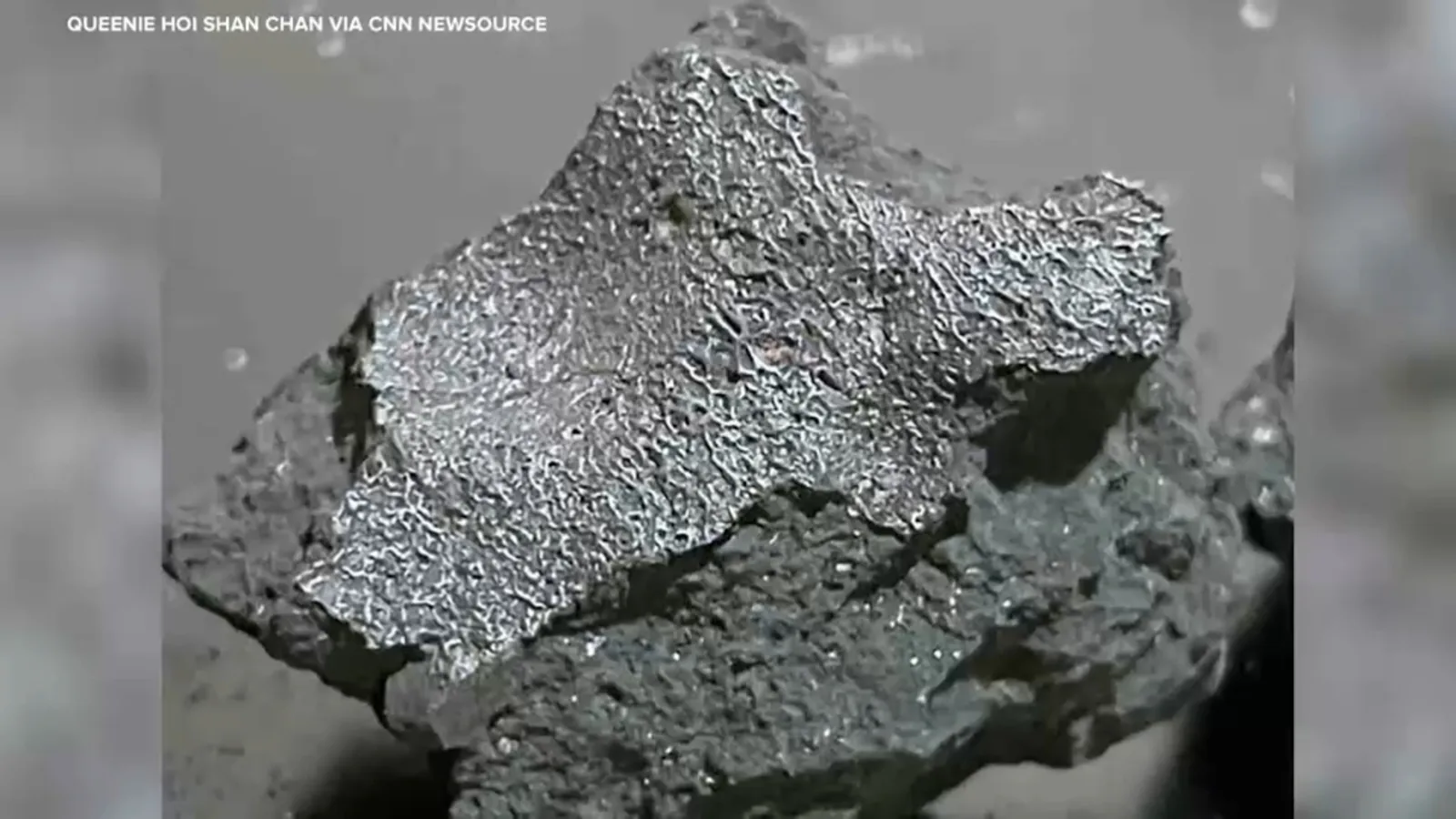
A rare meteorite that crashed through the roof of a New Jersey home two years ago has revealed a significant scientific discovery: a complex suite of amino acids, the fundamental building blocks of proteins, that are extraterrestrial in origin. The discovery, detailed in a new study, offers a unique window into the early solar system and the potential delivery of organic matter to early Earth. The event unfolded on July 16, 2024, when a fireball streaked across the sky, visible to observers across New York, New Jersey, Connecticut, Rhode Island, and Pennsylvania. The object, estimated to be the size of a heavy airline bag, caused a sonic boom felt in New York City and surrounding New Jersey areas as it traveled at approximately 32,000 miles per hour. It broke apart about 22 miles above the ground, with fragments falling over Staten Island and into New Jersey. Doppler weather radar from Newark Liberty International Airport detected the falling debris. Only one fragment, weighing more than two pounds, was recovered after it punched through the ceiling of a master bedroom in a Hillsborough, New Jersey, home. The homeowners, who wish to remain anonymous, promptly collected the black fragments and dust using disposable gloves, aluminum foil, and glass jars, preventing significant contamination before rain could fall. This quick thinking was crucial for preserving the fragile, porous meteorite.
A Window to the Early Solar System
Scientists analyzing the recovered fragment, now classified as a CM-type carbonaceous chondrite, have determined it to be a rare, primitive type of meteorite. This classification provides invaluable insights into the conditions of the early solar system. "We detected a complex suite of amino acids, the fundamental building blocks of proteins, in water extracts of the Hillsborough meteorite," said Dr. Danny Glavin, a senior scientist at NASA's Goddard Space Flight Center and coauthor of the study published in Science Advances. "Most of the amino acids detected in Hillsborough are rare or nonexistent in life on Earth, so they are truly extraterrestrial in origin." The meteorite is a remnant of rocky bodies that orbited in the early solar system, containing hydrated minerals and organic compounds. Researchers classified the Hillsborough specimen as an intermediate between CM1 and CM2 types, differing in the degree of water alteration. This particular meteorite is only the second CM type witnessed falling to Earth, but it is the first recovered sample that scientists could study in such a pristine state. Previous similar meteorites, like one that fell in Indonesia in 2020, landed in mud, hindering detailed analysis. Peter Jenniskens, a senior research scientist at the SETI Institute and lead author of the study, noted that this sample preserved subsurface material from its parent asteroid, offering an unprecedented view of its physical properties. The parent asteroid is believed to have originated in the inner asteroid belt, with collisions in its history contributing to its fragmentation and eventual trajectory toward Earth.
The analysis revealed high abundances of sodium, suggesting the presence of icy brines within the original asteroid. As water evaporated from the space rock, it left behind concentrated salt minerals. These minerals, the researchers noted, could be crucial for creating molecules essential for life as we know it. The team also identified organic carbon and a diverse array of complex amino acids, even more varied than those found in samples from asteroids Bennu and Ryugu, collected by NASA's OSIRIS-REx and Japan's Hayabusa2 missions, respectively. The collected fragments of the Hillsborough meteorite are currently being curated at the American Museum of Natural History in New York City.
Primitive carbonaceous chondrites like this one are considered key candidates for delivering organic matter to early Earth. "The Hillsborough meteorite provides more evidence that meteorite delivery of organic matter to the early Earth could have been an important source of organic molecules necessary for the origin of life," Glavin stated. The presence of brine is a strong indicator of how water moved and interacted with organics on the asteroid, according to Peter Brown, a professor at Western University, who was not involved in the study. "Everything we can learn about how water changes this kind of primitive meteorite is super important to sort of astrobiology and early biology on Earth," Brown added. Water may have been preserved beneath the surface of the parent asteroid for extended periods. Meteorites that have not undergone significant heating, like the Hillsborough sample, preserve the chemistry of the early solar system, offering a snapshot of how water interacted with minerals and organics. The homeowners, guided by Mike Hankey of the American Meteor Society, felt a responsibility to preserve the meteorite for scientific study. "It's still surreal to think that this meteorite traveled through space for millions of years before ending its journey in our home," they shared via email. "The entire experience has been incredible, and we're honored to have played a small part in advancing scientific understanding through its study." Reporting doorbell or dashcam videos of fireball sightings remains vital for researchers tracking and collecting meteorites, ultimately enhancing our understanding of solar system evolution.