
Curiosity Rover Finds Vast Honeycomb Patterns on Mars
NASA's Curiosity rover has discovered the largest-ever field of honeycomb-shaped polygonal fractures on Mars. Scientists believe these formations, found in Valle Grande, may offer clues about the planet's ancient wet and dry cycles billions of years ago.

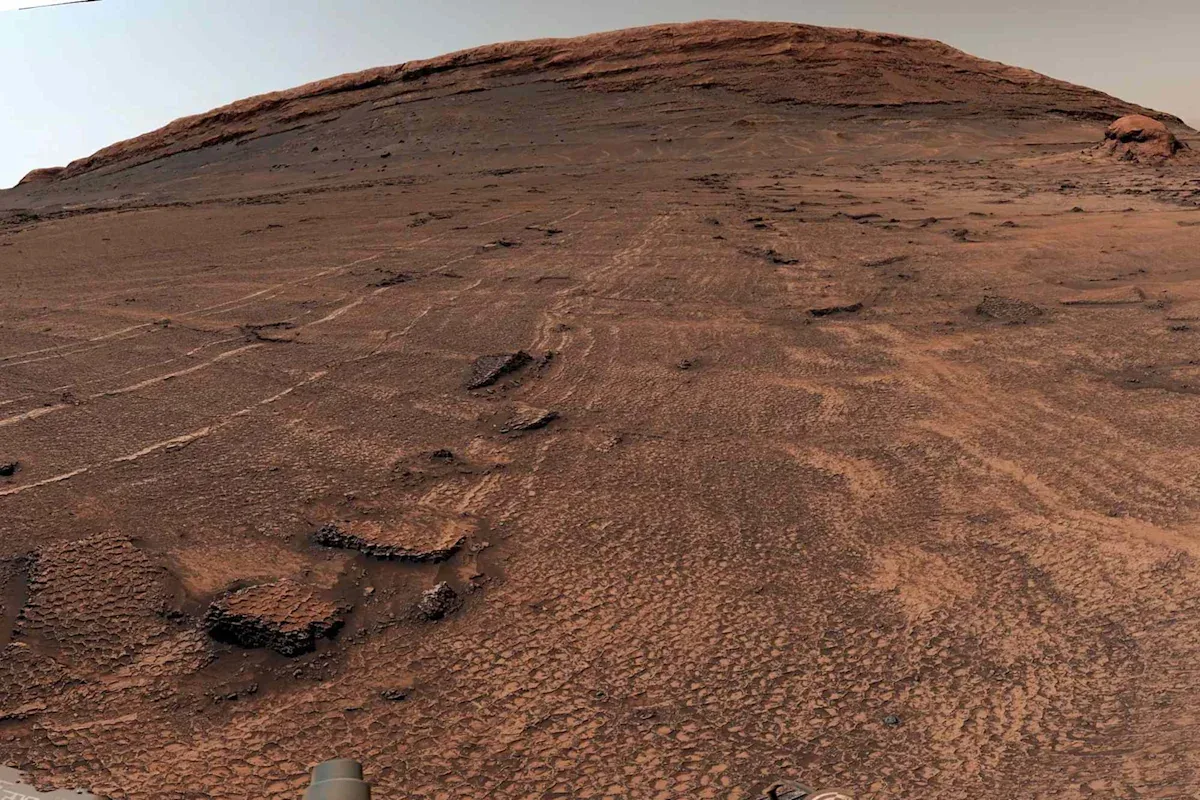
NASA's Curiosity rover has made a striking discovery in the Martian landscape, uncovering the largest field of honeycomb-shaped patterns ever observed on the planet's surface. The extensive network of polygonal fractures was identified as the rover traversed the region known as Valle Grande. While the rover has encountered smaller instances of these formations previously, the current find represents an unprecedented scale, stretching across the vista as far as the instruments could perceive.
These geological features, typically ranging from 1.5 to 3 inches across, are believed by scientists to have formed billions of years ago. The prevailing hypothesis suggests repeated cycles of wetting and drying of the Martian ground, which could have led to the characteristic cracking patterns. This latest observation adds another layer to our understanding of Mars's dynamic past.
Mars's Ancient Wet Past
The discovery has generated significant excitement among planetary scientists. Ashwin Vasavada, the project scientist for the Curiosity mission at NASA's Jet Propulsion Laboratory in Southern California, described the awe-inspiring sight: "We've seen a lot of fascinating landscapes through Curiosity's eyes, but this sea of polygons took our breath away." He added, "We measured their shapes and chemistry carefully and are hopeful there are clues in the data as to how these features formed."
The Curiosity rover has been a persistent explorer on Mars since its landing in 2012. Its mission has been instrumental in revealing evidence of Mars's ancient habitability. Beyond the recent honeycomb patterns, the rover has previously detected sulfur crystals, meteorites, and other unusual rock formations. Crucially, Curiosity has provided substantial evidence suggesting that Mars once possessed liquid water, the essential chemical ingredients, and the necessary conditions to support microbial life.
Further analysis of the Martian soil by NASA's instruments has uncovered complex organic molecules, including precursors to RNA and DNA. While the origin of these molecules—whether biological or geological—remains undetermined, their presence strongly indicates that ancient Mars had the foundational chemistry required for life to emerge and thrive. The discovery of these organic compounds, alongside evidence of water, continues to fuel the scientific quest to understand Mars's potential for past life.