
Deep Partial Lunar Eclipse Approaches: Aug. 27-28 Viewing Guide
A deep partial lunar eclipse, where 96.2% of the moon enters Earth's shadow, is set for Aug. 27-28. Millions across the Americas, Europe, and Africa can witness the 'almost blood moon' without special equipment.

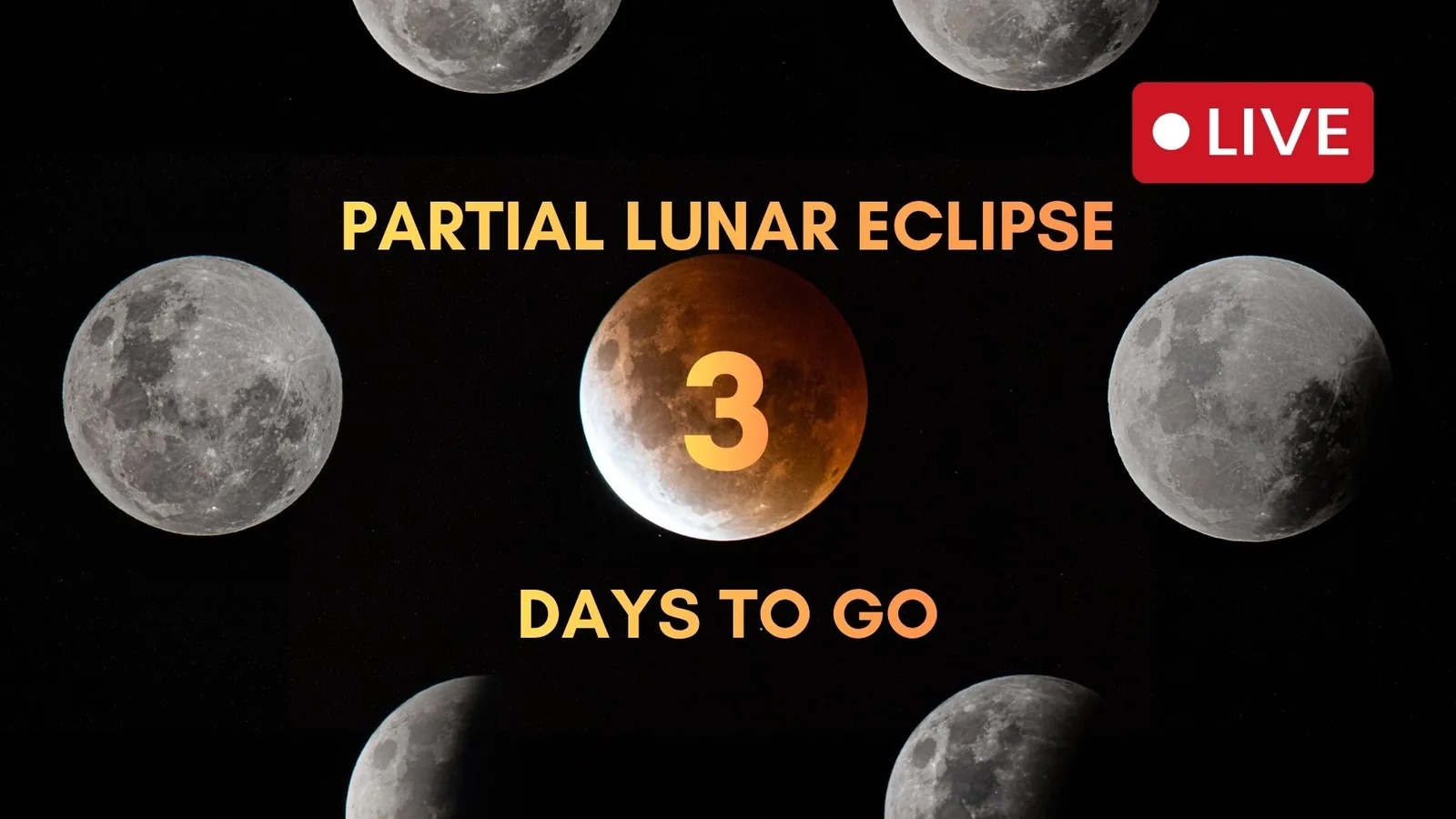
Skywatchers in North and South America, Europe, and Africa are gearing up for a spectacular celestial event: a deep partial lunar eclipse occurring on the night of August 27 and into the early morning hours of August 28, 2026. This eclipse promises to be a rare and impressive display, with an estimated 96.2% of the moon's surface expected to be engulfed by Earth's dark central shadow, known as the umbra. This level of coverage means the moon will take on a distinct reddish-orange hue, earning it the nickname 'almost blood moon,' though it will not be fully obscured like during a total lunar eclipse.
The event is considered significant because it is the deepest partial lunar eclipse visible globally until December 31, 2028. For those in the Americas, the entire eclipse will be observable, weather permitting. Viewers in Europe and Africa will see the eclipse in its later stages as the moon begins to set before dawn on August 28.
Understanding the Lunar Eclipse Phenomenon
Unlike solar eclipses, lunar eclipses are accessible to a vast audience. Anyone located on the night side of Earth when the eclipse occurs can witness the event without the need for specialized viewing equipment. The spectacle involves Earth's shadow gradually creeping across the face of the moon, a vivid demonstration of orbital mechanics. For those seeking a more detailed view of the moon's craters and maria, binoculars or a telescope can enhance the experience, offering a closer look at the lunar features as they pass into shadow.
The maximum phase of the eclipse, when the moon is most deeply immersed in Earth's umbra, will offer the most dramatic visual. The thin sliver of the moon that remains illuminated by direct sunlight will contrast sharply with the deep, ruddy colors of the shadowed portion. Experts like Daisy Dobrijevic from Time and Date highlighted the eclipse's depth, noting that the 96.2% coverage is nearly total. She also emphasized that this level of spectacle will not be seen again for over two years.
Planning for the eclipse involves checking local weather forecasts. Clouds can obscure the view, but clear skies will provide an unobstructed panorama of this astronomical phenomenon. The timing for viewing will vary by region. In the US, the eclipse will largely occur on the evening of August 27, while Western European observers will need to rise early on August 28 to catch the peak. The lunar eclipse provides a perfect opportunity for amateur astronomers and casual observers alike to connect with the cosmos.
This celestial alignment serves as a reminder of the dynamic relationship between Earth, the Moon, and the Sun. The Earth's shadow, cast by sunlight, creates the visual effect of the eclipse, a predictable yet always awe-inspiring event. With advance planning and favorable weather, the August 27-28 partial lunar eclipse is set to be a highlight of the 2026 skywatching calendar, offering a memorable experience for millions.