
Deep Partial Lunar Eclipse Peaks Aug. 27-28
Skywatchers across North and South America, Europe, and Africa can witness a deep partial lunar eclipse this week. The event reaches its peak on the night of Aug. 27 for North America and early Aug. 28 for Europe.

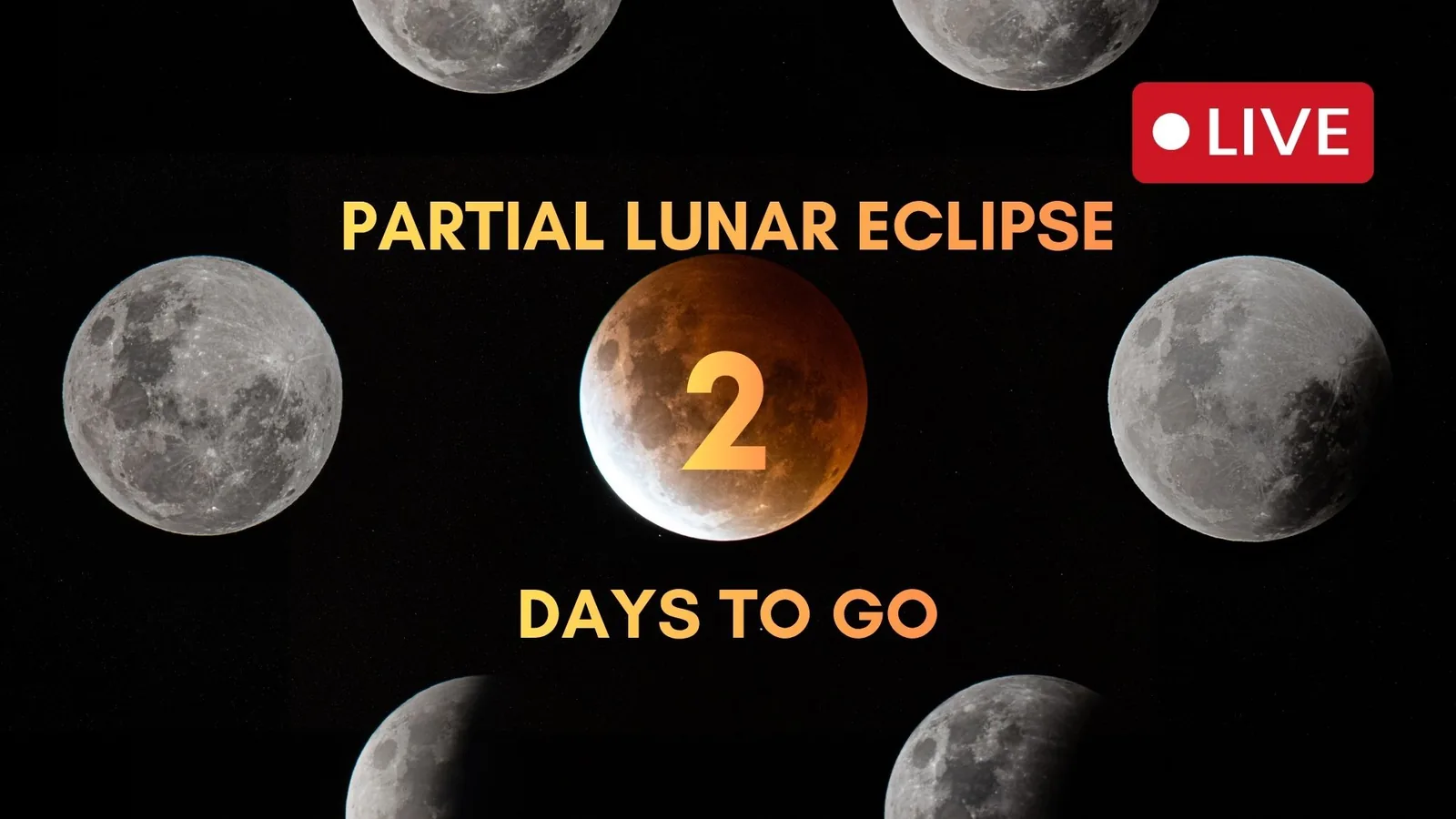
A rare and deep partial lunar eclipse will illuminate the night sky for observers across multiple continents on August 27 and 28, 2026. The celestial event promises a spectacular view as Earth's shadow gradually obscures a significant portion of the moon. For those in North and South America, the eclipse will begin on the evening of August 27, while viewers in Europe and Africa will witness the peak stages in the early hours of August 28. The eclipse will be visible, weather permitting, from regions where the moon is above the horizon during the event.
This particular lunar eclipse is notable for its intensity. At its maximum phase, an estimated 96.2% of the lunar surface will be enveloped by Earth's umbra, the darkest part of its shadow. This will create the appearance of an "almost blood moon," with only a sliver of the moon remaining brightly lit, while the rest takes on a distinct reddish-orange hue. Experts note that such a deep partial eclipse is a rare occurrence, with the next comparable event not expected until December 31, 2028.
The eclipse begins when the moon enters Earth's penumbra, its faint outer shadow, at 9:23 p.m. EDT on August 27 (01:23 GMT on August 28). While this stage may only cause a subtle dimming, the subsequent passage into the umbra will produce a dramatic visual transformation. Skywatchers do not require any special equipment to observe the phenomenon; simply looking up with the naked eye will offer a clear view. For those desiring a closer look at the craters and lunar features as they darken, binoculars or a telescope are recommended.
Viewing Opportunities and What to Expect
Millions of people worldwide will have the opportunity to witness at least a portion of this astronomical display. Observers in the Americas are particularly well-positioned to see the entire event unfold. In Europe and Africa, the moon will be setting as the eclipse reaches its maximum, meaning viewers will need to tune in early on August 28 to catch the most dramatic phases. The visibility across western Asia will also depend on the moon's position above the horizon during the peak of the eclipse.
Astronomers emphasize that while this is a partial eclipse, its depth makes it a significant event. The partial lunar eclipse has five distinct phases, beginning with the penumbral ingress and progressing through increasing obscuration by the umbral shadow. The event concludes as the moon fully exits the umbral shadow and then the penumbral shadow, returning to its full illumination. The visual spectacle of Earth's curved silhouette creeping across the lunar disk is a powerful reminder of the dynamic celestial mechanics governing our solar system.
The upcoming lunar eclipse offers a prime opportunity for both casual observers and photography enthusiasts. Unlike solar eclipses, lunar eclipses are safe to view directly without special eye protection. Photographers will find it easier to capture than a solar event, though achieving a perfectly exposed shot requires attention to changing light conditions and camera settings. Resources are available offering detailed tips on equipment selection, exposure, focus, and creative composition for capturing the moon's transformation.