
Scientists Discover 'Phoenix Planet' Formed From Stellar Remains
Astronomers have identified a unique planet candidate, dubbed the 'Phoenix Planet,' which appears to have formed from the debris of a dead star. This discovery offers new insights into planetary formation in extreme cosmic environments.

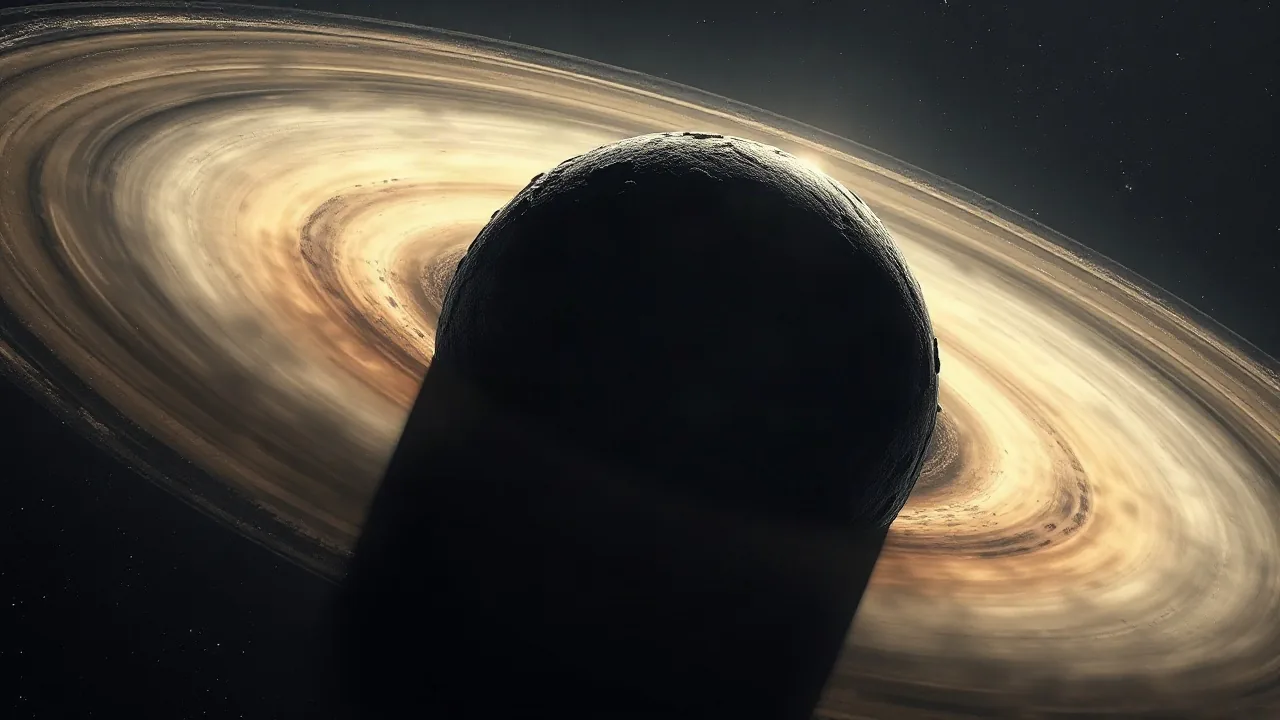
Astronomers have detected a remarkable exoplanet candidate that appears to have formed from the remnants of a deceased star, earning it the moniker "Phoenix Planet." This celestial body is accreting material onto a white dwarf, the dense core left behind after a star like our Sun exhausts its nuclear fuel. The finding, detailed in the journal Nature, provides compelling evidence for second-generation planet formation, where new planets can arise from the ashes of previous stellar generations.
The planet candidate orbits a white dwarf star approximately 3,000 light-years away in the constellation Capricornus. White dwarfs are incredibly dense objects, packing a solar mass into a volume roughly the size of Earth. As they cool over billions of years, they can still exert gravitational forces, potentially capturing or forming circum-stellar disks of dust and gas from material shed by the dying star or from asteroid collisions within its system. In this case, the observed accretion onto the white dwarf suggests the presence of a planetary body or substantial debris disk.
New Clues to Planetary Formation
This discovery is particularly significant because it offers a rare glimpse into the processes that can lead to the formation of planets in environments previously thought to be inhospitable. Traditional models of planet formation focus on protoplanetary disks around young stars, but the "Phoenix Planet" suggests that even the remnants of stellar death can serve as cosmic nurseries. Scientists are analyzing the composition of the material being accreted by the white dwarf to understand the planet's origins. Early observations indicate the presence of elements typically found in rocky planets, lending further support to the theory of its formation from stellar debris.
The research team utilized data from NASA's Hubble Space Telescope, which played a crucial role in observing the faint light from the white dwarf and its surrounding accretion disk. The telescope's advanced capabilities allowed scientists to measure the spectral signature of the infalling material, revealing clues about its composition. "This is a truly groundbreaking discovery that challenges our understanding of planetary systems," stated Dr. Ilaria Bonsi, lead author of the study from the University of Warwick. "We are seeing a planet potentially being reborn from the remnants of a star that lived and died billions of years ago."
The implications of this finding extend to our understanding of the ultimate fate of planetary systems, including our own solar system. After the Sun becomes a red giant and sheds its outer layers, it will eventually collapse into a white dwarf. If such a process can lead to the formation of new planets, it suggests that future planetary systems could emerge even after the demise of their parent star. This concept of planetary resilience and rebirth is a captivating area of research for astronomers worldwide, offering hope for the enduring presence of planets throughout the cosmos.
Further observations are planned using ground-based telescopes and potentially the James Webb Space Telescope to confirm the planetary nature of the object and to study its characteristics in greater detail. Understanding how this "Phoenix Planet" formed and survived could provide vital information about the long-term evolution of planetary systems and the conditions necessary for life to potentially emerge and persist across cosmic timescales.