
Draconid Meteor Shower: Northeast Ohio Viewing Guide for 2026
The Draconid meteor shower will be visible in Northeast Ohio on October 8th and 9th, 2026. Unlike many meteor showers, the Draconids are best viewed in the evening.

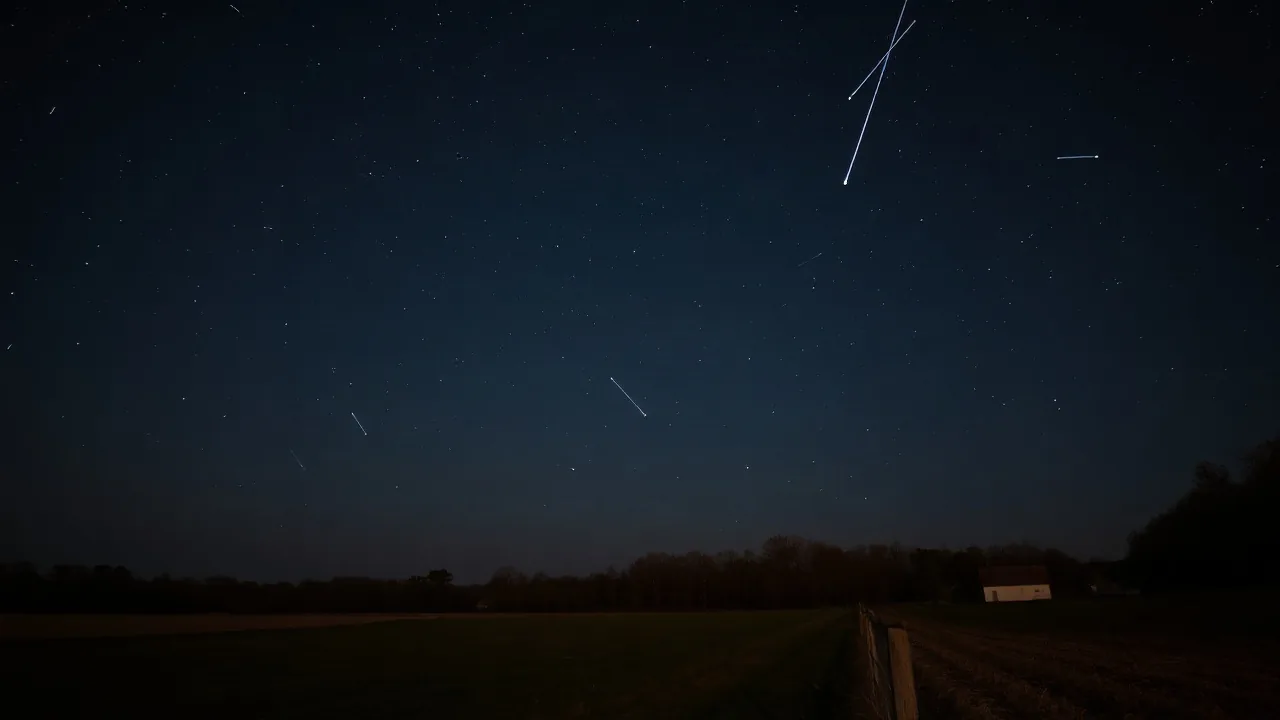
Stargazers in Northeast Ohio can anticipate a celestial display as the Draconid meteor shower reaches its peak on the evenings of October 8th and 9th, 2026. This annual event offers a unique viewing opportunity, as it is one of the few meteor showers that favors early evening hours, potentially allowing families and casual observers to enjoy the spectacle without staying up late.
The Draconids, also known as the Giacobinids, originate from dust and debris left behind by the comet 21P/Giacobini-Zinner. While this shower is not typically known for producing a high number of meteors per hour, it can occasionally surprise viewers with intense bursts. The number of visible meteors often depends on how closely Earth passes through the comet's debris trail. Unlike many other meteor showers that require a dark, late-night sky, the Draconids are most active shortly after sunset, making them an accessible event for many.
Viewing Tips for Optimal Visibility
For the best experience watching the Draconid meteor shower in Northeast Ohio, experts recommend finding a location away from city lights, as light pollution can significantly obscure fainter meteors. A clear view of the sky, ideally with an unobstructed horizon, is also beneficial. While no special equipment is necessary, allowing your eyes to adjust to the darkness for at least 15-20 minutes before the peak viewing times will enhance your ability to see the shooting stars. The meteors will appear to radiate from the constellation Draco, the Dragon, which will be positioned high in the northern sky during the evening hours.
Astronomer Dr. Sarah Chen from the Cleveland Museum of Natural History noted the shower's accessibility. "What makes the Draconids special is their evening peak," Dr. Chen stated. "This means you don't need to be a dedicated night owl to catch them. A comfortable spot in your backyard after dinner could be all you need for a chance to see some streaks of light." She added that while a clear night is essential, the moon phase for October 2026 is also favorable, with a minimal lunar presence expected to further improve visibility.
The Draconid meteor shower occurs annually around this time, but its intensity varies greatly from year to year. The shower is famous for its occasional outbursts, with particularly prolific displays recorded in 1933 and 1946, when thousands of meteors per hour were observed. While such intense activity is rare, the potential for unexpected surges keeps astronomers and skywatchers looking forward to the event each year. The radiant point of the shower is in the northern constellation Draco, which lends the meteor shower its name.
Residents across the region, from Cleveland to Youngstown and surrounding counties, are encouraged to look up on October 8th and 9th after sunset. While predicting the exact number of meteors is impossible, the favorable viewing conditions of the 2026 shower present a good opportunity for both novice and experienced skywatchers to witness this natural phenomenon. The Draconid meteor shower is a reminder of the dynamic and often spectacular events occurring in space.