
Earth Navigates Supernova Debris Cloud, Antarctic Ice Reveals
Scientists have detected radioactive iron-60 in ancient Antarctic ice, providing strong evidence that Earth is currently passing through debris from a supernova explosion that occurred long ago.

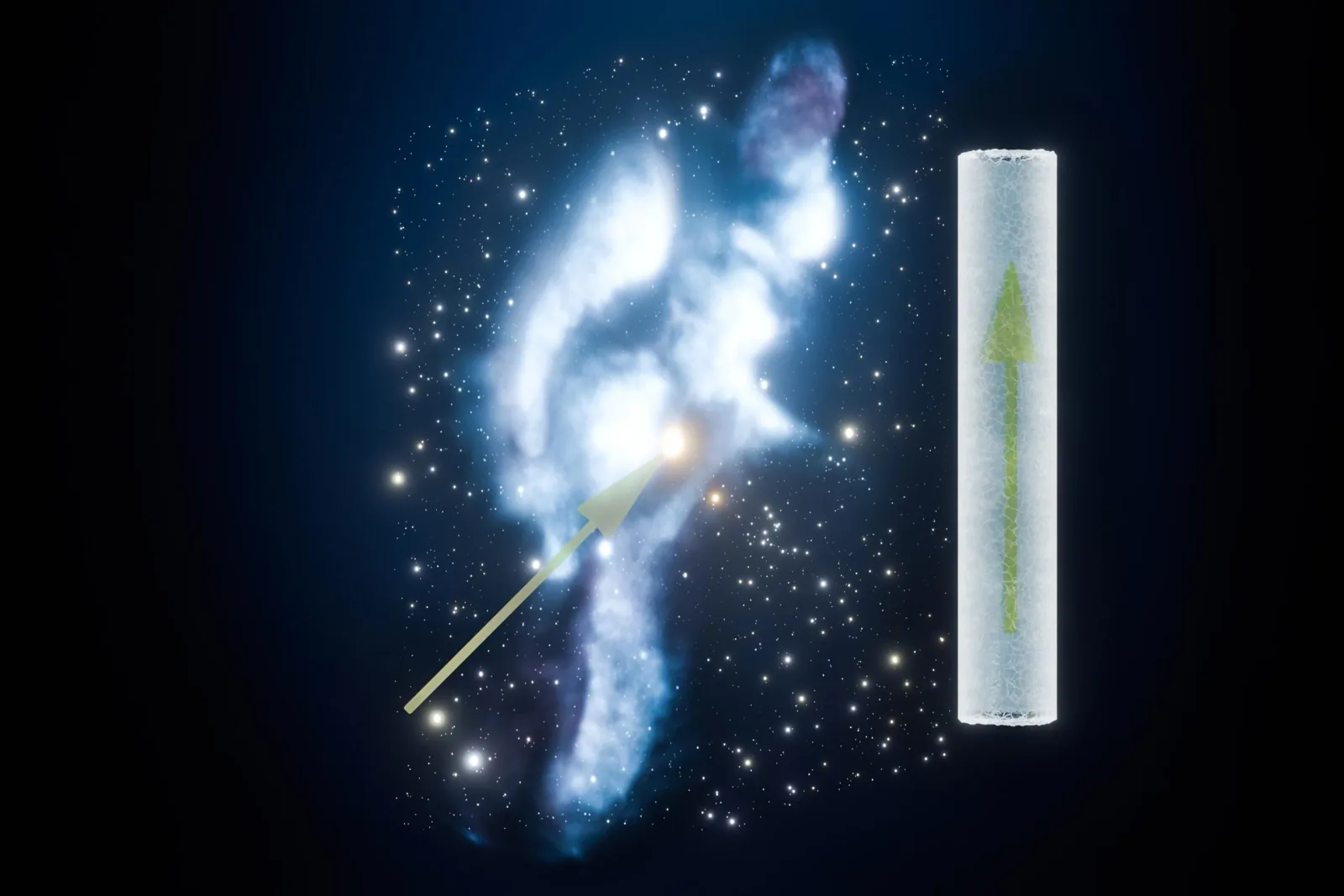
Earth is currently traversing a vast cloud of cosmic dust composed of remnants from an ancient stellar explosion, according to new research. Scientists analyzing tens of thousands of years of Antarctic ice have identified iron-60, a radioactive isotope exclusively produced in supernova events, offering compelling evidence that our solar system is moving through the lingering debris of a long-extinct star.
The international study, led by researchers from the Helmholtz-Zentrum Dresden-Rossendorf (HZDR), detected the radioactive signature within ice cores dating back between 40,000 and 80,000 years. This discovery strengthens the hypothesis that the Local Interstellar Cloud, a vast structure of gas and dust that envelops our solar system, contains and stores material ejected during ancient stellar cataclysms.
"Our idea was that the Local Interstellar Cloud contains iron-60 and can store it over long time periods. As the Solar System moves through the cloud, Earth could collect this material," explained Dr. Dominik Koll, a researcher at the Institute of Ion Beam Physics and Materials Research at HZDR. Previously, while geological records showed Earth had been exposed to iron-60 from nearby supernovae millions of years ago, the presence of recent traces in Antarctic snow raised questions, as no such explosions have occurred nearby in modern times.
Cosmic Debris Analysis in Antarctic Ice
To confirm their findings, Dr. Koll and Professor Anton Wallner analyzed additional samples, including deep-sea sediments dating back up to 30,000 years. While these samples also contained iron-60, alternative explanations remained possible. However, the newly examined Antarctic ice samples, sourced via the European EPICA ice drilling project and provided by the Alfred Wegener Institute Helmholtz Centre for Polar and Marine Research (AWI), offered a more definitive timeline.
By comparing the iron-60 concentrations in the 40,000 to 80,000-year-old ice with earlier sediment and snow measurements, the team observed a notable difference. "This suggests that we were previously in a medium with lower iron-60 content, or that the cloud itself exhibits strong density variations," Koll stated. The research indicated that Earth received less iron-60 between 40,000 and 80,000 years ago than it does currently, and that the signal shifts over cosmic timescales of tens of thousands of years. This pattern allowed the scientists to discard theories suggesting the material was merely fading remnants from supernovae millions of years ago.
The process of isolating the iron-60 involved transporting approximately 300 kilograms of ice from AWI to Dresden for meticulous chemical analysis. After extensive processing, only a few hundred milligrams of dust remained, from which the iron-60 was carefully extracted. The HZDR's DREsden Accelerator Mass Spectrometry (DREAMS) laboratory used beryllium-10 and aluminum-26 isotopes to verify the concentrations and ensure no material was lost during preparation, with expected amounts of these isotopes aligning with the iron-60 findings.
Final measurements were conducted at the Australian National University's Heavy Ion Accelerator Facility (HIAF), one of the few facilities globally capable of detecting such minute quantities of iron-60. Using electric and magnetic filters, researchers managed to isolate a handful of iron-60 atoms from an original sample containing 10 trillion atoms. "It’s like searching for a needle in 50,000 football stadiums filled to the roof with hay. The machine finds the needle in an hour," described Annabel Rolofs from the University of Bonn. Professor Wallner added, "Through many years of collaboration with international colleagues, we have developed an extremely sensitive method that now allows us to detect the clear signature of cosmic explosions that occurred millions of years ago in geological archives today."
The solar system is believed to have entered the Local Interstellar Cloud several tens of thousands of years ago and is expected to exit it in a few thousand years. Researchers suggest our current position is near the cloud's edge. Future studies will focus on even older Antarctic ice cores, predating the solar system's entry into the cloud, to further investigate the composition and history of these interstellar environments. The AWI is also involved in the Beyond EPICA – Oldest Ice project, aiming to retrieve ice cores from even further back in Earth's history.