
Saturn's Moon Enceladus: Microbes Thrive in Simulated Ocean Conditions
New research suggests Earth microbes could survive in the subsurface ocean of Saturn's moon Enceladus. The study simulated the moon's icy environment, offering new hope in the search for extraterrestrial life.

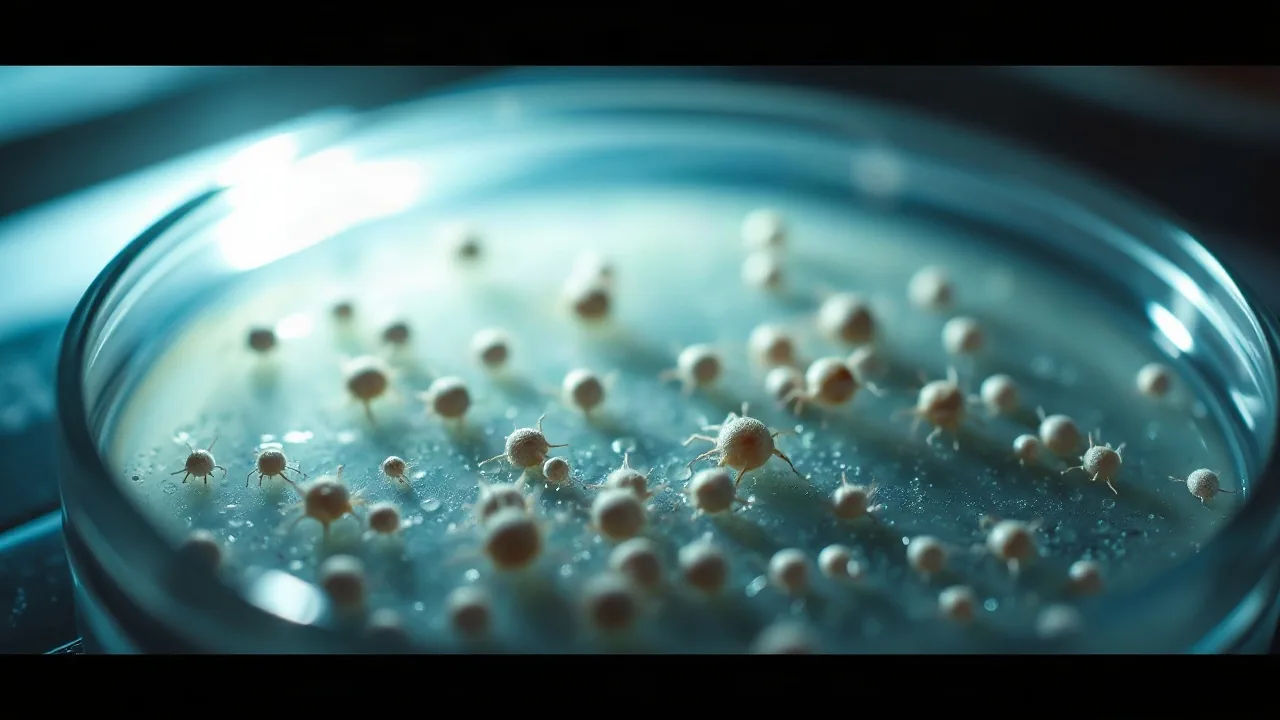
Scientists have demonstrated that common Earth microbes are capable of surviving the extreme conditions found in the subsurface ocean of Saturn's moon Enceladus. This groundbreaking research, published in the journal 'Nature Astronomy' on September 24, 2026, utilized laboratory simulations to replicate the icy, high-pressure, and chemical environment believed to exist beneath the moon's frozen crust.
The study focused on a specific type of bacteria, Halomonas salina, a hardy extremophile found in Earth's salt lakes and deep-sea hydrothermal vents. Researchers subjected these microbes to simulated Enceladus ocean water, which is known to be extremely salty and rich in dissolved gases like methane and ammonia. The experiments revealed that these microorganisms not only survived but also exhibited metabolic activity, suggesting they could potentially form a viable ecosystem in such an alien environment.
Enceladus: A Prime Candidate for Life Beyond Earth
Enceladus has long been a focal point in the search for extraterrestrial life due to strong evidence of a vast, liquid water ocean hidden beneath its icy shell. The moon's south polar region features prominent geysers that erupt water vapor and ice particles into space, providing scientists with direct samples of the ocean's composition. These plumes have been found to contain salts, organic molecules, and silica nanoparticles, all indicators of hydrothermal activity – similar to environments on Earth where life thrives.
Dr. Anya Sharma, the lead astrobiologist at the SETI Institute and the study's principal investigator, stated, "Our findings are incredibly encouraging. We've shown that life as we know it, or at least certain robust forms of it, could indeed persist in the specific conditions hypothesized for Enceladus' ocean. This doesn't confirm life exists there, but it significantly bolsters the possibility and provides a tangible biological model to explore."
The research team meticulously recreated the simulated Enceladus ocean environment by adjusting salinity levels to match spectrographic data from the Cassini spacecraft, which conducted numerous flybys of Saturn and its moons. They also controlled for temperature, pressure, and the specific chemical makeup of the water, including the presence of dissolved minerals and gases. The results indicated that the microbes could utilize available chemical energy sources, a process known as chemosynthesis, without the need for sunlight.
This study is a critical step in understanding the habitability of icy moons within our solar system and beyond. While Mars has been a primary focus for decades, celestial bodies like Enceladus' ocean and Jupiter's moon Europa are now considered equally, if not more, promising locations for the potential discovery of alien life. The implications extend to the search for life on exoplanets, as the conditions on Enceladus may mirror those found on many distant worlds.
Future missions, such as the proposed Enceladus Orbilander, aim to directly sample the moon's plumes and potentially land on its surface to search for biosignatures. "Understanding the resilience of terrestrial life in simulated alien environments is paramount for designing instruments and mission strategies that can detect life if it is present," added Dr. Sharma. The microbes tested in this study represent a baseline, and further research will explore a wider variety of extremophiles and their potential adaptations to the unique challenges posed by moons like Enceladus.