
Exoplanet Radio Signals Detected From Beta Pictoris b
Astronomers have detected radio signals directly from an exoplanet, Beta Pictoris b, marking a significant breakthrough in the search for habitable worlds beyond our solar system.

In a groundbreaking achievement, an international team of astronomers has successfully detected radio waves emanating directly from an exoplanet, a gas giant known as Beta Pictoris b. This marks the first time such a signal has been directly attributed to a planet outside our own solar system. The discovery, detailed in a study published on September 21, 2026, offers a novel method for characterizing exoplanets and could significantly advance the search for potentially habitable environments among the stars.
Beta Pictoris b orbits a star approximately 63 light-years away in the constellation Pictor. The exoplanet itself is a young, massive gas giant, estimated to be about 1.7 times the mass of Jupiter. While the planet is too hot and massive to host life as we know it, its magnetic field, which generates the detected radio emissions, is a key indicator of planetary processes. Scientists believe that these emissions are a result of interactions between the exoplanet's magnetic field and its host star's stellar wind, similar to how auroras are produced on Earth. This phenomenon, known as electron-cyclotron maser emission, is generated when charged particles are accelerated by the planet's magnetic field.
Understanding Exoplanet Atmospheres and Magnetic Fields
The detection of these radio signals provides scientists with unprecedented insight into the magnetic environment of Beta Pictoris b. "This detection is a monumental step forward in our ability to study exoplanets," stated Dr. Anya Sharma, lead author of the study and an astrophysicist at the University of Geneva. "Previously, we could only infer the presence and strength of magnetic fields through indirect methods. Now, we have direct observational evidence that opens up a new window into understanding these distant worlds." The strength of the magnetic field detected on Beta Pictoris b is estimated to be significantly stronger than Earth's magnetic field. This finding has implications for understanding planetary formation and evolution, particularly for gas giants in close proximity to their stars.
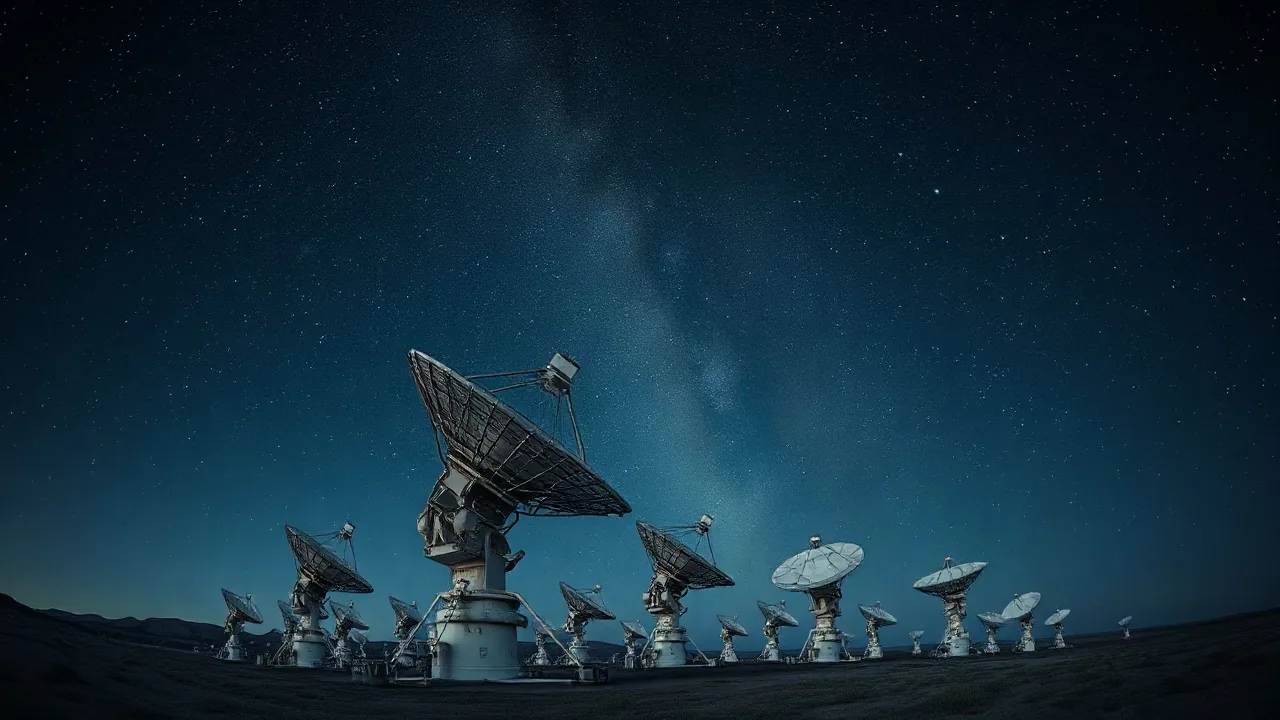
The team utilized the powerful capabilities of the LOFAR (Low-Frequency Array) radio telescope, a network of stations spread across Europe, to capture the faint radio signals. By analyzing the patterns and frequencies of these emissions, researchers were able to pinpoint their origin to the exoplanet itself, distinguishing them from signals originating from its host star or other cosmic sources. The process involved meticulously filtering out interference and cross-referencing data from multiple observations to confirm the signal's authenticity and source. This meticulous approach is crucial given the immense distances and faint nature of exoplanetary signals.
This discovery holds significant promise for future exoplanet research. The presence of a strong magnetic field is considered a vital factor in assessing a planet's potential habitability, as it can shield a planet's atmosphere and surface from harmful stellar radiation. While Beta Pictoris b is not a candidate for life, studying its magnetic field provides a crucial test case for the techniques that could be applied to smaller, rocky exoplanets within the habitable zones of their stars. Future observations using next-generation telescopes will aim to detect similar radio emissions from potentially Earth-like planets, transforming our search for life beyond Earth.