
New Giant Dinosaur 'Nagatitan' Unearthed in Thailand
Researchers have identified Nagatitan chaiyaphumensis, a massive long-necked herbivore, as the largest dinosaur ever discovered in Southeast Asia. The new species roamed the region over 100 million years ago.

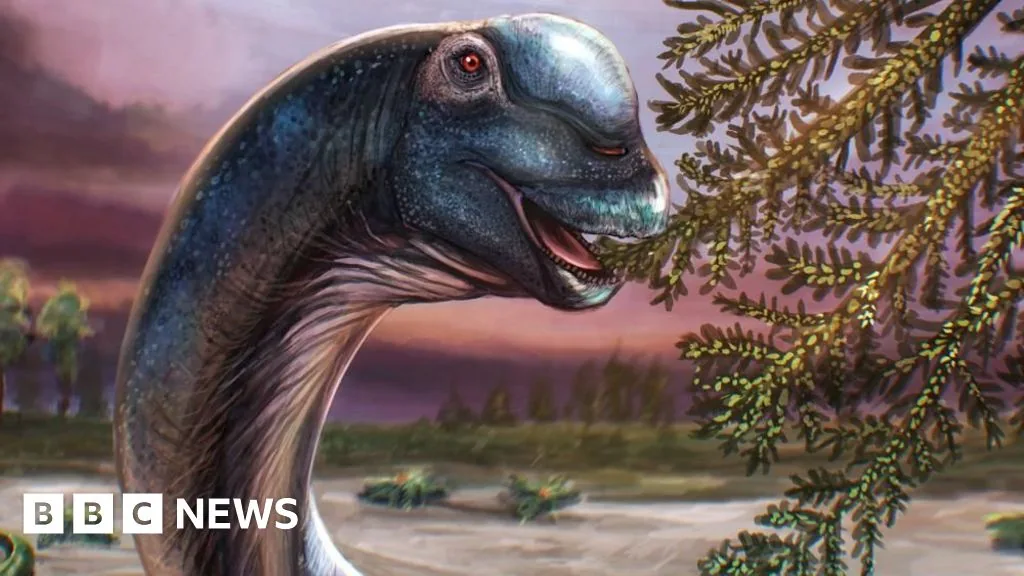
A colossal new dinosaur species, dubbed Nagatitan chaiyaphumensis, has been identified from fossils unearthed in northeastern Thailand, marking the largest dinosaur discovery to date in Southeast Asia. Researchers estimate the herbivore weighed approximately 27 tonnes – equivalent to nine adult Asian elephants – and stretched an impressive 27 meters (88 feet) in length, surpassing even the mighty Diplodocus.
The immense creature belonged to the sauropod family, characterized by their long necks and tails. The fossils, discovered near a pond a decade ago, were meticulously studied by a collaborative team of researchers from the UK and Thailand. The dinosaur's full scientific name, Nagatitan chaiyaphumensis, draws from South Asian folklore ('naga' for serpent), Greek mythology ('titan' for gods), and the province of Chaiyaphum, where the remains were found.
Living between 100 and 120 million years ago, during the Early Cretaceous period, the Nagatitan predates the Tyrannosaurus Rex by roughly 40 million years and was approximately twice its size. Thitiwoot Sethapanichsakul, a Thai doctoral student at University College London (UCL) and lead author of the study published in Scientific Reports, referred to the Nagatitan as "the last titan" of Thailand. This designation stems from the fossils being recovered from the country's youngest known dinosaur-bearing rock formation.
Sethapanichsakul explained, "Younger rocks laid down towards the end of the time of the dinosaurs are unlikely to contain dinosaur remains because the region by then had become a shallow sea. So this may be the last or most recent large sauropod we will find in South-East Asia." The paleontologist, who identified himself as a self-proclaimed "dinosaur kid," also shared in a UCL press release that the study fulfills a personal childhood ambition of naming a dinosaur. The identification of Nagatitan marks the 14th distinct dinosaur species to be named in Thailand.
A Rich Fossil Record
Thailand boasts a remarkable diversity of dinosaur fossils, making it a significant location for paleontological research. Dr. Sita Manitkoon, a paleontologist at Mahasarakham University, stated that the country is "possibly the third most abundant in Asia in terms of dinosaur remains." This rich fossil record provides invaluable insights into prehistoric life in the region.
The study's co-author, Professor Paul Upchurch from UCL, highlighted the evolutionary context of such large sauropods during this period. "It seems a little odd that sauropods were able to cope with higher temperature conditions," Prof. Upchurch told National Geographic. This observation is particularly noteworthy given that large bodies typically retain heat, making thermoregulation a challenge in warmer climates.
The discovery of Nagatitan chaiyaphumensis not only adds a significant new species to the global dinosaur family tree but also underscores Thailand's importance as a hotspot for uncovering ancient life. The find contributes to our understanding of sauropod evolution and their adaptation to diverse environments millions of years ago.