
Green Meteor Fireball Lights Up Ohio Sky, Great Lakes Region
A brilliant green fireball meteor captivated onlookers across Northeast Ohio and the Great Lakes region Monday night, generating over 200 reports. The phenomenon occurred around 10:42 p.m. and appeared to break apart as it streaked across the sky.

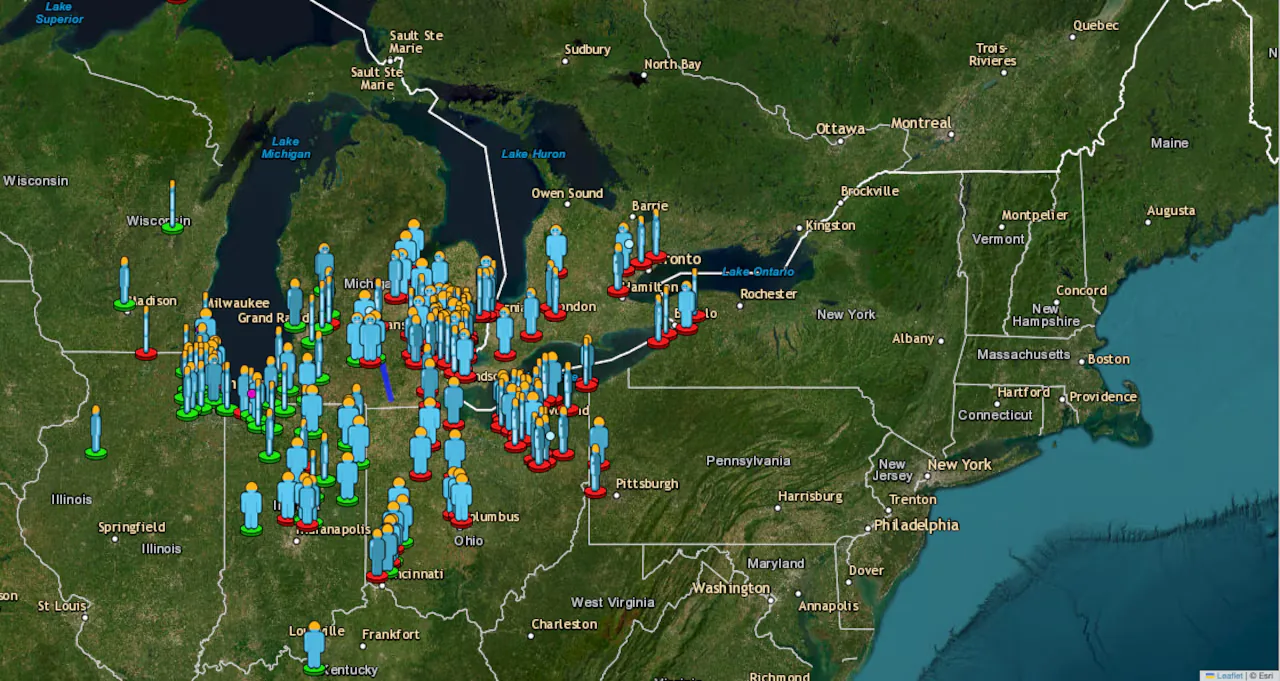
A spectacular green fireball meteor blazed across the night sky over Northeast Ohio and the surrounding Great Lakes region Monday, June 2, 2026, around 10:42 p.m. Eastern Time. The celestial event generated widespread excitement, with over 200 eyewitness reports cataloged by the American Meteor Society from across Ohio, Michigan, and several neighboring states. Residents described a vivid blue-green streak illuminating the darkness, with some observing the object seemingly fragmenting as it traversed the atmosphere for several seconds.
The meteor's visibility spanned a broad area encompassing the Midwest and Great Lakes, including Illinois, Indiana, Kentucky, Michigan, New York, Ohio, Pennsylvania, Wisconsin, and even parts of Ontario, Canada. Communities within Northeast Ohio that reported the sighting included Elyria, Lorain, Bay Village, Parma, Akron, Cleveland Heights, Grafton, Wickliffe, Lakewood, Medina, Macedonia, Mentor-on-the-Lake, and Painesville. The American Meteor Society defines a fireball as a meteor of exceptional brightness, far surpassing the typical “shooting star” which are the luminous trails left by small pieces of space rock or debris burning upon atmospheric entry.
Context of Recent Fireball Events
This recent bright fireball sighting adds to a notable series of atmospheric events observed in the region this year. In March 2026, another asteroid exploded over Northeast Ohio, resulting in a significant fireball and audible sonic booms. Subsequent searches in Medina County led to the discovery of meteorites, pieces of the original asteroid that survived their fiery descent. NASA later mapped the probable strewn field, indicating where these fragments likely landed, extending from northern Medina County southward toward Rittman and parts of Wayne County. Prior to Monday night's event, another notable fireball entered Earth's atmosphere over southern Wisconsin less than a week after the March incident, and was visible across multiple states, including Ohio and Michigan.
As of Tuesday morning, June 3, 2026, officials had not confirmed any sonic booms or reported impacts related to Monday night's fireball. Analysis of observational data and trajectories is ongoing. Meteorologists are working to pinpoint the meteor's exact path, with early indications suggesting it may have crossed northern Ohio before heading toward southern Michigan, potentially passing almost directly over Toledo, according to WTOL chief meteorologist Chris Vickers. The American Meteor Society estimates that thousands of fireballs enter Earth's atmosphere daily. However, the vast majority go undetected due to their occurrence over oceans, remote locations, or during daylight hours, making sightings like the one on Monday a rare and cherished phenomenon for ground observers.