
Greenland Glacier's Ice Tongue Suffers Major Breakup, Satellite Reveals
A significant portion of Petermann Glacier's floating ice tongue in northwest Greenland has broken off, marking the most substantial loss of floating ice from the glacier in over a decade. Satellite imagery captured the event on August 4, 2026.

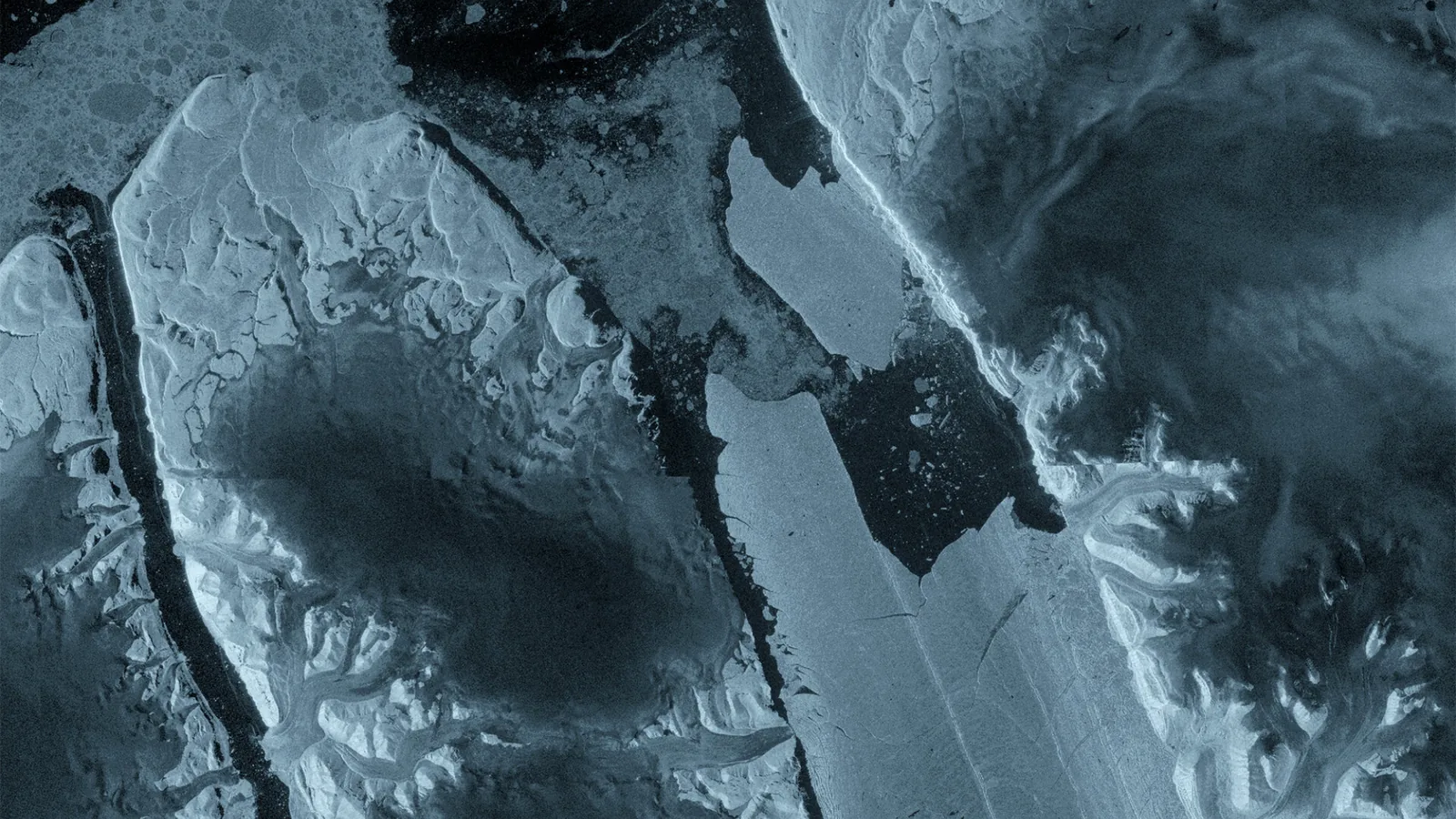
Satellite imagery has captured a dramatic breakup of the floating ice tongue of Petermann Glacier in northwest Greenland, marking the most significant loss of floating ice from the glacier since 2012. The European Space Agency's Copernicus Sentinel-1 mission recorded the event on August 4, 2026, revealing that a 29 square mile (76 square km) section of the glacier's ice tongue had detached. This incident represents the largest ice calving event observed in the Arctic since 2020.
Petermann Glacier, a massive ice stream connecting the Greenland ice sheet to the Arctic Ocean, previously featured an ice tongue extending approximately 43 miles (70 kilometers) long and 9 miles (15 km) wide. The recent detachment underscores the ongoing impacts of a warming climate on polar regions. Scientists utilize such satellite observations to monitor changes and enhance understanding of glacial processes.
Climate Change and Arctic Ice Loss
The accelerated melting and fragmentation of Arctic ice are direct consequences of escalating global temperatures. While Antarctica has experienced substantial ice loss, the Arctic is also undergoing rapid transformation. Warming ocean waters are steadily eroding remaining ice formations, contributing to rising sea levels worldwide. The ability to study these phenomena from space provides crucial data for climate science.
"Satellite missions such as Sentinel-1 provide the systematic, long-term observations needed to track these changes, helping scientists better understand the processes driving calving and the wider impacts on the polar environment, and ultimately the Earth system as a whole," stated ESA Earth scientist Martin Wearing. These continuous monitoring efforts are vital for accurate climate modeling and prediction.
Researchers emphasize the importance of studying these ice islands to gain insights applicable across both Arctic and Antarctic regions. Understanding how such calving events influence glacier dynamics, contribute to sea-level rise, and affect the ocean environment is critical for a comprehensive grasp of planetary changes.
"By studying Arctic ice islands, we will gain knowledge that can be transferred across polar regions. This is critical for understanding how the calving and deterioration of ice islands impact glacier dynamics, sea-level rise and the ocean environment," added Anna Crawford, a glaciologist at the University of Stirling. The ongoing observation of Petermann Glacier and similar formations offers invaluable data for conservation efforts and climate change mitigation strategies.
The loss of floating ice does not directly raise sea levels, as this ice is already displacing water. However, the detachment of ice tongues can destabilize the remaining ice sheet, leading to increased glacial flow and ultimately contributing to sea-level rise as more grounded ice melts and enters the ocean. This recent event at Petermann highlights the sensitivity of even the largest glaciers to environmental shifts and the urgent need for continued scientific observation and global climate action.