
Houston Crew Completes Yearlong Mars Isolation Simulation
Four volunteers have successfully concluded a 378-day mission simulating life on Mars in Houston. The experiment aimed to gather crucial data for future space exploration missions.

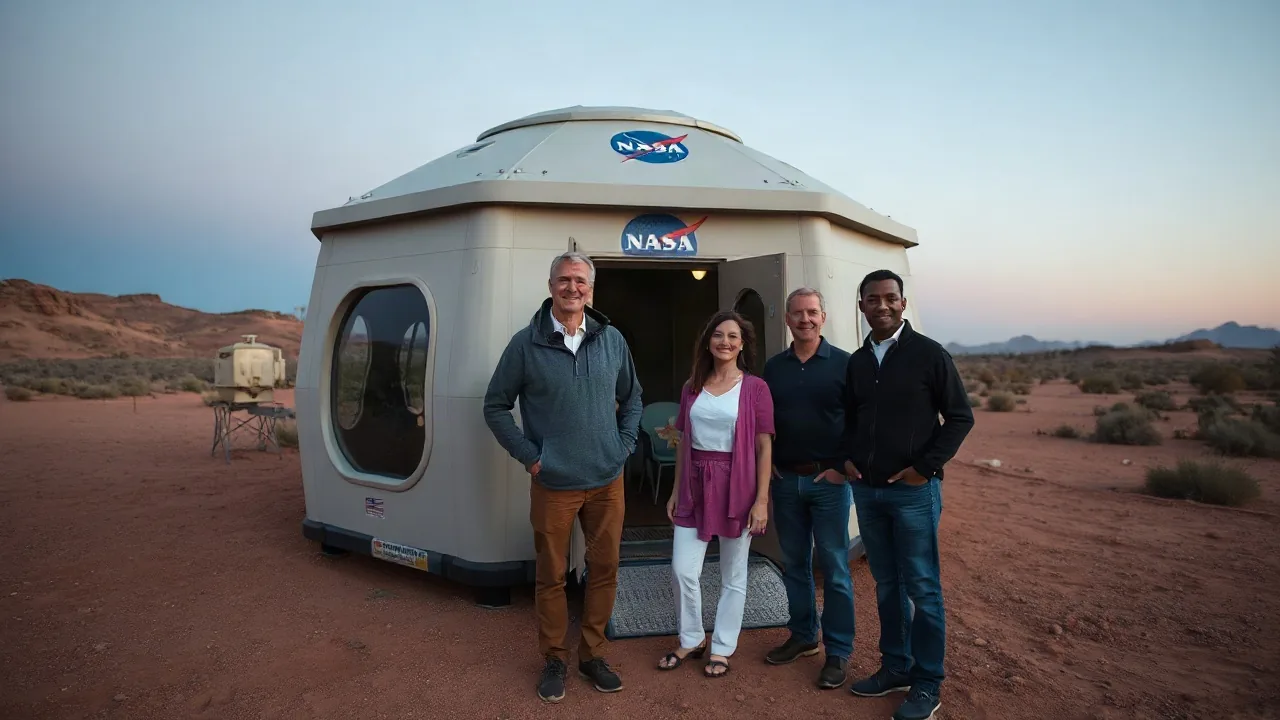
Four volunteers have emerged from a simulated Mars habitat in Houston after spending 378 days in complete isolation, marking the successful conclusion of a groundbreaking mission designed to prepare for long-duration space travel. The crew, part of NASA's second year-long Mars simulation study, endured confinement within a specially constructed habitat located at NASA's Johnson Space Center.
The experiment, which began on November 12, 2025, and concluded on November 26, 2026, aimed to replicate the psychological and physiological challenges astronauts would face on a mission to the Red Planet. During their time in the habitat, dubbed 'Habitat for Humanity,' the crew subsisted on a diet of pre-packaged food, engaged in virtual reality excursions, and conducted scientific experiments, all while maintaining communication with mission control under a significant time delay, simulating the vast distances of space.
"This mission is vital for understanding the human element of deep space exploration," stated Dr. Anya Sharma, lead scientist for the simulation, in a press briefing. "The data we collect from these volunteers provides invaluable insights into crew cohesion, mental well-being, and operational efficiency, which are critical for ensuring the safety and success of future endeavors beyond Earth orbit."
Preparing for the Red Planet
The isolation period was meticulously designed to mimic the conditions of a Mars mission. The volunteers, comprised of individuals with diverse professional backgrounds including engineering, medicine, and science, followed a strict daily schedule. They were only able to leave the habitat for simulated spacewalks, which were conducted in specialized suits within a controlled environment outside the main structure. This aspect of the mission allowed researchers to study the effects of limited movement and the demands of extravehicular activities in a simulated Martian gravity environment.
This extensive duration in confinement is significantly longer than previous short-term simulations and offers a more comprehensive understanding of the long-term impacts of isolation. Researchers are particularly interested in monitoring the crew's interactions, problem-solving capabilities, and overall morale throughout the challenging year. The findings are expected to inform the design of future spacecraft, habitat modules, and crew support systems for potential missions to Mars in the coming decades.
The success of such missions hinges not only on technological advancements but also on the resilience and adaptability of the human crew. By observing how these four individuals navigated the pressures of isolation, communication delays, and confined living spaces, NASA and its partners can better anticipate and mitigate potential risks. The insights gained will be instrumental in planning the logistics and psychological support required for the historic journey of humans to Mars.