
Impossible Crystal Discovered in Debris from World's First Nuclear Blast
Scientists have identified a novel clathrate crystal structure, previously thought impossible on Earth, within the glassy material formed by the 1945 Trinity nuclear test in New Mexico. This discovery sheds light on unique materials formed under extreme conditions.

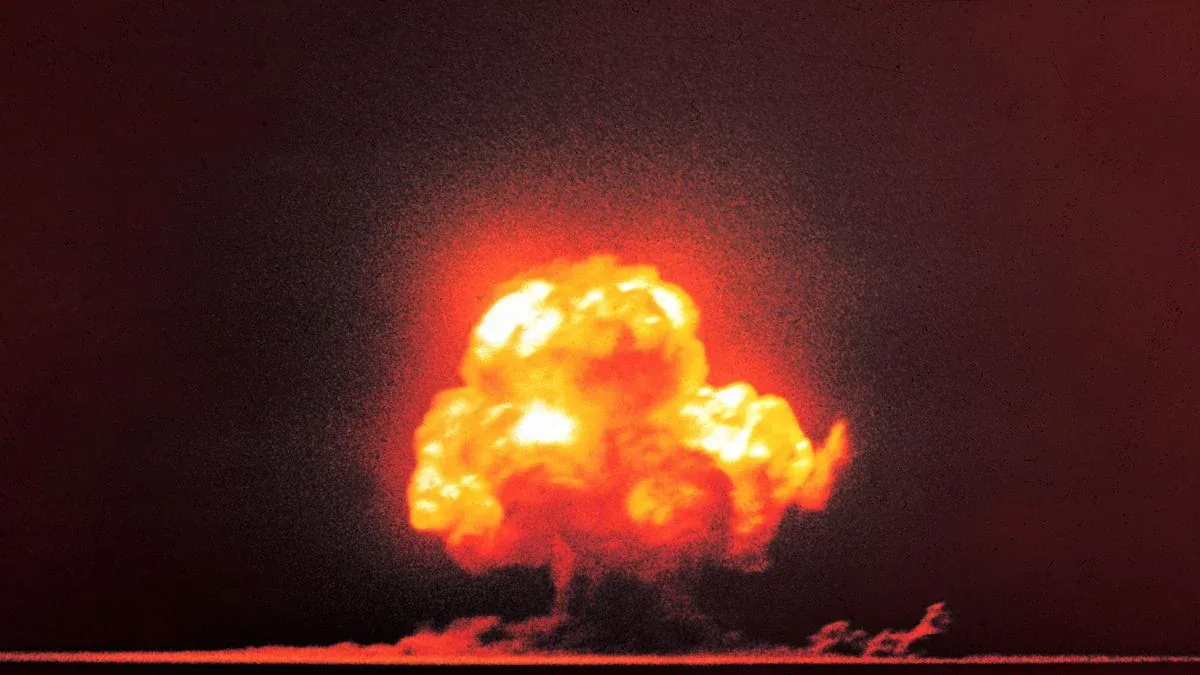
More than 80 years after the dawn of the nuclear age was irrevocably altered by the detonation of the world's first atomic bomb, scientists continue to uncover the profound effects of that cataclysmic event. On July 16, 1945, the U.S. Army's Trinity test in New Mexico unleashed an energy equivalent to 21 kilotons of TNT, creating unprecedented conditions on Earth. Now, researchers have identified a crystal within the resulting fallout that, under normal circumstances, could not possibly exist.
A team led by Luca Bindi, a geologist at the University of Florence in Italy, reported the discovery of a previously unknown calcium copper silicate type-I clathrate. This unique structure, formed in the aftermath of the 1945 Trinity test, is the first crystallographically confirmed clathrate found among the products of a nuclear explosion. "Extreme, transient conditions produced by nuclear detonations can generate solid-state phases inaccessible to conventional synthesis," the researchers noted in their study.
The Trinity test itself was a spectacle of raw power. The detonation instantly vaporized the 30-meter (98-foot) test tower and surrounding copper infrastructure, including critical recording instruments. The intense heat and pressure fused the tower, copper, asphalt, and desert sand into a glassy substance, later named trinitite. This material, essentially a snapshot of the extreme conditions at the moment of detonation, has proven to be a treasure trove for mineralogists.
Unusual Structures Emerge from Extreme Conditions
In 2021, Bindi and his colleagues had already identified an unexpected quasicrystal within a rare red form of trinitite. This latest discovery, a clathrate structure found adjacent to the quasicrystal, adds another layer of mystery to the material. Clathrates are crystalline structures characterized by cage-like lattices that can trap other atoms. Inorganic clathrates are particularly rare and require highly specific formation conditions.
The Trinity explosion provided precisely those extreme conditions: shockwaves, temperatures exceeding 1,500 degrees Celsius (about 2,730 degrees Fahrenheit), and pressures of 5 to 8 gigapascals. The rapid decrease in these parameters, followed by swift cooling, allowed atoms within the trinitite to arrange themselves into configurations that would not be stable under normal geological or laboratory settings. These structures then became locked in place, preserving a unique mineralogical record.
Using advanced techniques like X-ray diffraction, the scientists analyzed a sample of red trinitite and pinpointed a copper-rich droplet. Further examination revealed the unusual atomic arrangement of a cubic type-1 clathrate. In this structure, silicon atom 'cages' enclose single calcium atoms, with trace amounts of copper and iron also present. This marks the first time such a clathrate has been identified in the aftermath of a nuclear detonation.
Intriguingly, the clathrate and the previously discovered quasicrystal share similar compositions and formed under the same extreme conditions. Initially, researchers considered the possibility that the quasicrystal might have formed from the clathrate. However, mathematical modeling suggested that while this pathway is theoretically possible, the specific copper concentration in this sample was too high for such a transformation. This implies that two distinct and complex crystal phases emerged independently from the same materials within the same sample.
The findings challenge previous assumptions, with the researchers stating, "These findings rule out a simple clathrate-based structural interpretation for the Trinity quasicrystal and emphasize the distinct nature of silicon-rich phases generated under extreme conditions." This ongoing research not only deepens our understanding of the long-term effects of nuclear testing but also offers potential new forensic tools for investigating historical nuclear sites.
The discovery underscores the scientific value of rare, high-energy events. As the study authors note, phenomena such as nuclear detonations, intense lightning strikes, and hypervelocity asteroid impacts act as unique natural laboratories. They provide opportunities for producing unexpected crystalline matter and for rigorously testing and refining structural models that lie beyond the capabilities of conventional scientific synthesis.