
Molten Sulfur Planet Discovered: L 98-59 d Rewrites Planetary Science
Astronomers identified a novel exoplanet, L 98-59 d, featuring a global magma ocean and a sulfurous atmosphere. This unique molten world challenges existing planetary classification systems.

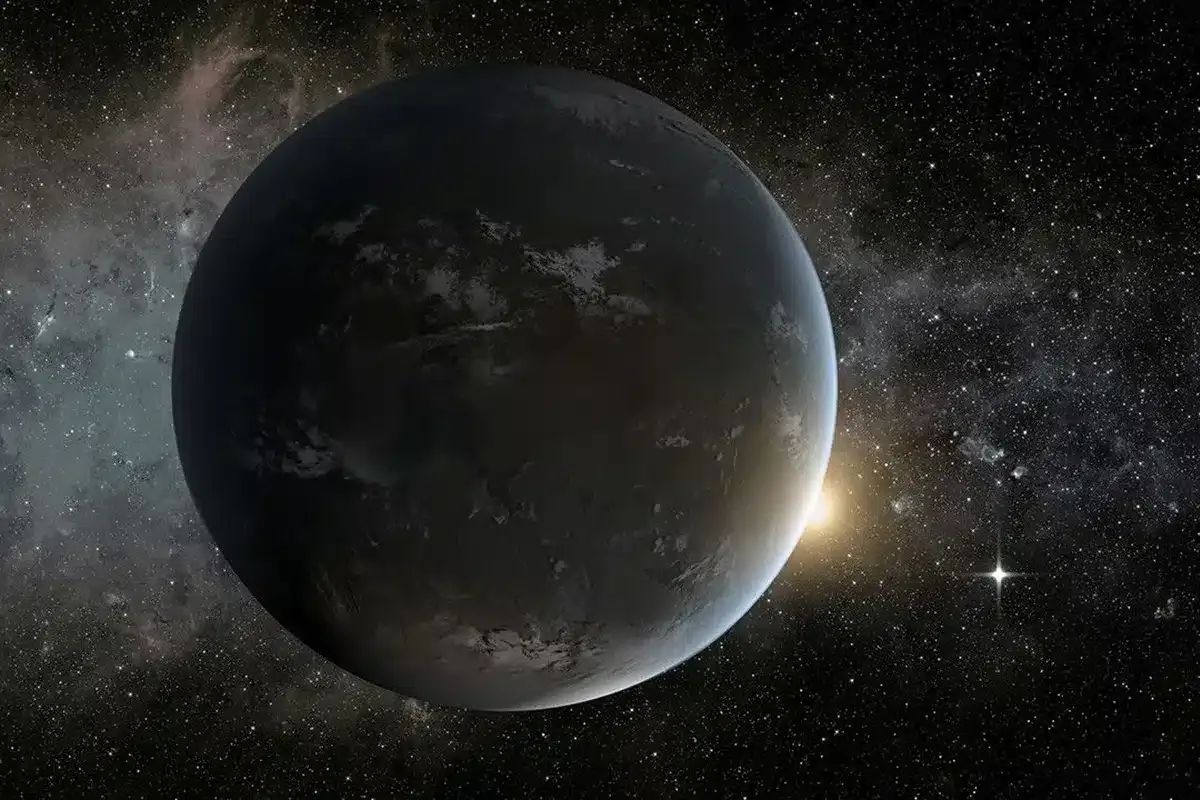
Astronomers have identified a completely new category of exoplanet, a molten world named L 98-59 d, located approximately 35 light-years away in the constellation Volans. This unique celestial body, detailed in the journal Nature, features a global magma ocean and a dense, sulfur-rich atmosphere, defying current scientific models for planetary classification. The discovery offers an unprecedented glimpse into the sheer diversity of worlds beyond our solar system.
L 98-59 d is unlike any planet previously cataloged. Instead of a solid crust and surface oceans like Earth, its mantle consists entirely of molten silicate material. A thick, sulfurous atmosphere creates an intense greenhouse effect, trapping heat and preventing the planet from cooling over billions of years, thus sustaining its vast magma ocean. This extreme environment makes the planet an unlikely candidate for life but provides invaluable data for planetary science.
“This discovery suggests that the categories astronomers currently use to describe small planets may be too simple,” stated Dr. Harrison Nicholls, lead author of the study from the University of Oxford. “While this molten planet is unlikely to support life, it reflects the wide diversity of the worlds which exist beyond the Solar System. We may then ask: what other types of planet are waiting to be uncovered?”
Understanding Planetary Evolution Through New Models
The formation and evolution of L 98-59 d appear to have diverged significantly from typical planetary development. Advanced computer models combined with observational data suggest that the planet, initially resembling a sub-Neptune, has undergone substantial shrinkage and atmospheric loss. This history makes its low density and current composition an anomaly among planets of its size, challenging existing theories. The ability to infer such details about a distant world is a testament to advancements in astronomical observation techniques.
Professor Raymond Pierrehumbert, a co-author of the study, highlighted the power of computational tools in this research. “What’s exciting is that we can use computer models to uncover the hidden interior of a planet we will never visit,” he remarked. This approach allows scientists to reconstruct the deep past of exoplanets, gathering insights into their formation and composition without direct physical exploration. It represents a significant leap in our capability to understand alien worlds from afar.
The ongoing quest for exoplanets is continuously revealing worlds that push the boundaries of our understanding. Future discoveries, aided by increasingly sophisticated telescopes, are expected to uncover more unusual planets like L 98-59 d. These findings will undoubtedly reshape our classifications and theories about planetary systems. As astronomers identify more such molten planets, they will gain a clearer picture of the processes that shape planetary systems throughout the cosmos. Professor Pierrehumbert added, “Although astronomers can only measure a planet’s size, mass and atmospheric composition from afar, this research shows that it is possible to reconstruct the deep past of these alien worlds – and discover types of planets with no equivalent in our own Solar System.” The study of exoplanets continues to be a rapidly evolving field, promising further revelations about the universe.