
Jurassic Insect Calls Reconstructed From Fossils, Revealing Ultrasonic Frequencies
Scientists used lasers, AI, and computer models to recreate the sounds of 165-million-year-old Jurassic insects from fossilized wings. One species produced ultrasonic calls, predating bats.

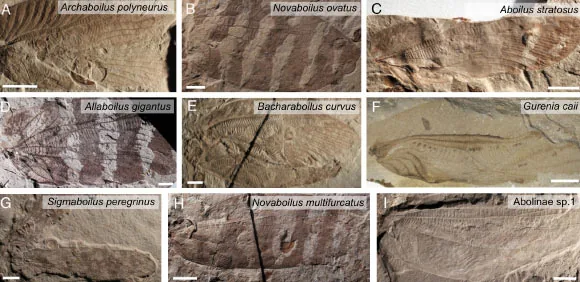
Researchers have successfully reconstructed the calls of insects that lived approximately 165 million years ago during the Jurassic period, using a combination of advanced technologies including lasers, computer modeling, and artificial intelligence. Analyzing fossilized wing fragments unearthed in China, scientists from Sichuan Agricultural University identified 165-million-year-old relatives of modern crickets and katydids. Their findings reveal that at least one of these ancient insects emitted sounds at frequencies beyond the range of human hearing, challenging the long-held belief that bats were the primary evolutionary force driving insects into the ultrasonic communication realm.
"Very little is known about the acoustic landscape of long-gone environments, such as the Jurassic forests," stated lead author Dr. Jun-Jie Gu and colleagues in their published paper. They elaborated on the challenge of understanding ancient sounds, noting that "the sounds made by dinosaurs and other charismatic vertebrates are not definitively known because their vocal organs rarely preserve well in fossils." However, they pointed out a key difference with certain arthropods: "Unlike tetrapod vocal cords, the sound-producing organs present in the sclerotized cuticle of some arthropods do fossilize well." This preservation allows for detailed study, as "the stridulatory structures (file, plectrum) can be observed and measured in the fossilized forewings of male crickets and allies." The researchers concluded that "these fossils incorporate a fingerprint of the acoustic signals they generated, offering a unique window into the soundscapes of the past."
The study involved the meticulous analysis of 20 fossilized ensiferan insects, belonging to seven species within the Prophalangopsidae family and two within Haglidae. These extinct families thrived from the Triassic to Cretaceous periods. The specimens were discovered in the Jiulongshan Formation in Inner Mongolia, China, and are dated to the Middle Jurassic, approximately 165 million years ago. The exceptional preservation of these fossils included the delicate wing structures essential for 'singing' through a process known as stridulation, where insects rub their wings together to produce sound.
Decoding Ancient Insect Sonics
To decipher these ancient insect songs, the scientific team employed a multi-faceted approach. They conducted phylogenetic analyses, comparing the fossil specimens with nearly 100 species of living insects to understand evolutionary relationships. Complementing this, laser vibrometry was used to measure the vibrational properties of modern insect wings. These measurements informed sophisticated computer simulations designed to predict how the fossilized wings would have vibrated when producing sound. Crucially, machine-learning models, trained on the relationship between wing morphology and call patterns in contemporary insects, were utilized to predict the acoustic signals of the ancient specimens.
The results painted a surprisingly varied auditory picture of the Jurassic landscape. Most of the nine identified species produced low-frequency, pure-tone calls around 5 kilohertz (kHz), akin to the sounds made by some of today's crickets. However, one particular species, identified as Sigmaboilus peregrinus, appears to have communicated at frequencies exceeding 20 kHz, entering the ultrasonic range—a spectrum inaudible to humans. This discovery is particularly significant as it predates the evolutionary appearance of bats by roughly 55 million years. Bats, with their echolocation capabilities, have long been considered the primary drivers behind the evolution of ultrasonic communication and hearing in insects, serving as a defense mechanism against these high-frequency predators.
This new evidence fundamentally challenges that established narrative, suggesting that ultrasonic signaling in insects was already in development long before the advent of bats. The scientists propose that the pressure to develop these high-frequency calls may have originated from other sources, such as early mammals and different types of predators. These predators might have been eavesdropping on insect calls, prompting insects to develop quieter, more localized signals to avoid detection. Additionally, the researchers suggest that competition for available acoustic space within a densely populated environment could have also played a role in the diversification of insect vocalizations.
"For now, we can only confirm that Jurassic ensiferans were communicating with a broad range of frequencies from low audio to moderate ultrasound," the authors noted in their paper. They added, "We show that ultrasonic communication was likely adopted by katydid ancestors during the Middle Jurassic, some 165 million years ago, the oldest record known for ultrasound communication in animals." The study further indicates that these ancient ensiferans had already begun to diversify their communication strategies, altering their body size and the structure of their stridulatory organs to produce varied calls, including pure-tone and high-pitch sounds. While predator avoidance is often cited as the main driver for ultrasonic communication in modern katydids, this research suggests bats were not the sole impetus. Instead, "it is likely that early mammals and non-mammalian ancestors were also listening in to the songs of ensiferans, driving early diversification of acoustic signaling strategies." The authors posit that competition for acoustic niche partitioning might have also fueled the evolution of ultrasound. This, combined with earlier evidence of ultrasound in Cretaceous moths, implies that bats encountered a world already rich with ultrasonic sounds when they emerged nearly 100 million years after these singing insects.
The groundbreaking research, titled "Reconstruction of an extinct soundscape reveals ultrasonic communication in the Jurassic," was published on August 26, 2026, in the prestigious journal Proceedings of the National Academy of Sciences (PNAS).