
Lasers Detect Space Junk's Atmospheric Pollution Impact
New laser technology is helping scientists detect the atmospheric pollution caused by reentering space debris. A recent study linked a lithium cloud to a SpaceX rocket stage's descent.

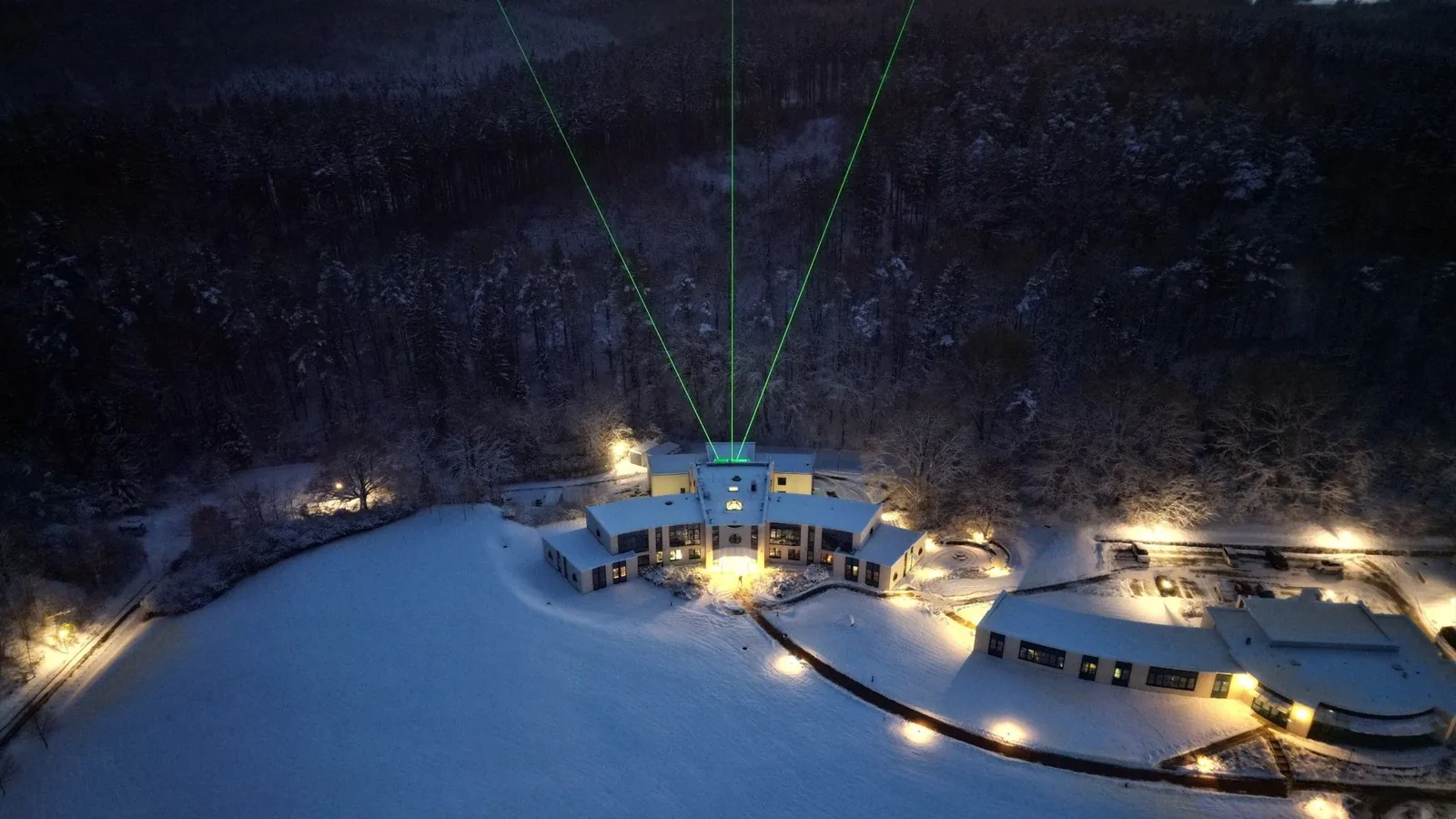
Scientists are now employing advanced laser technology to better understand the impact of space junk on Earth's upper atmosphere. Ground-based light detection and ranging (LiDAR) systems are proving capable of detecting the metallic clouds formed when satellites and rocket stages burn up during atmospheric reentry in real time.
This new observational evidence emerged prominently in early 2025 when a significant lithium cloud was detected at an unusually high altitude. Back-trajectory analysis conducted by researchers at the Leibniz Institute of Atmospheric Physics (IAP) in Germany traced the air mass to a location west of Ireland, correlating precisely with the atmospheric reentry of a SpaceX Falcon 9 upper stage on February 19-20, 2025. This marked the first time such a high-altitude lithium cloud was definitively linked to space debris ablation.
Michael Gerding, a scientist at the IAP, highlighted the significance of these findings. "Lithium is a crucial species for investigating anthropogenic impacts on the middle atmosphere because of its extensive use in the space industry," Gerding stated. "Ablation of reentering satellites and rocket stages is expected to become a significant source of metals in the mesosphere, yet systematic observations remain limited so far." Gerding presented these initial results at the 2026 European Geosciences Union conference held in Vienna from May 3-8.
Monitoring for New Atmospheric Contaminants
The IAP has developed a new three-channel multi-species lidar system specifically designed to search for various materials expected to be released during the ablation of reentering space debris. These targeted materials include copper, aluminum oxide, and hydrogen fluoride, a propellant component used in some rocket engines. "These materials, which naturally occur only in trace amounts at such altitudes, are influencing the mesosphere and upper stratosphere to an extent not previously documented," according to the IAP's website. "This influence is expected to intensify further in the coming years."
The increasing frequency of satellite launches, particularly the rapid deployment of massive satellite constellations, is altering the composition of Earth's upper atmosphere. Robin Wing, another IAP scientist, confirmed that the new multi-species lidar system is progressing well. "We have done test measurements and are currently improving some subsystems," Wing said. The upgraded equipment features a survey channel that systematically scans for various spacecraft elements, with copper being an initial focus.
This research is crucial because the upper atmosphere plays a vital role in regulating Earth's climate and protecting the ozone layer. Introducing significant amounts of metals and other chemicals can potentially disrupt atmospheric chemistry and physics in ways that are not yet fully understood. The long-term consequences for air quality and atmospheric stability are a growing concern.
Further underscoring these concerns, a study published in the May 1, 2026, issue of Advances in Space Research by Leonard Schulz and colleagues at the Technische Universität Braunschweig's Institute of Geophysics and Extraterrestrial Physics investigated the issue of "space waste." Their findings indicate that reentering space debris is injecting a substantial amount of matter into the mesosphere and lower thermosphere, posing a potential threat to the ozone layer. "There is a need for dedicated searches for space waste that survived reentry and impacted ground, detailed observations of space waste ablation, and further ground experiments representative of the conditions of atmosphere reentry," Schulz and his team emphasized in their paper. The researchers also noted that "Today's large satellite constellations amplify the problem of on-orbit space debris as well as the ground risk from impacts." The development of advanced detection methods like the new LiDAR technology is therefore essential for monitoring and potentially mitigating the environmental consequences of space activities.