
NASA's Artemis 3 Mission: SLS to Launch With Spacer Instead of Upper Stage
NASA's Artemis 3 mission will launch the Space Launch System (SLS) with an inert "spacer" in place of its standard Interim Cryogenic Propulsion Stage (ICPS). This change allows the final ICPS to be used on a later mission, Artemis 4.

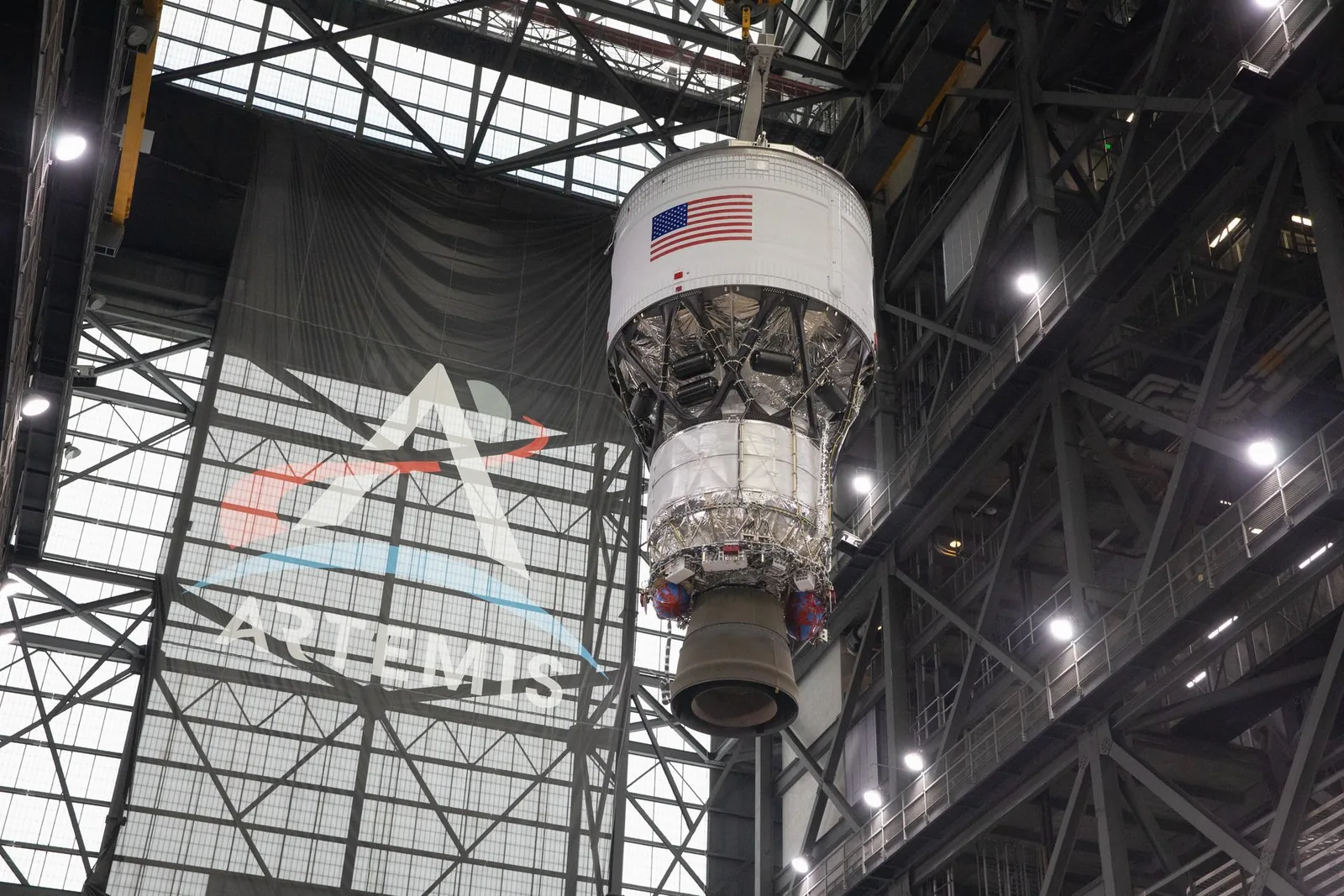
NASA has revised plans for its forthcoming Artemis 3 mission, opting to launch the powerful Space Launch System (SLS) rocket without its standard Interim Cryogenic Propulsion Stage (ICPS). Instead, an inert "spacer" will occupy that position on the rocket. This adjustment, detailed in a May 13 agency update, signifies a significant shift in the mission's architecture as NASA refines its lunar exploration strategy. The spacer, currently under development at the Marshall Space Flight Center, is designed to match the dimensions and interfaces of the ICPS it replaces.
The decision to forgo the ICPS on Artemis 3 is directly linked to broader mission changes announced in February. Originally slated as the inaugural crewed lunar landing of the Artemis program, Artemis 3's objectives were redefined. The mission, now anticipated for late 2027, will focus on testing rendezvous and docking procedures in low Earth orbit with prototype lunar landers from Blue Origin and SpaceX. This shift also led NASA to abandon plans for the Block 1B variant of the SLS, which would have incorporated a larger Exploration Upper Stage.
With the ICPS, which is derived from the Delta 4 upper stage, no longer in production, NASA has sought alternatives. In March, the agency announced its intention to utilize the Centaur upper stage, currently employed on United Launch Alliance's Vulcan rocket, for future SLS missions beginning with Artemis 5. The substitution of a spacer for the ICPS on Artemis 3 creates an opportunity to reserve the final ICPS for Artemis 4, currently scheduled as the program's first crewed lunar landing attempt in 2028. This provides additional time for NASA to integrate and adapt the Centaur upper stage for SLS use.
Artemis 3 Mission Objectives and Complexity
Without the ICPS, the Orion spacecraft will rely on its own propulsion system to achieve a stable orbit. A May 7 request for information from NASA indicated that Orion would operate in a 463-kilometer orbit at a 33-degree inclination during the mission. The primary goal of Artemis 3 is to test the critical rendezvous and docking capabilities between the Orion capsule and the lunar lander prototypes: Blue Origin's Blue Moon Mark 2 and SpaceX's Starship. However, details regarding the precise operational concept and whether astronauts will indeed board the lander prototypes remain scarce, even following the latest update.
"Informed by Blue Origin and SpaceX capabilities, NASA also is defining the concept of operations for the mission," the agency stated. "While some decisions are yet to be determined, astronauts could potentially enter at least one lander test article." This mission's complexity is amplified by the requirement for three separate launches: the SLS carrying Orion, and individual launches for each of the two landers. This necessitates unprecedented coordination among multiple spacecraft and ground operations.
"For the first time, NASA will coordinate a launch campaign involving multiple spacecraft integrating new capabilities into Artemis operations," Jeremy Parsons, acting assistant deputy administrator for Moon to Mars at NASA, said in the update. NASA has acknowledged that several key decisions for Artemis 3, including crew selection and the testing of the Axiom Space lunar spacesuit, are still pending. The mission duration is expected to exceed that of Artemis 2, which concluded after slightly more than nine days. The agency has not yet provided a firm launch date beyond confirming it will occur sometime next year, a slight adjustment from earlier projections of a mid-2027 target.