
Massive New Moon Crater Stuns Scientists, Impacts Lunar Base Plans
A newly discovered lunar crater, measuring 222 meters across, has been identified by NASA's Moon Orbiter. This 'once-in-a-century' formation raises questions for future moon base construction.

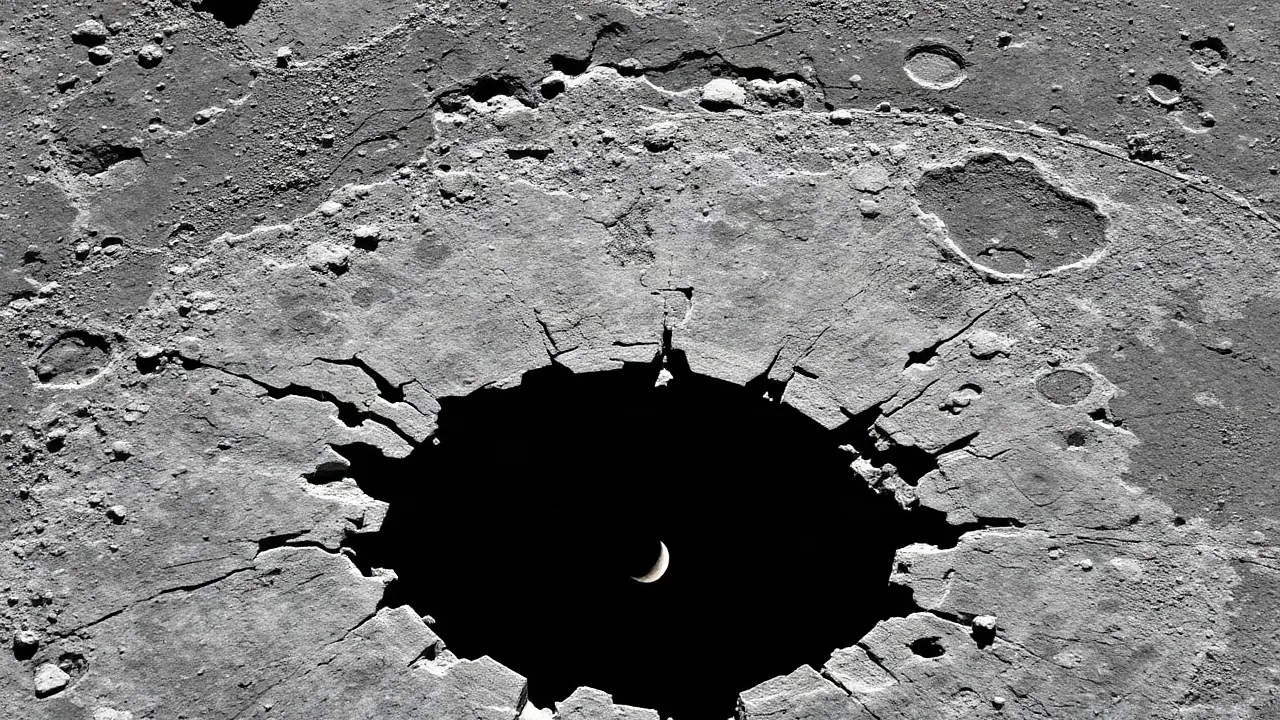
A colossal crater, estimated to be 222 meters in diameter, has been discovered on the Moon, marking the largest newly formed impact crater found anywhere in the solar system. The discovery, made through a routine quality check of lunar mapping data by NASA's Lunar Reconnaissance Orbiter (LRO), has surprised scientists and could have significant implications for the planning of future lunar bases. The bright spot, encircled by a dark halo, indicates a recent impact that occurred sometime after spring 2024, and its sheer size has been described as a 'once-in-a-century' event.
The unexpected finding was made by scientists analyzing data from the LRO spacecraft. While sifting through images and topographical information to update lunar maps, a distinct bright feature surrounded by a dark halo stood out. Further investigation confirmed the presence of a significant impact crater that was not previously cataloged. This new crater is not only massive but also relatively young, differentiating it from the ancient, well-documented impact basins that characterize much of the Moon's surface.
Implications for Lunar Habitats
The existence of such a large, recent impact crater poses new considerations for establishing sustainable human outposts on the Moon. Future lunar base designs will need to account for the potential threat of micrometeoroid impacts, even in areas previously thought to be stable. The Moon, despite its lack of atmosphere, is constantly bombarded by space debris, but impacts of this magnitude are rare. Understanding the frequency and distribution of these larger events is crucial for ensuring the safety and longevity of any permanent lunar settlements. The NASA scientists involved in the discovery are now re-evaluating risk assessments for proposed landing sites and base locations.
"This discovery is a stark reminder that the lunar environment is dynamic," stated Dr. Emily Carter, a planetary geologist not directly involved in the LRO mission but familiar with lunar impact studies. "While we've always known about impacts, finding one this large that's so recent necessitates a fresh look at our safety protocols. It underscores the importance of continuous monitoring and adaptable design principles for any long-term presence beyond Earth."
The crater's dimensions are notable, with its diameter exceeding that of the Roman Colosseum. Its formation suggests a substantial impactor, likely a meteoroid or small asteroid, struck the lunar surface with considerable force. The dark halo surrounding the crater is likely ejecta, material thrown out from the impact site, which has not yet been significantly eroded by subsequent smaller impacts or solar wind.
Further research will focus on determining the precise age of the impact and analyzing the composition of the ejecta. Scientists hope that by studying this event, they can gain a better understanding of the population of larger impactors in the inner solar system and refine models that predict the frequency of such significant cosmic events. This knowledge is not only vital for lunar exploration but also for planetary defense initiatives aimed at protecting Earth from asteroid threats.