
MEGATRON Simulation Links Early Universe Stars to Cosmic Fingerprints
New computer simulations named MEGATRON have successfully linked the chemical signatures of the universe's first stars to observable "cosmic fingerprints." This breakthrough helps astronomers understand galaxy formation.

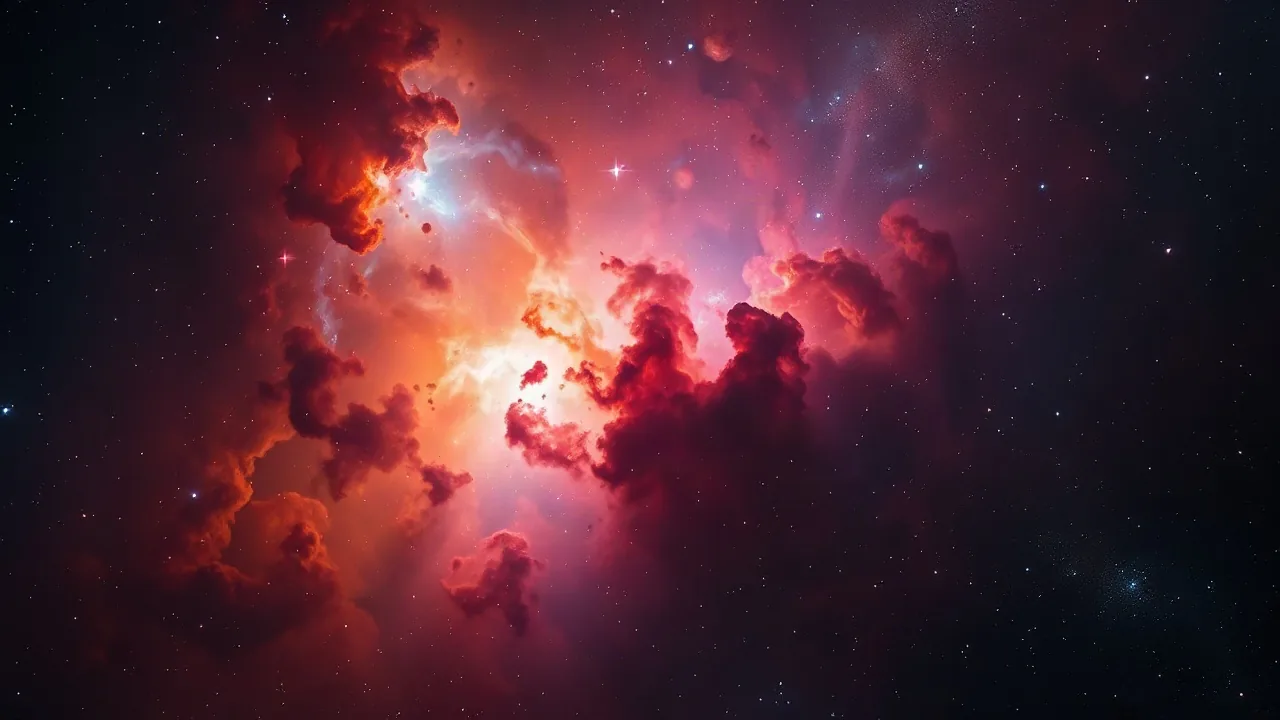
Scientists have developed advanced computer simulations, dubbed MEGATRON, that successfully connect the chemical remnants of the universe's very first stars to observable "cosmic fingerprints" still present in galaxies today. This groundbreaking work, detailed in recent studies, bridges a significant gap in our understanding of early galactic evolution and the fundamental processes that shaped the cosmos shortly after the Big Bang.
The research focuses on the chemical composition of stars and galaxies, specifically the elements forged in the extreme conditions of the universe's first stellar generations. These early stars, known as Population III stars, were massive, short-lived, and are believed to have produced the first heavy elements, such as iron and oxygen. "These elements were then dispersed into the surrounding gas when the stars died, seeding the next generation of stars and galaxies with the building blocks for everything we see today," explained Dr. Anya Sharma, lead astrophysicist on the project from the University of Cambridge. The unique chemical patterns left behind by these primordial stars act as a historical record, allowing astronomers to trace cosmic evolution.
Unraveling the "Iron Plateau"
A key challenge in this field has been understanding the "iron plateau," a period where the abundance of iron in stars appears relatively constant before a sharp increase. The MEGATRON simulations provide a potential explanation for this phenomenon. By modeling the formation of the first stars and their subsequent integration into early galactic structures, the simulations reveal how the distribution and mixing of these newly forged elements influenced the chemical makeup of subsequent stellar populations. The simulations account for factors such as the masses of the first stars, their explosion mechanisms, and how their material dispersed within nascent galaxies.
The complexity of these early cosmic events has made direct observation exceedingly difficult. The first stars formed in a universe vastly different from our own, characterized by vast clouds of hydrogen and helium, with virtually no heavier elements. Their sheer distance and the passage of billions of years obscure direct evidence. Therefore, sophisticated computational models like MEGATRON simulation are crucial tools for astrophysicists. "We are essentially looking at the echoes of these ancient events," Dr. Sharma added. "The MEGATRON simulations allow us to reconstruct those echoes and understand the initial conditions that led to the galaxies we observe in the present day."
This research offers vital insights into the processes of galaxy formation and the enrichment of the interstellar medium. By accurately simulating the chemical fingerprints left by the universe's first stars, scientists can better interpret observational data from telescopes like the James Webb Space Telescope, which is capable of peering back to the earliest epochs of cosmic history. The success of the MEGATRON simulations suggests that astronomers are on the right track in their quest to understand the universe's origins and the chemical evolution that underpins all cosmic structures.