
Massachusetts Meteor Blazes Sky, Causes Sonic Booms Across US East Coast
A large meteor entered Earth's atmosphere over Massachusetts on Saturday, producing sonic booms heard and felt across multiple US states and into Canada. NASA confirmed the object was natural material.

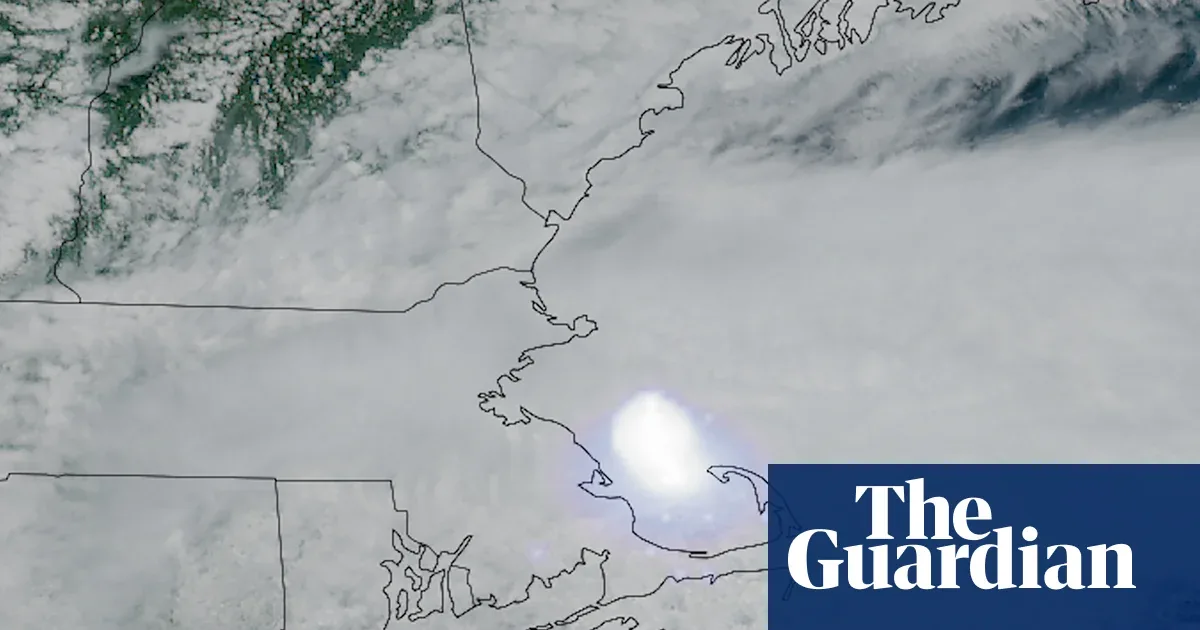
A spectacular meteor blazed across the sky over Massachusetts on Saturday afternoon, triggering reports of powerful sonic booms and ground shaking from New England down to Delaware and as far north as Montreal. NASA officials confirmed the celestial visitor was natural space rock, not artificial debris, and entered the atmosphere around 2:06 PM Eastern Time.
The American Meteor Society (AMS) received dozens of accounts from witnesses describing a brilliant fireball, akin to a daytime shooting star, accompanied by a distinct double boom. Robert Lunsford, program monitor for the AMS, stated that the object was approximately three feet (one meter) in diameter as it began its atmospheric entry near the New Hampshire border, north of Boston. The double boom was reportedly strong enough to rattle buildings in Massachusetts and even neighboring Rhode Island.
Dashcam footage from New York captured the brilliant streak across the sky, underscoring the widespread nature of the sighting. "It was definitely bigger than a normal fireball, about a yard wide," Lunsford noted, though he cautioned that it was unlikely the meteor reached the ground intact. "We would need more information about the trajectory, the speed and other aspects to know for sure if it hit the ground – but if it didn’t burn up, then it would have landed in the ocean," he explained. "Most of them do burn up before they hit the ground."
Atmospheric Phenomenon and Sonic Booms
NASA spokesperson Allard Beutel explained that the meteor was traveling at an estimated 75,000 miles per hour (120,700 km/h) when it fragmented about 40 miles (60 km) above the Earth's surface. Meteors, traveling at supersonic speeds, create significant pressure waves as they heat up and break apart in the atmosphere. These waves can generate powerful sonic booms that are audible to observers on the ground. NASA estimated the energy released by the fragmentation of this particular meteor was equivalent to approximately 300 tons of TNT, sufficient to account for the reported booms.
The impact of the atmospheric event was felt beyond just auditory reports. Numerous individuals across several states posted on social media about feeling their buildings shake. Videos shared on platforms like X captured the distinct sound of two rapid booms, with no accompanying visual evidence of fire or smoke. Several residents also filed reports with the US Geological Survey (USGS), registering the tremors they experienced with the National Earthquake Information Center. A USGS spokesperson confirmed the agency opened an event page due to the high volume of "Did you feel it?" reports submitted via its website. However, the agency's seismographs registered no earthquake activity, confirming the shaking was a direct result of the meteor's passage.
The event serves as a striking reminder of the dynamic nature of space and the constant influx of natural material into Earth's atmosphere. While most objects of this size burn up harmlessly, their atmospheric disintegration can create dramatic displays and audible phenomena. The widespread reports highlight the interconnectedness of observation, with Massachusetts residents witnessing the initial blaze, while those in New York captured its trajectory and many across the Eastern Seaboard experienced its sonic aftermath. The AMS continues to gather data to further analyze the event's trajectory and composition.