
Narwhal Tusk's Double Spiral Revealed by X-Ray Study
A new study using advanced X-ray techniques has uncovered a surprising internal double-helix structure within the narwhal's iconic spiral tusk, revealing the source of its remarkable strength.

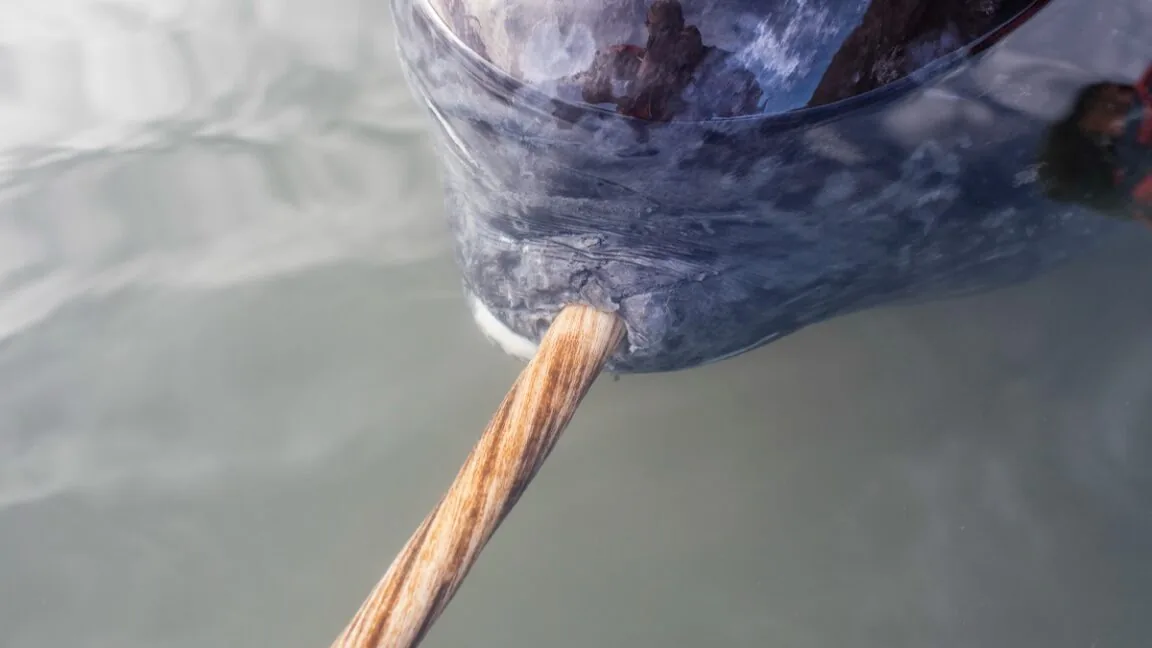
Scientists have long been fascinated by the narwhal's distinctive, spiraling tusk, a feature once believed to be a unicorn's horn with magical properties. Now, a groundbreaking study published in Nature Communications has revealed that this iconic structure is far more complex than previously understood. Researchers have discovered that the tusk, an elongated canine tooth found primarily in male narwhals, possesses an internal double-helix structure, contributing to its extraordinary strength and resilience.
The narwhal tusk, which can grow up to 2 meters (nearly 7 feet) long, twists in a consistent left-handed direction. Historically, the exact purpose of this appendage has been a subject of debate. While females typically lack tusks or possess much smaller ones, and males with tusks often appear to have a higher social status, theories range from use in hunting to sensory organs for detecting changes in water temperature or salinity. Observations have shown narwhals using their tusks to stun prey like Arctic cod, and the presence of millions of nerve endings suggests a sensory function.
Unraveling the Tusk's Microscopic Architecture
To understand the tusk's internal makeup, a team of researchers utilized advanced imaging techniques, including X-ray computed tomography and scanning X-ray diffraction, on two male narwhal tusk and skull specimens. Their investigation required access to powerful synchrotrons in Sweden, Switzerland, and France. The findings revealed that while the outer layer, the cementum, forms a left-handed helix, the inner layer, the dentine, forms a right-handed helix. This intricate double-helix design is key to the tusk's exceptional stiffness and strength, allowing it to withstand significant forces without fracturing. This structure also enables the tusk to grow straight, a notable contrast to the curved tusks of animals like elephants.
The study also identified a finer, underlying microstructure within the cementum, characterized by collagen fiber bundles extending radially outward. This aspect is slated for further investigation using more advanced micro- and nano-beam experiments. "Since whales can live for up to 80 years, their teeth form a kind of historical record of changing environmental conditions throughout the animal’s lifetime," explained co-author Henrik Birkedal of Aarhus University. "And because the North Atlantic is currently undergoing very rapid changes, it is obvious to investigate whether we can trace these changes in the hard tissue of the narwhal tusk. That is what we are now working on." This ongoing research aims to use the narwhal tusk as a paleoclimate archive, potentially offering insights into the Arctic environment over decades or even centuries.
The discovery of the double-helix structure offers a new perspective on the evolution and function of the narwhal's tusk. It underscores the incredible adaptations found in marine life and highlights the role of sophisticated scientific instruments in unlocking nature's secrets. Understanding these adaptations can provide valuable clues about the narwhal's place in its ecosystem and the challenges it faces, particularly in the context of rapid climate change impacting the Arctic region.