
NASA Names Artemis III Crew for 2027 Moon Mission Preparations
NASA has announced the four astronauts selected for the Artemis III spaceflight, a mission set for 2027 that will test critical lunar landing technologies and procedures. The crew includes veteran astronauts and mission specialists preparing for future lunar surface exploration.

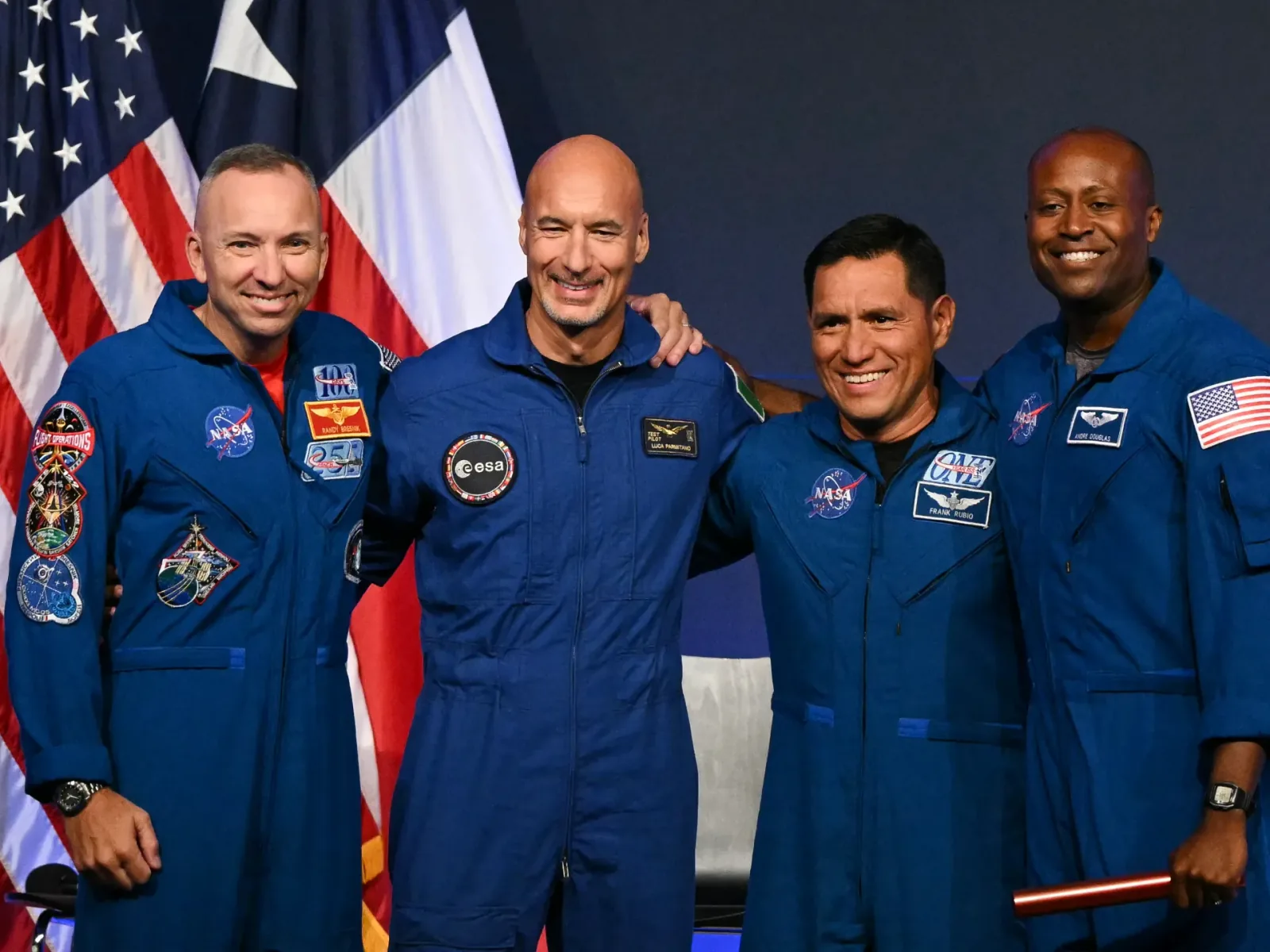
The National Aeronautics and Space Administration (NASA) has revealed the crew for its pivotal Artemis III spaceflight, a mission slated for 2027 that serves as a crucial step in the United States' renewed lunar ambitions. The selected astronauts are Andre Douglas, Frank Rubio, Luca Parmitano, and Randy Bresnik. Veteran test pilot Bob Heintz will serve as backup. The two-week mission is designed to focus on collecting vital research and practicing in-space docking maneuvers ahead of a planned lunar landing.
While the Artemis III flight itself will not land on the Moon, it is designed to test key technologies and procedures. The crew will practice rendezvous procedures with lander models from private companies Blue Origin and SpaceX. These maneuvers are essential preparations for future missions that will carry astronauts to the lunar surface. The Orion spacecraft carrying the crew will orbit Earth and interact with these lander prototypes.
Background and Crew Expertise
This upcoming mission, while not a lunar landing itself, is a significant undertaking building upon NASA's Artemis program. The Artemis II mission, which completed a lunar flyby earlier in 2026, paved the way for Artemis III. The newly announced crew brings a diverse range of experience. Andre Douglas, a Florida-born engineer, makes his first spaceflight as a mission specialist and will be one of the few African Americans to have traveled to space.
Frank Rubio, a Salvadoran American physician and former US Army helicopter pilot, also joins as a mission specialist. Rubio holds the record for the longest single-duration spaceflight by a U.S. astronaut, spending 371 days in orbit. The mission commander, Randy Bresnik, at 58, is the most experienced crew member. A former U.S. Navy test pilot and Marine, Bresnik has previous experience on a Space Shuttle mission and commanded the International Space Station in 2017.
Luca Parmitano, 49, will serve as the pilot. An Italian citizen and former commander of the International Space Station, Parmitano brings valuable international experience to the mission. NASA administrator Jared Isaacman, who introduced the crew, highlighted their unique backgrounds and dedication, stating, "Each of you possess a unique background. Your vast experience and unwavering dedication to NASA’s mission enables you to help make us and take this next great step in space exploration."
Artemis III represents a significant public-private partnership, with major aerospace companies like Blue Origin and SpaceX providing crucial lander technology. The mission aims to reduce risks for future crewed Moon missions by utilizing lander test articles. This approach ensures that when astronauts do land, the operations are safer and more likely to be successful. This strategy is also seen as a way to maintain American leadership in space, particularly in the context of a growing space race with China, which has also announced lunar landing ambitions for the 2030s.
Concerns about the recent explosion of an uncrewed Blue Origin New Glenn rocket in May 2026 were addressed by NASA and Blue Origin representatives. Both organizations emphasized that setbacks are learning opportunities and that intensive efforts are underway to ensure readiness for Artemis III. John Couluris, a representative for Blue Origin, noted that factories are running around-the-clock shifts. "We will measure ourselves not only by our successes but how we respond to setbacks," he stated. NASA’s acting deputy administrator, Jeremy Parsons, confirmed NASA is taking an active role with partners to ensure successful outcomes.
The Artemis program is designed not just to return humans to the Moon, but also to establish a long-term presence there, potentially using the Moon as a stepping stone for further space exploration. This mission, scheduled for launch before the end of 2027, is a critical element in that long-term vision, aiming to secure a lasting American presence on the lunar surface and strengthen the nation's leadership in the cosmos.