
NASA Rescue Craft for Falling Swift Observatory Faces Own Space Woes
NASA's LINK spacecraft, sent to boost the decaying Swift observatory into a higher orbit, is experiencing attitude control issues and sporadic communication, jeopardizing its mission.

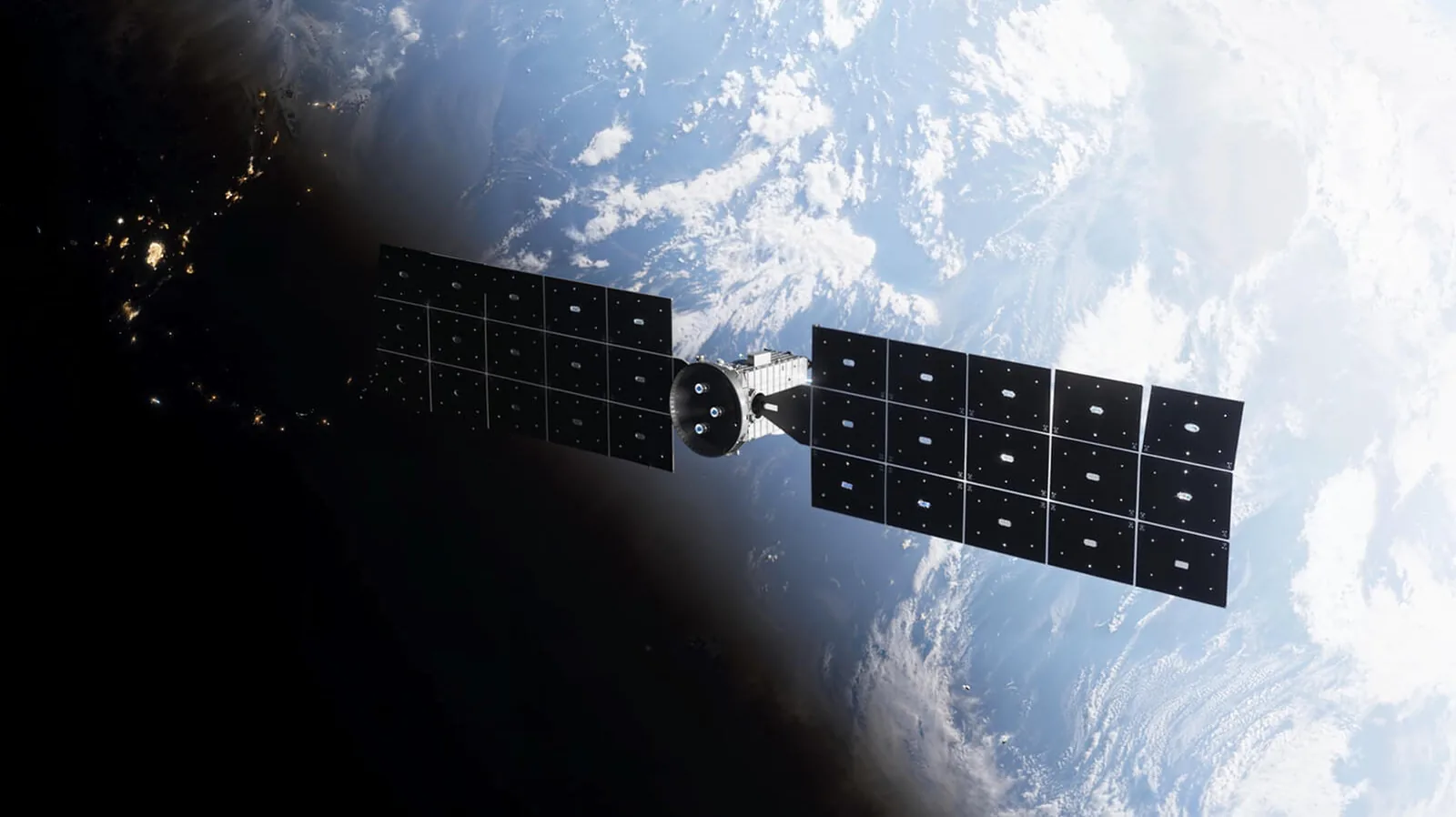
A sophisticated NASA mission to extend the operational life of the ailing Swift observatory has encountered significant technical difficulties, casting doubt on its ability to perform its crucial rescue task. The specialized spacecraft, named LINK and built by Arizona company Katalyst Space, was launched in early July with the objective of docking with the Swift observatory and towing it to a higher orbit. However, LINK itself is now grappling with critical attitude control problems, including non-operational reaction wheels and a compromised thruster system, which have led to intermittent communication with ground control.
Swift, a vital orbital observatory, has been experiencing an accelerated rate of atmospheric drag. This decay is attributed to increased solar activity over the past couple of years, causing the observatory to descend faster than anticipated. NASA’s projections indicated that Swift would re-enter Earth’s atmosphere sometime in 2026 without intervention. The LINK mission was designed as a direct response, aiming to push Swift back into a more stable orbit and afford scientists additional years of valuable data collection.
LINK's Attitude Control Issues Threaten Mission Success
The trouble for the LINK spacecraft began last weekend when it experienced significant attitude control issues, causing it to spin uncontrollably in space. This uncontrolled rotation has resulted in sporadic communication, making it difficult for engineers to maintain a stable connection. According to NASA's update on the Neil Gehrels Swift Observatory blog, two of LINK's three crucial reaction wheels, which are essential for maintaining the spacecraft's orientation, are currently inoperable. Furthermore, there is a noted loss of functionality in its cold gas thruster system, which plays a role in fine-tuning the spacecraft's position.
Despite these setbacks, ground teams have managed to retain some level of communication with LINK. The immediate plan involves utilizing the spacecraft's electric propulsion thrusters in an attempt to stabilize its spin. This maneuver is a critical first step before engineers can proceed with re-establishing the spacecraft's guidance and navigation systems, which will need recalibration to account for its altered state. The successful stabilization and recalibration are paramount for determining if the LINK spacecraft can still fulfill its intended purpose of rescuing the Swift observatory.
The situation presents a complex challenge for NASA and Katalyst Space. Even if LINK can be stabilized, its own compromised state will necessitate adjustments to the original mission plan. The team must carefully assess LINK's capabilities and limitations to devise a revised strategy for either proceeding with the rescue attempt or potentially adapting the mission's goals. The ultimate outcome hinges on whether the LINK probe can be brought back under control sufficiently to execute the delicate orbital maneuver required to save the Swift observatory.
This incident highlights the inherent risks and complexities associated with space missions, particularly those involving robotic servicing and repair. The successful deployment of a spacecraft like LINK, designed to interact with another in orbit, requires immense precision and redundancy. When components fail, as they have with LINK's reaction wheels and thruster system, it tests the ingenuity of mission control and the resilience of the technology itself. The ongoing efforts to salvage the LINK mission underscore NASA's commitment to maximizing the lifespan of its scientific assets and pushing the boundaries of orbital mechanics and robotic spacecraft engineering.