
NASA's Roman Space Telescope Set for August 30 Launch
NASA's Nancy Grace Roman Space Telescope, slated for launch August 30, promises unprecedented views of the cosmos, aiming to revolutionize our understanding of dark matter and exoplanets.

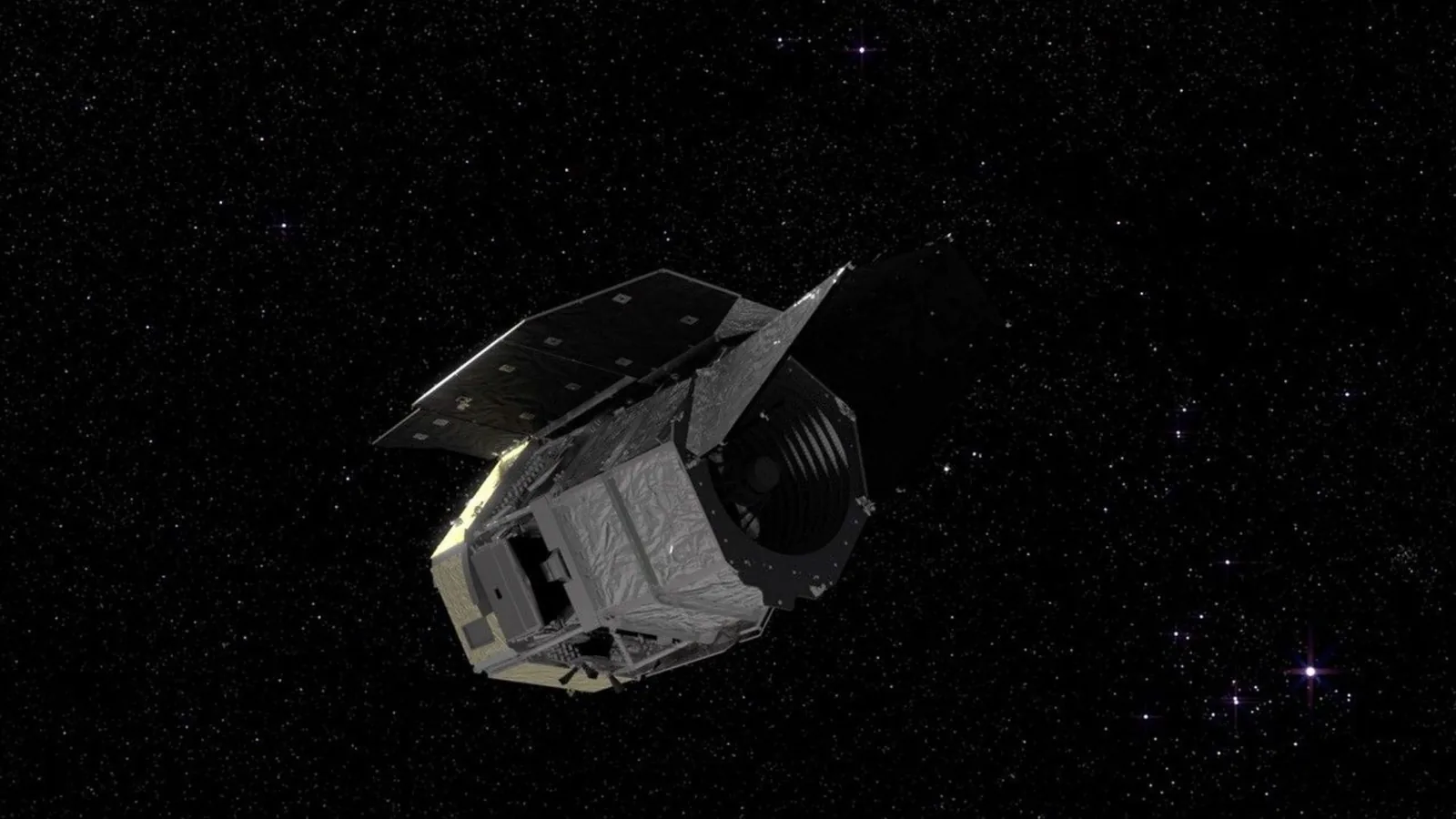
The Nancy Grace Roman Space Telescope, NASA's highly anticipated next-generation observatory, is on track for launch on August 30, 2026, from NASA's Goddard Space Flight Center. This multi-billion dollar mission is poised to become one of the agency's most powerful tools for astronomical discovery, joining the ranks of legendary observatories like the Hubble Space Telescope and the James Webb Space Telescope. Scientists confirmed the mission is nine months ahead of schedule, with its encapsulation into the SpaceX Falcon Heavy rocket's fairing occurring within the next three weeks.
Jeremy Perkins, Roman's telescope integration and test scientist, expressed excitement during a recent press conference, stating, "In 30 days, we're going to be launching Roman, testing it out, opening the deployable aperture cover, looking at the sky, and sending data down to the ground for the first time." The telescope recently received its hydrazine fuel, a crucial step enabling its mission at the Sun-Earth L2 Lagrange point, a stable location a million miles from Earth. While hydrazine is toxic, it remains an efficient fuel necessary for the telescope's extensive operational requirements, including course corrections and maintaining its orbit for at least five years.
A New Era of Astronomical Data
The Roman Space Telescope's scientific potential is immense, particularly when compared to its predecessors. Scientists estimate Roman will generate over 500 terabytes of data annually, vastly exceeding Hubble's total output of 400 terabytes over its 35-year lifespan. "Roman has broadly the same sensitivity and sharpness of vision as Hubble, but we survey the sky much faster, so that one month of observations to survey our Milky Way galaxy would take about a century with with Hubble," explained Julie McEnery, Roman's senior project scientist. She further illustrated Roman's data-gathering capacity, noting that a single image from its largest survey would require over half a million 4K televisions to display, covering an area equivalent to 45 Manhattan city blocks.
While the James Webb Space Telescope excels at peering deep into the universe with exquisite infrared sensitivity, Roman's Wide-Field Instrument (WFI) offers a panoramic view, capturing images approximately 50 times wider than Webb's. "Webb is designed to be able to probe very deeply and with exquisite sensitivity into the universe so we can find rare things in the early universe," McEnery said. "But you need Roman to find rare things in the more nearby universe." This capability will be crucial for identifying and studying elusive objects, such as the "little red dots" observed in JWST images, enabling scientists to build a more comprehensive understanding of their nature.
Roman's mission objectives include a primary survey to image around 2 billion galaxies, providing unprecedented data to decode the intricacies of dark matter and dark energy. The telescope also features a coronagraph instrument, expected to revolutionize exoplanet research. "I think of this as doing magic with physics. We're taking advantage of the wave properties of light to cancel out the light from a star, so that we can image planets next to it," McEnery stated, highlighting the innovative techniques employed by the instrument. The combined data from these instruments promises to unlock new insights into the universe's most profound mysteries.
The legacy of Nancy Grace Roman, the pioneering astronomer for whom the telescope is named, looms large over the project. As NASA's first female executive and chief of astronomy, she was instrumental in advancing satellite research and laying the groundwork for exoplanet science. "The next Dr. Nancy Grace Roman, sitting in a classroom somewhere next year, will be studying our data and hopefully catch the science bug and go on to transform the world in the same way that Dr. Nancy Grace Roman did," remarked Jackie Townsend, Roman's project manager, underscoring the mission's inspiration for future generations of scientists.