
NASA Roman Space Telescope Launch Delayed to 2027
NASA's Nancy Grace Roman Space Telescope, originally scheduled for 2026, now faces a launch slip to late 2027 as the agency completes final hardware and software integration. Mission remains on track to revolutionize observations of dark energy and exoplanets.

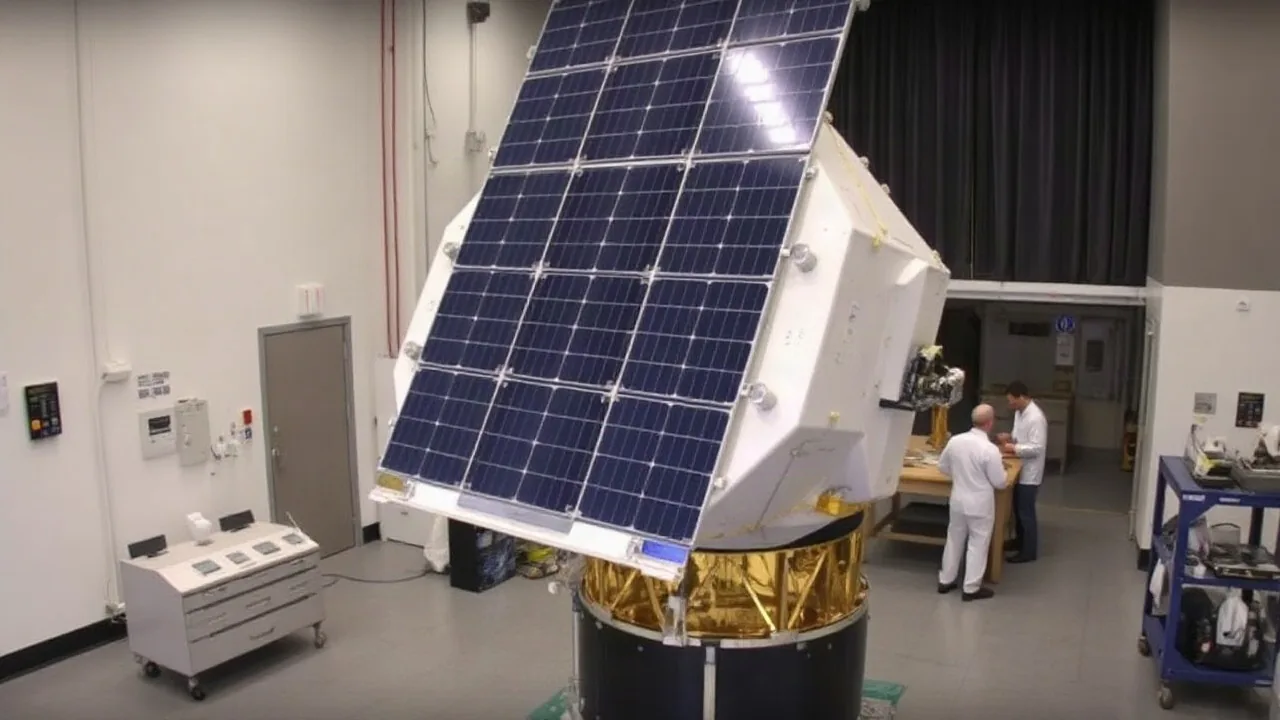
NASA announced in September 2026 that its Nancy Grace Roman Space Telescope will not launch this year, pushing the mission to late 2027 due to continued integration and testing of complex spacecraft systems. The delay marks the latest in a series of schedule adjustments for the agency's flagship infrared observatory, which remains among the most ambitious space exploration projects in development.
The mission, named after the pioneering astronomer who advanced the concept of the Hubble Space Telescope, will operate approximately one million kilometers from Earth at the second Lagrange point. From that vantage point, Roman will observe distant galaxies, measure the expansion rate of the universe, and detect potentially habitable exoplanets around nearby stars.
"The additional time allows our teams to thoroughly validate every component and ensure we meet the rigorous safety standards NASA demands," said Mark Clampin, the mission's project scientist at NASA's Goddard Space Flight Center, in a statement released to the aerospace community. "We are confident this methodical approach protects the integrity of the science and the spacecraft."
Technical Challenges and Integration Milestones
The delay stems from multiple technical hurdles in assembling the telescope's sophisticated payload. Engineers have been working to finalize the Wide Field Instrument, a imaging system capable of capturing light from millions of galaxies simultaneously, and the Coronagraph Instrument, designed to block starlight and reveal dim exoplanets orbiting their host stars.
Key remaining tasks include:
- Thermal vacuum testing to simulate the extreme cold of space
- Integration of the telescope's optical components with the spacecraft bus
- Software validation for onboard autonomous systems and data processing
- Final vibration and acoustic testing to ensure durability during launch
SpaceX remains the scheduled launch provider, using a Falcon Heavy rocket to carry Roman into space. No changes to the launch vehicle or launch site have been announced. NASA's Kennedy Space Center in Florida will continue to serve as the primary launch location.
Science Goals and Mission Impact
Roman's primary scientific objectives address fundamental questions in cosmology and planetary science. The telescope will measure the acceleration of the universe's expansion due to astronomy's most persistent mystery: dark energy, which comprises roughly 68 percent of all matter and energy in the cosmos.
The mission will also conduct a census of exoplanets using gravitational microlensing, a technique that can detect earth-sized worlds around distant stars. This capability complements data from NASA's Transiting Exoplanet Survey Satellite (TESS) and the James Webb Space Telescope, offering a different window into planetary populations across the galaxy.
The project carries a price tag exceeding 2 billion dollars. Delays in science missions of this scale routinely inflate costs, though NASA has not released updated budget figures. The agency emphasized that the additional year addresses critical reliability concerns rather than scope creep.
Timeline and Future Milestones
NASA's updated schedule places Roman in orbit by the fourth quarter of 2027, with commissioning activities extending into early 2028. Full aerospace system testing will conclude in the coming months, with hardware delivery to Kennedy Space Center planned for spring 2027.
The delay does not affect other major NASA Roman space telescope partnerships. The mission will collaborate with ground-based observatories and other space-based facilities to maximize scientific return. International partners, including the European Space Agency, continue their contributions to the mission's data analysis framework.
Astrophysicists in the United States and abroad have expressed acceptance of the revised schedule. "A launch delay measured in months is preferable to an in-orbit failure that would cost the scientific community years of lost observations," noted Dr. Elena Rodriguez, an exoplanet researcher at a major research university, in comments to industry analysts.
The mission represents NASA's commitment to answering humanity's deepest questions about the cosmos and the prevalence of worlds beyond Earth. With integration work advancing steadily and no insurmountable technical obstacles remaining, the telescope is positioned to become one of astronomy's most productive instruments when it begins observations in 2028.