
NASA Telescope Rescue Craft Itself Requires Saving
A spacecraft dispatched by NASA to boost a vital space telescope's orbit is now in trouble, spinning uncontrollably and jeopardizing the rescue. Engineers are working to stabilize the craft, delaying its critical mission.

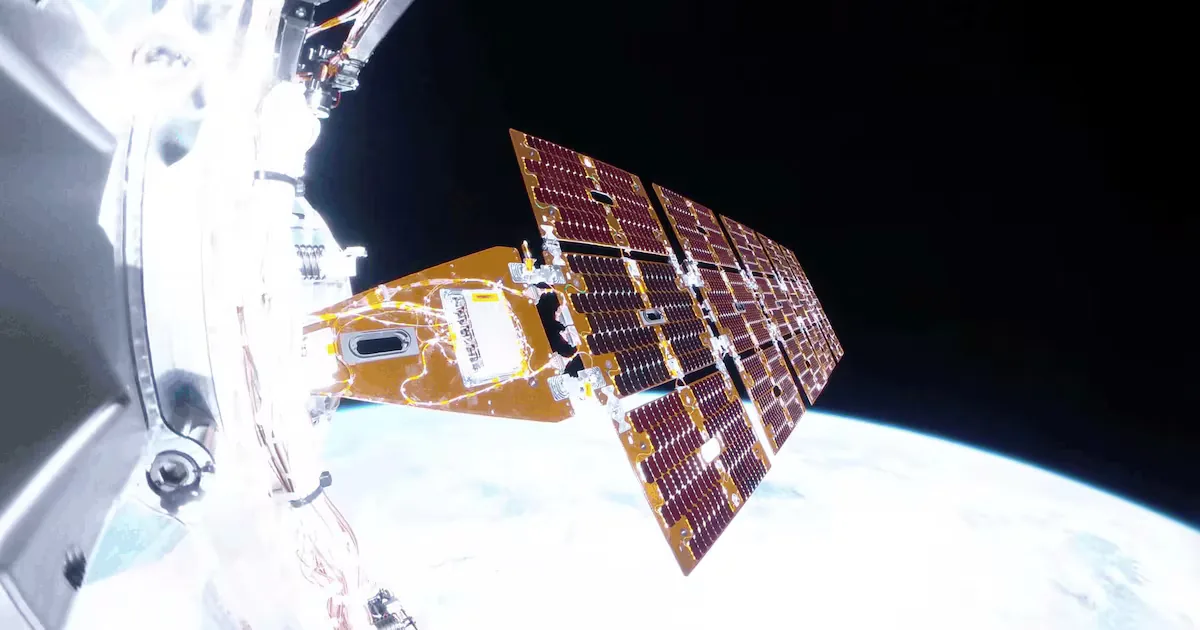
A critical mission to extend the operational life of NASA's Neil Gehrels Swift Observatory has encountered a significant setback, as the rescue spacecraft itself has fallen into a precarious state. The observatory, launched in 2004 to study gamma-ray bursts, has already surpassed its intended lifespan. However, increased atmospheric drag, a consequence of a more intense-than-anticipated solar cycle peak in 2024, is causing Swift to lose altitude at a rate of approximately 1.5 miles per week. This orbital decay threatens the valuable scientific instrument.
In response to the escalating risk, the company Katalyst was tasked with a high-stakes endeavor: to deploy a small, specialized craft named Link. The objective was for Link to rendezvous with Swift and provide the necessary thrust to propel the observatory into a higher, safer orbit. This intervention was deemed essential to prevent the premature demise of a crucial astronomical asset.
Rescue Craft Encounters Unexpected Tumbling
The rescue mission took an unforeseen turn when the Link spacecraft began to tumble uncontrollably shortly after approaching Swift, completing a full rotation every 40 seconds. This unexpected spin has placed the entire rescue operation in jeopardy, raising concerns among engineers and NASA officials. Ghonhee Lee, chief executive of Katalyst, described the situation as "very serious," emphasizing that teams are actively working to regain control of the tumbling craft. The incident has delayed Link's planned rendezvous with Swift by at least several weeks.
The Neil Gehrels Swift Observatory has been a cornerstone of high-energy astrophysics research since its inception. Its primary mission has been to detect and observe gamma-ray bursts (GRBs), the most luminous electromagnetic events known to occur in the universe. These bursts are thought to originate from the collapse of massive stars and the merger of neutron stars, offering profound insights into the extreme physics of the cosmos. Swift's ability to rapidly slew to target GRB afterglows has made it an indispensable tool for astronomers worldwide, enabling follow-up observations across the electromagnetic spectrum.
The current predicament highlights the inherent risks and complexities involved in space missions, even those designed for intervention. The intensified solar activity, exceeding predictions from 2024, has had a tangible impact on low Earth orbit. This phenomenon increases the density of the upper atmosphere, creating more friction for satellites, particularly those in lower orbits like Swift. The observatory's extended mission duration has made it more vulnerable to such environmental factors, necessitating the costly and complex rescue attempt.
Despite the critical issue with the Link spacecraft, NASA remains hopeful that a solution will be found. The agency has stated its confidence in the engineers' ability to resolve the tumbling anomaly and eventually complete the vital maneuver to save the Swift Observatory. The success of this mission is crucial not only for continuing Swift's scientific observations but also as a potential demonstration of on-orbit servicing capabilities for aging satellites.