
NASA Telescope Rescue Mission Launches to Save Swift Observatory
A specialized spacecraft has launched to capture NASA's Swift Observatory, which is in danger of crashing to Earth due to solar storms. The mission aims to boost its orbit and extend its life.

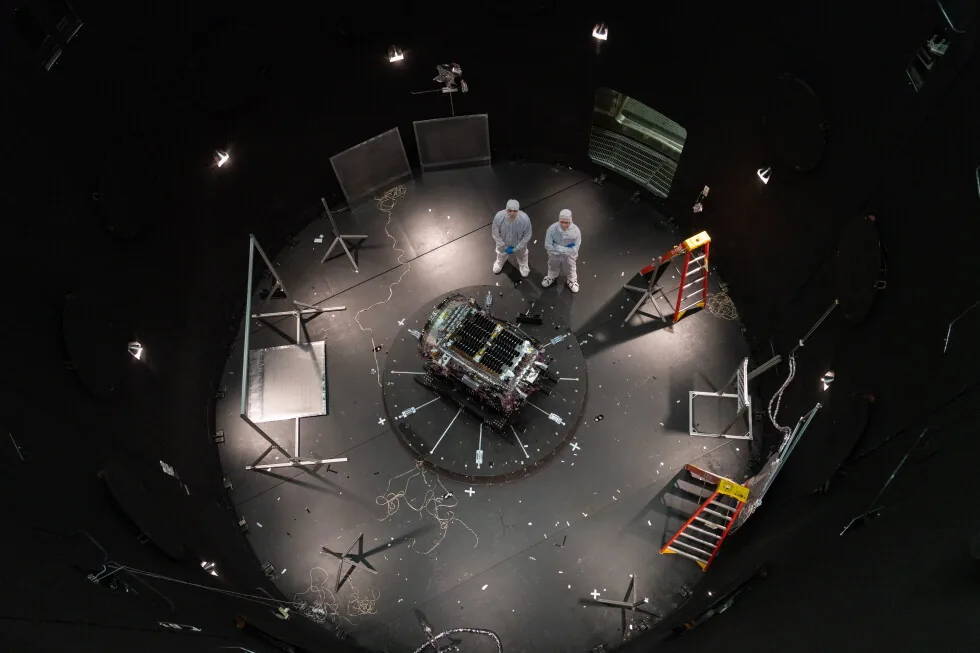
A critical rescue mission is underway for NASA's Swift Observatory, a vital telescope tracking cosmic explosions, which is rapidly descending towards Earth. A specially designed spacecraft, named Link, was launched Friday from the Marshall Islands aboard a Pegasus rocket carried by a modified airplane. The mission, developed by Katalyst Space Technologies, aims to capture the 1.6-ton telescope in approximately one month and re-boost its orbit, potentially saving it from atmospheric burn-up.
Swift, launched in 2004, is experiencing accelerated orbital decay due to increased atmospheric drag caused by recent solar storms. This phenomenon, driven by the sun's outbursts, is causing the observatory to sink faster than anticipated. NASA is investing $30 million in Katalyst Space Technologies to perform this unprecedented salvage operation. The goal is to raise Swift's altitude by about 150 miles (240 kilometers) from its current orbit of 224 miles (360 kilometers) above Earth, restoring it to its operational height.
Orbital Salvage and Future Implications
The Link spacecraft is equipped with thrusters designed to gently nudge Swift, avoiding any harsh movements that could damage the delicate instrument. Katalyst Space Technologies reportedly assembled this complex mission in an exceptionally short timeframe of just nine months, driven by NASA's urgency. Without intervention, Swift is predicted to plummet to Earth and disintegrate in its atmosphere by October 2026. This accelerated timeline meant overcoming weather and technical hurdles that led to several last-minute launch postponements.
The successful capture and re-orbiting of Swift could have significant implications for future space asset management. NASA's Hubble Space Telescope, also an aging observatory, faces similar orbital decay risks in the coming years due to increased atmospheric drag. This mission could serve as a crucial precedent for extending the operational life of valuable scientific instruments in orbit, rather than letting them succumb to the unforgiving physics of space. If successful, Swift could resume its observations of phenomena like gamma-ray bursts and exploding stars by September 2026, with its current scientific operations placed on hold to conserve its orbit.
Ghonhee Lee, CEO of Katalyst Space Technologies, described the mission as "high-risk, high-reward." He emphasized the primary objective was to prevent the loss of the telescope. "The biggest danger was always we don’t launch anything and we let Swift burn up in the atmosphere," Lee stated. "So we were always trying to avoid that risk, and our team has done that." The success of this operation hinges on the precise rendezvous and capture of the observatory, followed by a controlled orbital boost.