
2026 Nobel Physics Prize: Antarctic Ice Detects Cosmic Neutrinos
The 2026 Nobel Prize in Physics honors Francis Halzen for pioneering neutrino detection using a cubic kilometer of Antarctic ice. This work opens new windows into the universe's most energetic phenomena.

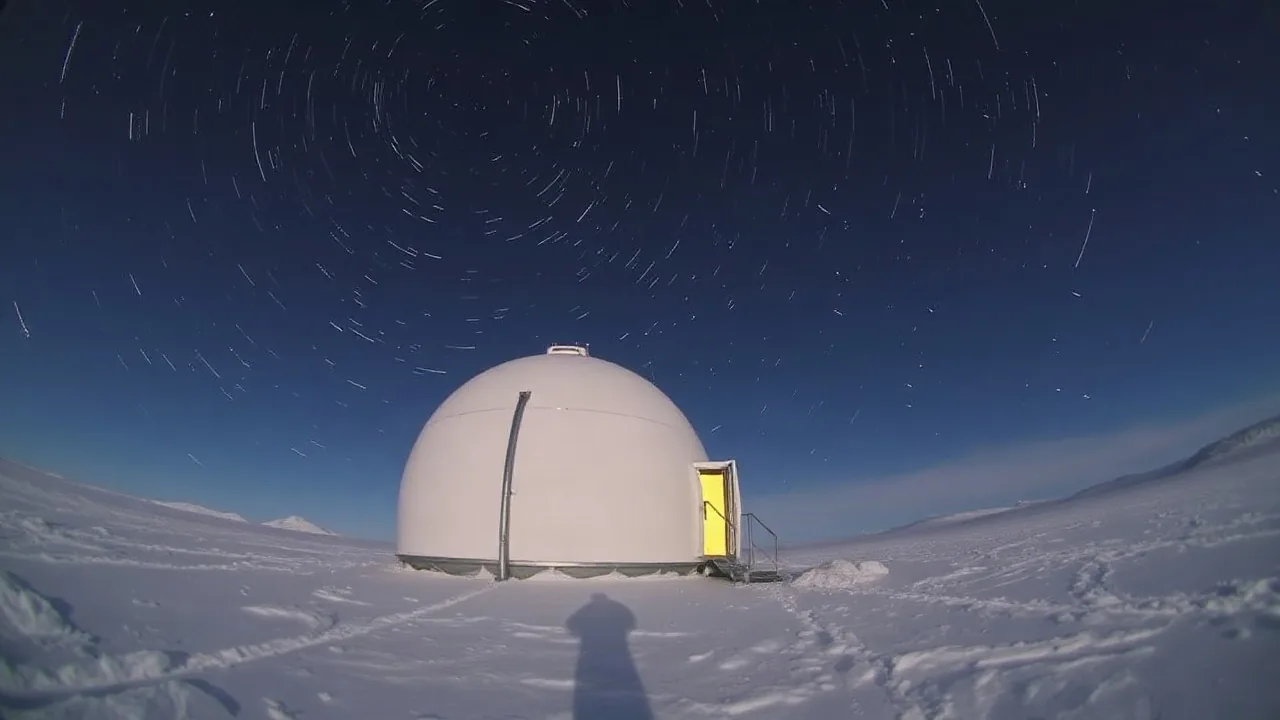
The 2026 Nobel Prize in Physics has been awarded to Professor Francis Halzen for his groundbreaking work in detecting elusive cosmic neutrinos. His innovative approach transformed a massive volume of Antarctic ice into a sophisticated telescope, allowing scientists to observe these "ghostly" particles originating from the most violent and energetic events in the universe. The prize recognizes decades of dedicated research and technological advancement that have finally yielded significant results in understanding the cosmos.
For years, detecting neutrinos, which are subatomic particles with almost no mass and no electric charge, has been a monumental challenge for physicists. They stream through matter, including Earth, virtually unimpeded, making them incredibly difficult to capture and study. Professor Halzen's vision was to harness the natural properties of ice at the South Pole, specifically the clarity and immense volume of the IceCube Neutrino Observatory. This facility, buried deep within the ice sheet, uses thousands of sensors to detect the faint blue light (Cherenkov radiation) emitted when a neutrino occasionally interacts with an ice molecule.
Unveiling the Universe's Most Energetic Sources
The IceCube Neutrino Observatory, located at the Amundsen-Scott South Pole Station, is one of the largest and most sensitive particle detectors ever built. Its design hinges on the fact that while neutrinos are hard to detect, the particles they do produce when they interact are detectable. Professor Halzen's theoretical work and leadership were crucial in conceiving and executing this ambitious project. The observatory's success has allowed scientists to pinpoint the origins of some of the highest-energy cosmic rays, a feat previously thought impossible. This breakthrough has provided strong evidence that these high-energy particles are accelerated by supermassive black holes at the centers of distant galaxies and other powerful cosmic accelerators.
This discovery is more than just a testament to human ingenuity; it offers a new way to probe the universe. For decades, astronomers have relied on electromagnetic radiation—light, radio waves, X-rays—to study celestial objects. Neutrinos, however, travel in straight lines from their source and are not deflected by magnetic fields, offering a pristine, unadulterated view of cosmic events. "This is like gaining a new sense to perceive the universe," stated a representative from the Nobel Committee. "We can now 'see' the unseen and understand phenomena that were previously shrouded in mystery." The implications for astrophysics and cosmology are profound, promising to reshape our understanding of cosmic evolution and the fundamental laws of physics.
Professor Halzen's journey from theoretical physicist to the leader of a Nobel Prize-winning experiment highlights the importance of persistence and bold vision in scientific research. The IceCube project, a collaborative effort involving hundreds of scientists from around the globe, exemplifies how international cooperation can lead to monumental discoveries. The data collected by the observatory is continually being analyzed, with scientists expecting further revelations about dark matter, the nature of black holes, and the very early universe. This award celebrates not only an individual's achievement but also the collaborative spirit that drives scientific progress forward.