
Northern Lights Possible in US Skies This Weekend
A geomagnetic storm watch has been issued, potentially allowing the Northern Lights to be visible across several northern U.S. states this weekend, including parts of the Capital Region.

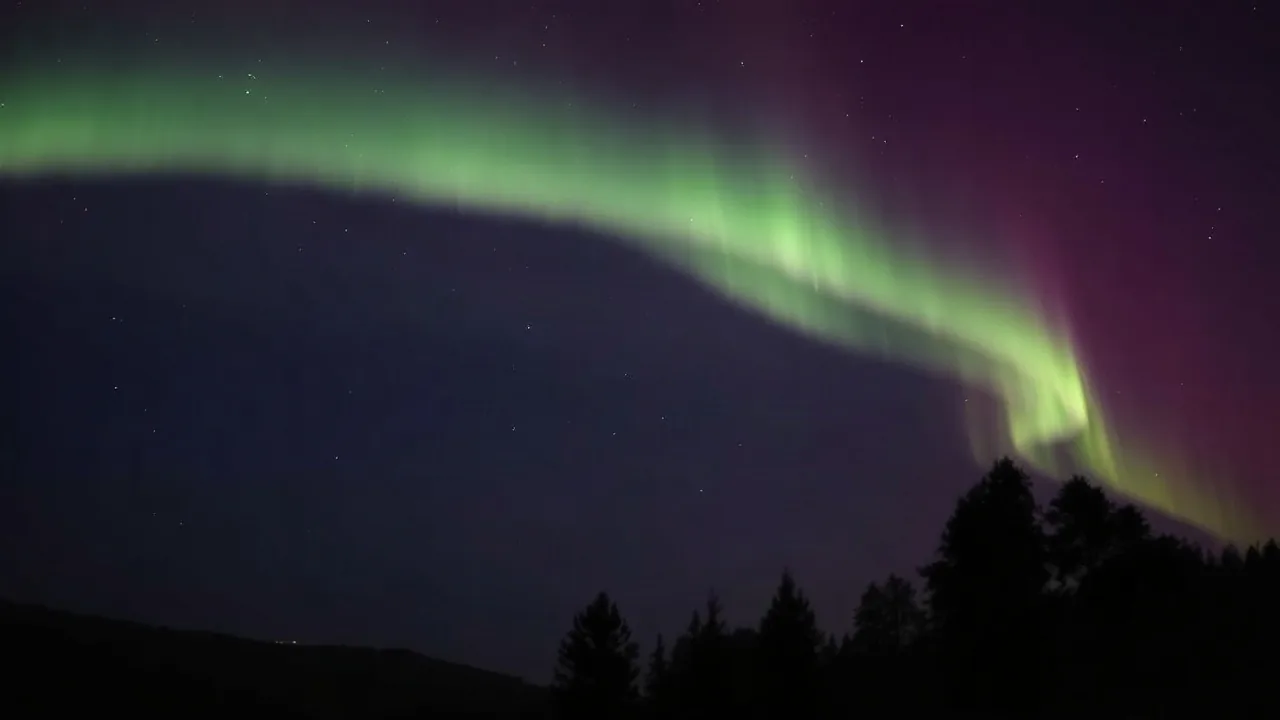
Residents across several northern U.S. states may have a chance to witness the aurora borealis, commonly known as the Northern Lights, this weekend due to a forecast geomagnetic storm. The National Oceanic and Atmospheric Administration's Space Weather Prediction Center issued a G2 (Moderate) Geomagnetic Storm Watch for October 9, anticipating solar activity that could extend auroral displays further south than usual.
This celestial event presents an opportunity for many Americans to see the aurora, which is typically confined to higher latitudes. The visibility will depend on several factors, including the storm's intensity and local weather conditions. Clear skies and minimal light pollution will be crucial for optimal viewing. Experts advise looking towards the northern horizon after sunset.
Auroral Displays and Solar Activity
The potential for visible auroras stems from recent solar eruptions. These events, such as coronal mass ejections (CMEs), send charged particles hurtling towards Earth. When these particles interact with the Earth's magnetic field and atmosphere, they create the vibrant light shows characteristic of the aurora. While previous forecasts for the region had mixed predictions, this current watch indicates a renewed possibility for viewing.
For those hoping to catch a glimpse, checking aurora forecast apps and websites is recommended. These resources can provide real-time updates on geomagnetic activity and predicted visibility. The Capital Region, along with other areas in the northern tier of the United States, could be prime locations if conditions align. The timing of the geomagnetic storm is expected to begin on Friday, October 8, with the peak viewing potential likely occurring over the weekend.
Contextually, the display of auroras this far south is a rare but not unprecedented occurrence. Major geomagnetic storms, driven by powerful solar flares, have historically caused auroras to be seen in latitudes as far south as Mexico. Such events underscore the dynamic nature of the Sun and its profound influence on our planet's environment. Understanding these solar-terrestrial interactions is a key focus for agencies like NOAA's Space Weather Prediction Center, which monitors space weather to provide warnings for potential disruptions to satellites, power grids, and communication systems.
The National Weather Service is monitoring the situation and will provide updates if the geomagnetic storm is expected to be particularly strong. While sightings are not guaranteed, the current forecast offers a promising window for skygazers. The opportunity to witness the aurora borealis is a compelling reason to step outside and look up, especially for those who live in areas where the lights are a seldom-seen phenomenon.