
October 2026 Skywatching: Hunter's Moon, Meteor Showers, and Saturn
October 2026 offers spectacular celestial events, including the Hunter's Moon, two prominent meteor showers, and Saturn appearing at its brightest. Look up for an unforgettable astronomical display.

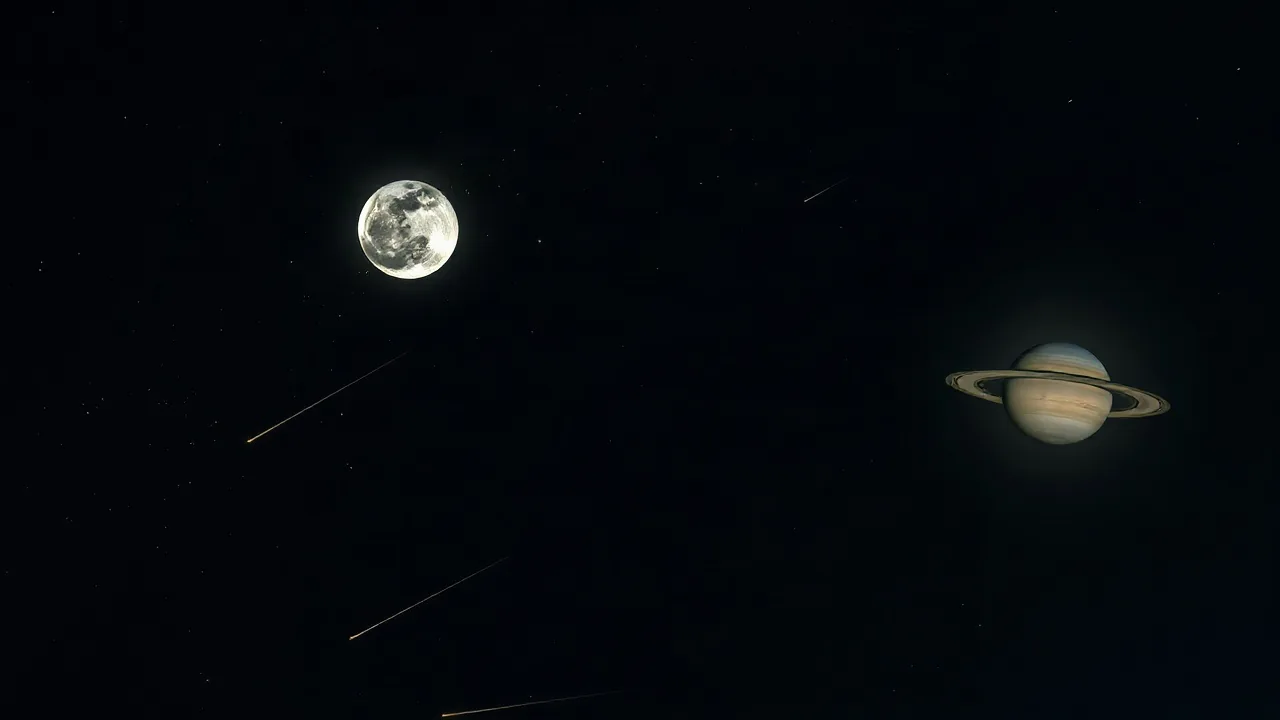
October 2026 promises a dazzling celestial calendar for stargazers across the United States. The month is set to feature the annual Hunter's Moon, the peak of two significant meteor showers, and the planet Saturn reaching its opposition, making it appear at its brightest and largest in the night sky. Observers will have ample opportunities to witness these cosmic events throughout the month.
The Hunter's Moon, traditionally the full moon following the Harvest Moon, is expected to illuminate the night sky. While the exact date of its peak illumination varies annually, it typically occurs in mid-October. This moon gets its name from its association with the hunting season, as it provided light for hunters pursuing game in the autumn months.
Adding to the excitement, October will host the peak activity of two major meteor showers: the Orionids and the Draconids. The Orionids, produced by debris from Halley's Comet, are known for their fast-moving and bright meteors, often appearing around October 21st. The Draconids, on the other hand, are typically less prolific but can produce spectacular, albeit infrequent, displays of shooting stars. Their peak often falls earlier in the month, around October 7th or 8th, making for an extended period of potential meteor sightings.
Saturn on Full Display
A major highlight of the October 2026 sky is Saturn's opposition, scheduled for October 28th. During opposition, the Earth passes directly between the Sun and Saturn, placing the ringed planet in direct sunlight and at its closest point to our planet for the year. This celestial alignment means Saturn will rise around sunset and set around sunrise, appearing brighter and larger through telescopes than at any other time. For those equipped with binoculars or telescopes, viewing Saturn's prominent rings will be particularly rewarding during this period. Sky & Telescope magazine advises that Saturn will be visible all night from dusk until dawn.
The opportunity to see Saturn's rings clearly is a significant draw for amateur astronomers. The planet's majestic rings are composed primarily of ice particles, ranging in size from dust grains to large boulders. Their ethereal appearance has captivated humanity for centuries, and opposition offers the best chance to observe them in detail. NASA science publications often highlight such planetary events as key opportunities for public engagement with astronomy.
Beyond these major events, several other astronomical phenomena will grace the October 2026 sky. Early risers might catch glimpses of planetary alignments or the fading glow of the zodiacal light. For those in clear, dark locations away from city lights, the sheer number of stars visible, coupled with the occasional meteor streak, promises a memorable viewing experience. The meteor showers, in particular, offer a chance for spontaneous celestial fireworks.
Stargazing in October 2026 provides a fantastic opportunity to connect with the cosmos. Whether observing the Hunter's Moon rise, counting shooting stars from the Orionids or Draconids, or marveling at Saturn's rings, the night sky offers a profound spectacle. Resources from organizations like FOX Weather and nationalgeographic.com often guide the public on how to best view these events, emphasizing simple techniques for enhanced observation.