
Partial Solar Eclipse Visible in US States August 12
A partial solar eclipse will grace the skies over the United States on August 12, 2026. While not a total solar event for Americans, many northern states will witness the moon obscure a portion of the sun.

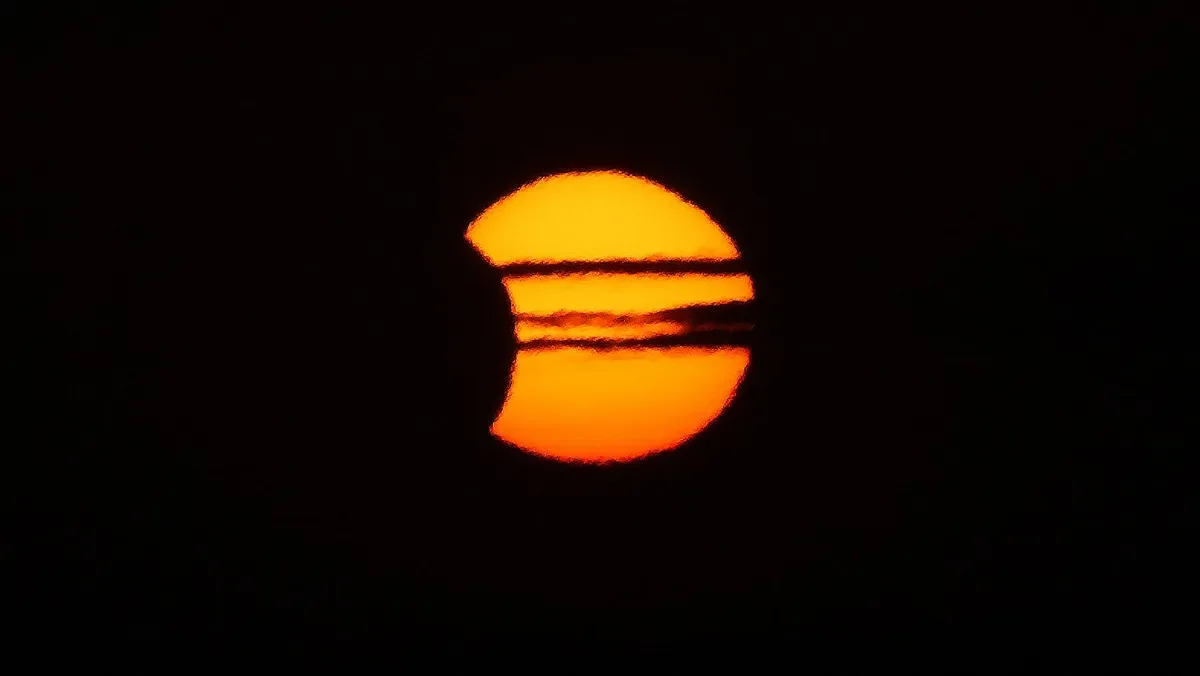
A partial solar eclipse will be visible across numerous U.S. states on August 12, 2026, offering skygazers a chance to witness a celestial alignment. While the full spectacle of a total solar eclipse will be confined to parts of Greenland, Iceland, Portugal, Russia, and Spain, a significant portion of the United States will experience a dimmer day as the moon passes between the Earth and the sun.
This upcoming astronomical event, while not a total eclipse for the U.S., is still a noteworthy occasion. A partial solar eclipse occurs when the celestial bodies are not perfectly aligned, resulting in only a fraction of the sun being covered by the moon. This creates a dramatic visual effect, often described as the sun taking on a crescent shape.
Where to See the Partial Eclipse and Safety Precautions
Residents in many northern U.S. states, as well as Washington D.C., can expect to see varying degrees of the partial solar eclipse. Alaska is predicted to experience the most significant coverage, potentially exceeding 20%. Cities across New England and New York are also anticipated to witness between 10% and 20% of the sun obscured.
According to NASA, direct viewing of a partial solar eclipse without proper eye protection is extremely dangerous. The intense solar rays can cause severe eye injury, even when the sun is partially covered. Certified solar eclipse glasses are essential for safe observation. It is also critical to avoid looking at the sun through any optical devices, such as cameras, telescopes, or binoculars, without specialized solar filters, as these can magnify the sun's rays and lead to permanent vision damage.
For those without eclipse glasses, alternative safe viewing methods are available. One such method is the creation of a pinhole projector. This simple device, often made from a cardboard box and aluminum foil, allows observers to project an image of the sun onto a surface, providing a safe way to witness the event. Detailed instructions for building a pinhole projector can be found on NASA's official website.
The visibility of the partial solar eclipse will span across 26 states and Washington D.C. The list of participating states includes Alaska, Connecticut, Delaware, Illinois, Indiana, Iowa, Kentucky, Maine, Maryland, Massachusetts, Michigan, Minnesota, Montana, New Hampshire, New Jersey, New York, North Carolina, North Dakota, Ohio, Pennsylvania, Rhode Island, South Dakota, Vermont, Virginia, Washington D.C., West Virginia, and Wisconsin. The exact timing of the eclipse will vary by city and state, with resources available from NASA providing specific schedules for different locations across the nation.
The alignment on August 12th is a reminder of the dynamic celestial mechanics that govern our solar system. While total eclipses capture the most awe, partial eclipses offer their own unique beauty and a valuable opportunity for scientific observation and public engagement with astronomy. Such events underscore the importance of space agencies like NASA in educating the public about astronomical phenomena and ensuring safety during viewing.