
Physicists Discover Novel Superconductor Breaking Time Symmetry
Researchers have identified a new type of superconductor that exhibits a unique property: it breaks time-reversal symmetry. This discovery marks a significant advancement in understanding exotic quantum states.

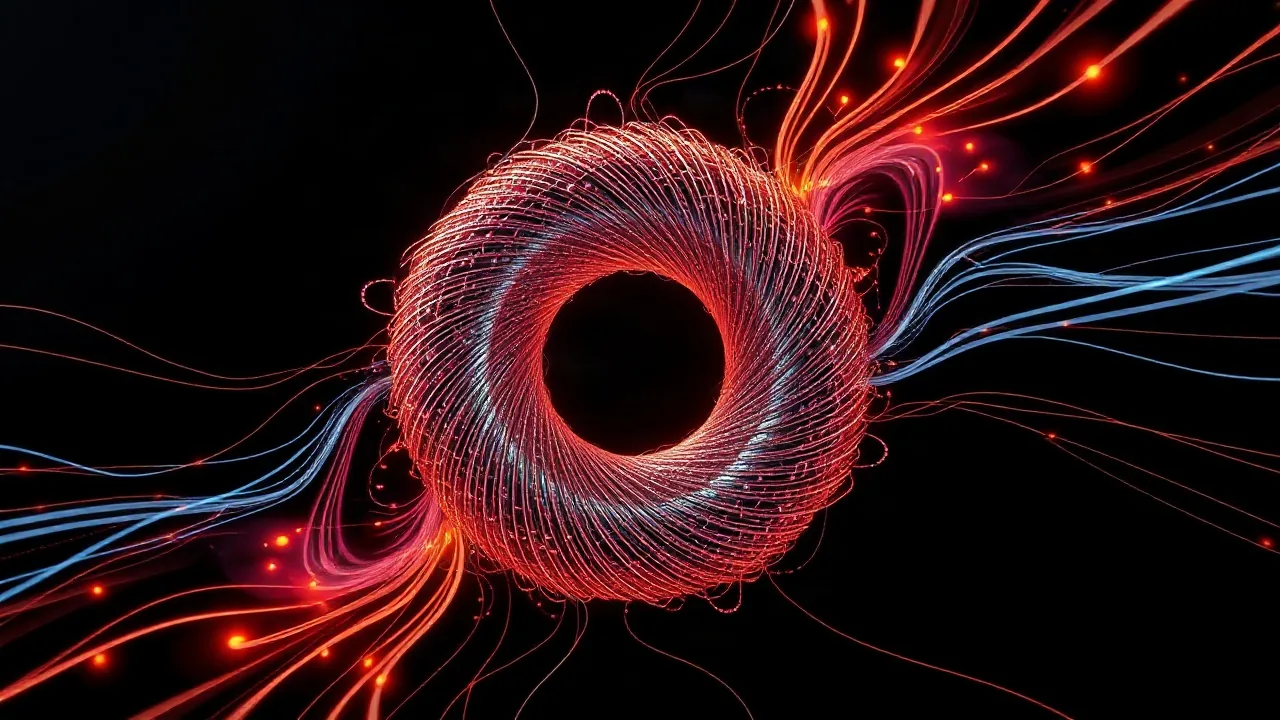
In a groundbreaking discovery, physicists have identified a novel superconductor that exhibits a never-before-seen phenomenon: the breaking of time-reversal symmetry. This finding, detailed in a recent study, represents the first instance of a Type-I superconductor displaying such exotic behavior, potentially opening new avenues in quantum physics and material science.
The research team, led by scientists from the Indian Institute of Science Education and Research (IISER) Bhopal, focused on a specific material that, under certain conditions, behaves in a manner that defies the conventional understanding of time's arrow in superconductors. Typically, superconductors are expected to maintain a state where the laws of physics are invariant whether time flows forward or backward – a concept known as time-reversal symmetry. However, this newly identified superconductor deviates from that norm.
Unraveling Exotic Quantum Behavior
The implications of this discovery are substantial. Breaking time-reversal symmetry in a superconductor suggests the presence of internal magnetic fields or other exotic quantum states within the material that are not usually observed in standard Type-I superconductors. These internal fields can dictate a preferred direction of time at the quantum level, a phenomenon previously theorized but rarely observed in such a clear manifestation.
Dr. Anshuman Kumar, a leading researcher on the project, stated, "Observing time-reversal symmetry breaking in a Type-I superconductor is a significant leap. It challenges our existing models and provides a unique platform to explore phenomena like non-reciprocal transport, which could have future applications in quantum computing and advanced electronics."
This type of superconductor, known for its perfect diamagnetism and Meissner effect, typically does not exhibit broken time-reversal symmetry. The breakthrough occurred when the team subjected the material to specific temperature and magnetic field conditions, revealing this unusual characteristic. The precise mechanism behind this symmetry breaking is now the subject of intense theoretical and experimental investigation.
The study, published in a peer-reviewed journal, meticulously documented the experimental setup and the resulting data. Using advanced techniques, the researchers were able to confirm the presence of spontaneous magnetic moments within the superconducting state, a clear indicator of broken time-reversal symmetry. This finding is not only a testament to the intricate nature of quantum mechanics but also a crucial step towards harnessing exotic quantum states for technological advancements.
Understanding such unconventional properties in superconductors could pave the way for the development of new electronic devices that operate with unprecedented efficiency and functionality. For instance, materials that break time-reversal symmetry are of great interest for creating topological qubits, essential components for fault-tolerant quantum computers. Furthermore, the principles learned from studying these materials could lead to innovations in spintronics, a field that utilizes the intrinsic spin of electrons in addition to their charge.
The scientific community is buzzing with the implications of this discovery. While the immediate applications are still in the realm of fundamental research, the long-term potential is immense. Further studies will aim to explore other Type-I superconductors for similar properties and to engineer materials with controlled time-reversal symmetry breaking. This research underscores the continuous evolution of our understanding of fundamental physics and the surprising phenomena that lie hidden within matter.