
Radio signals from deep space discovered emitting every eight minutes
Astronomers in Australia have discovered a rare star system emitting mysterious radio signals every eight minutes from 5,000 light-years away.

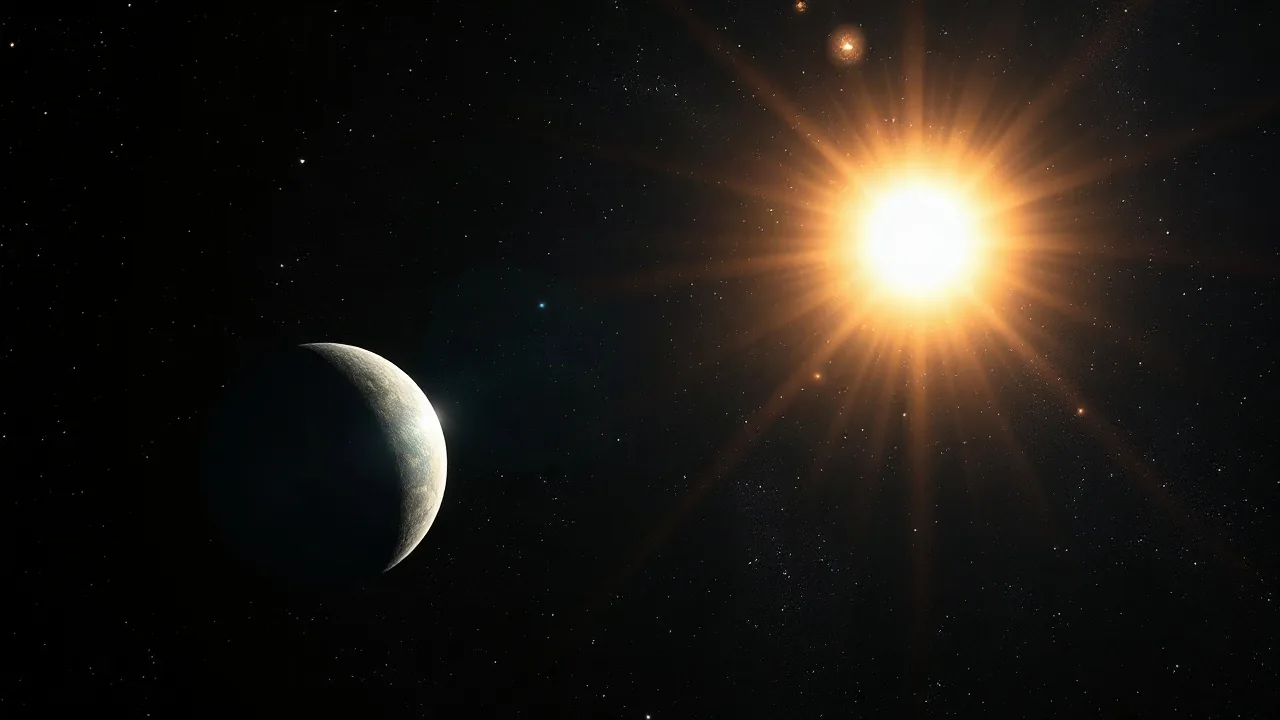
Astronomers in Australia have identified an unusual star system located 5,000 light-years from Earth that emits mysterious radio signals every eight minutes. The newly found system, cataloged as GPM J071507−114153, pairs a dead star with a G-type star similar to our own sun, according to a recent study published in the journal Nature Astronomy. This marks the first time such rhythmic pulses have been detected from a white dwarf orbiting a sun-like star.
Researchers at the International Centre for Radio Astronomy Research (ICRAR) in Perth, Western Australia, explained that these kinds of pulses are typically observed in systems containing smaller and cooler red dwarf stars, making this finding entirely unprecedented. The system belongs to a broader class of celestial objects known as long-period transients, or LPTs, which produce signals that cycle on and off over intervals ranging from minutes to hours.
Study lead author Dr Sam McSweeney stated, “This is the first time the pulses are clear enough to see the white dwarf moving in its orbit around its companion, so we know that the pulsations are coming from a region close to the white dwarf, or possibly even from the white dwarf itself.” Dr McSweeney completed the discovery while working as a researcher at ICRAR. Around a dozen similar objects have been detected since the initial discovery by the same ICRAR team in 2021.
Telescopes and Supercomputing Power
To analyze and validate the white dwarf motion, the research team processed more than 100 hours of radio data utilizing the Pawsey Supercomputing Research Centre. The system itself was initially spotted during a large survey using the Murchison Widefield Array to scan the Milky Way visible from Australia. Scientists subsequently used the MeerKAT radio telescope in South Africa to pinpoint its exact location before the W.M. Keck Observatory in Hawaiʻi confirmed its association with the sun-like star.
Study co-author Associate Professor Natasha Hurley-Walker noted that the pulses allowed the team to detect stellar flares on the sun-like star, comparable to the phenomena that create aurorae on Earth. Associate Professor Hurley-Walker said, “As a bonus, we also saw the white dwarf moving behind a region with a strong magnetic field, most likely a ‘stellar prominence’ – which is a large loop of plasma erupting from a star’s surface. It’s amazing that by using radio wavelengths we can detect the storms on a star over 5,000 light-years away.” Dr McSweeney added that future infrastructure like the SKAO telescopes will likely reveal many more such systems in deep space.