
Rare Baby Whale Shark Sighting Offers Clues to Where Giants Are Born
A rare sighting of a newborn whale shark in Indonesia is providing scientists with crucial new insights into the breeding grounds of the world's largest fish. The juvenile was found in Saleh Bay, a location that may serve as a nursery.

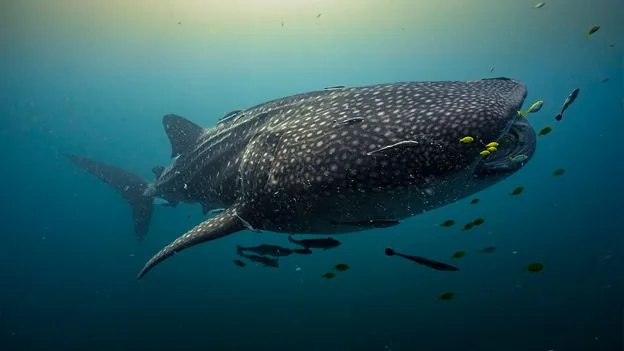
A rare glimpse of a newborn whale shark in Indonesia's Saleh Bay is offering scientists a significant clue to one of the ocean's most enduring mysteries: where these colossal creatures come into the world. The 5-foot-long juvenile, estimated to be just four months old, was discovered by local fishers on September 6, 2024, in a net designed to catch smaller prey. This marks the first neonatal whale shark documented in Indonesia and is one of only a few dozen ever recorded globally.
Whale sharks, known as the largest species of fish on Earth, can grow to the size of a bus, weighing as much as six elephants. Despite their immense size and presence in warm waters worldwide, their mating and birthing processes have remained largely undocumented. The discovery of this neonatal specimen, however, suggests that the elusive birthplace might be closer than previously thought.
Mochamad Iqbal Herwata Putra, a marine scientist with the nonprofit Konservasi Indonesia, described the sighting as "a rare glimpse" into an early stage of life that is almost never observed. He suspects that Saleh Bay, a semi-enclosed cove with nutrient-rich waters fed from the deep ocean, could be a critical birthing ground and nursery area for young whale sharks. The bay's abundant mackerel and squid populations, which attract the juvenile, also provide a vital food source for its growth and development, while offering protection from larger predators like blue sharks.
Understanding Whale Shark Mysteries
The discovery in Saleh Bay adds to a growing body of evidence suggesting that specific coastal areas may serve as vital nurseries. For decades, scientists have struggled to pinpoint where whale sharks reproduce. These solitary giants undertake vast migrations, with some individuals tracked swimming over 7,000 kilometers (5,000 miles). Their nomadic nature made studying their life cycle exceptionally challenging until the late 20th century when aggregations in specific coastal regions, such as off Mexico's Yucatan Peninsula, allowed for more intensive research and tagging efforts.
Ben D'Antonio, a research scientist at the Shark Research Foundation, emphasized the importance of such findings. "Finding a nursery ground is a fundamental discovery," he stated, praising the collaboration between Indonesian scientists and local fishers. This partnership is crucial for conservation efforts, especially as global whale shark populations have declined by over 50% since the 1980s, leading to their classification as an endangered species.
One of the most significant breakthroughs in understanding whale shark reproduction came in 1995 with the examination of a 10-meter (33-foot) specimen in Taiwan, nicknamed 'Megamamma.' This female contained 304 fertilized eggs and embryos in varying stages of development, indicating that whale sharks are ovoviviparous—hatching eggs internally and giving birth to live young. Genetic analysis later confirmed that all offspring likely belonged to a single father, suggesting sperm storage and sequential fertilization. This discovery was pivotal in revealing that female whale sharks can carry a large number of young simultaneously.
Just 33 neonate whale sharks have ever been formally recorded, appearing across tropical regions from the Atlantic to the Arabian Sea. Freya Womersley, a research scientist at the Marine Biological Association, has analyzed these sightings, noting a pattern: many occur in or near permanent oxygen minimum zones (OMZs). These low-oxygen areas, less hospitable to many predators, may serve as a protective 'oceanic cloak' for vulnerable newborns, while also concentrating plankton, an essential food source for young sharks. The Indonesian discovery aligns with these findings, placing Saleh Bay's unique oceanographic conditions as a potential factor in attracting and supporting juvenile whale sharks.
Despite increased scientific understanding and conservation measures, threats persist. In the 1980s and 1990s, hundreds of whale sharks were hunted annually for their meat and fins. Although the species was listed as vulnerable in 2000, illegal fishing continues. Organizations like Konservasi Indonesia are working to establish protected marine areas, such as a proposed reserve in the north of Saleh Bay, which would be the first in Indonesia dedicated to whale shark protection. Such initiatives are vital to safeguarding critical habitats and ensuring the survival of these magnificent, enigmatic giants.